
President Osmani condoles the family on the passing of Prof. Dr. Isuf Dedushaj

It is with deep sorrow that we received the news of the passing of Prof. Dr. Isuf Dedushaj, one of the most prominent individuals in the field of epidemiology, science and academia. He will always be remembered for his extraordinary contribution to the development of healthcare and medical education in Kosovo. With a rich academic and scientific career, he has left an indelible mark as a physician, epidemiologist and university professor. During these difficult moments for the family, I sympathize with you and encourage you to find strength in coping with the pain. May the memory of Isuf Dedushaj be eternal!
President Osmani condoles the families for the loss of life of three children in Jabllanicë, Gjakovë

With a heavy heart and deep sorrow, we received the tragic news of the loss of life of three children in Jabllanicë, Gjakovë, who passed away prematurely as a result of the collapse of an uninhabited building. There are no words that can ease the pain of the families who are today facing the endless void left behind by the loss of their loved ones. During these difficult moments of grief, we share with you the indescribable pain, expressing our sincere condolences and standing by you with our minds and hearts. May their young souls rest in peace!
President Osmani conveys her condolences to the German people on the passing of former German President Köhler: During his tenure, Germany recognized and supported Kosovo’s independence
The President of the Republic of Kosovo, Vjosa Osmani, conveyed her condolences to the German people on the passing of former President Horst Köhler. “Our deepest condolences to the German people on the passing of former President Horst Köhler. During his tenure, Germany recognized and supported Kosovo’s independence – a historic milestone for our nation. We remain eternally grateful for his unwavering support. Our thoughts are with his family and the German people during this difficult time,” wrote President Osmani.
President Osmani on the 28th anniversary of the fall of heroes Zahir Pajaziti, Hakif Zejnullahu and Edmond Hoxha: Today, more than ever, we have a duty not to forget their ideal
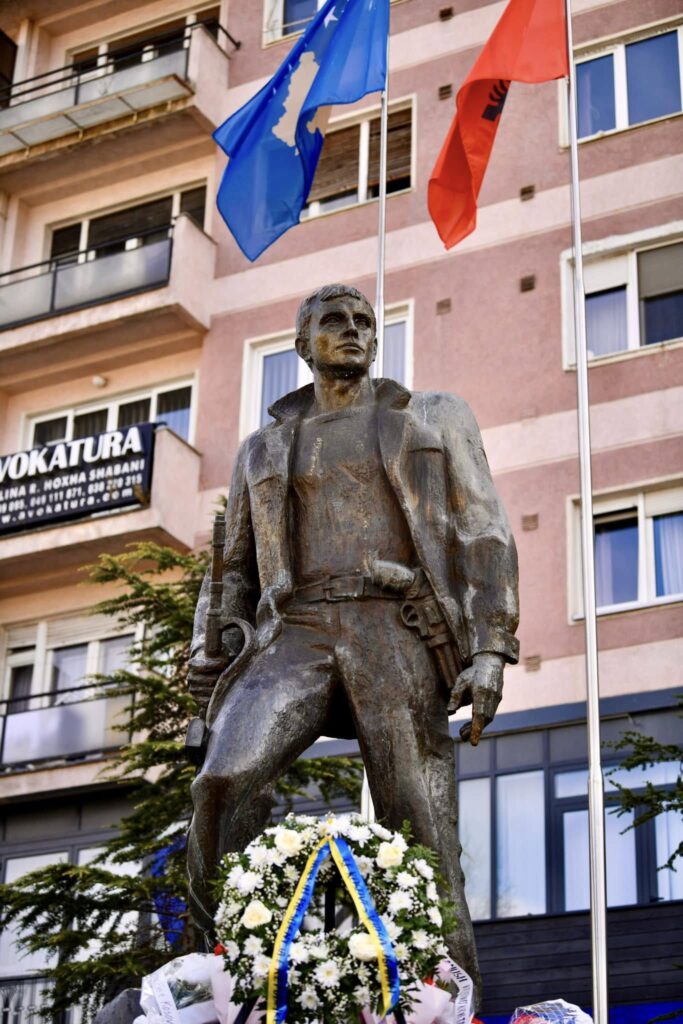
The President of the Republic of Kosovo Vjosa Osmani, paid homage at the statue of Zahir Pajaziti, on the 28th anniversary of the fall of heroes Zahir Pajaziti, Hakif Zejnullahu and Edmond Hoxha. President Osmani wrote: With respect and pride we remember the hero Zahir Pajaziti, the visionary of the liberation war who, together with Hakif Zejnullahu and Edmond Hoxha, with courage and determination alongside many KLA comrades, paved the way to the liberation of Kosovo, becoming symbols of sacrifice and dedication to the homeland. Today, more than ever, we have a duty not to forget their ideals. The freedom for which they gave their lives must be protected not only by remembering them and the other KLA heroes, but with work, engagement and dedication to Kosovo for which they dreamt and for which they fell. Eternal glory to the heroes Zahir Pajaziti, Hakif Zejnullahu, Edmond Hoxha and all the martyrs of our nation!
President Vjosa Osmani’s address at the marking of the birthday of Emperor Naruhito of Japan
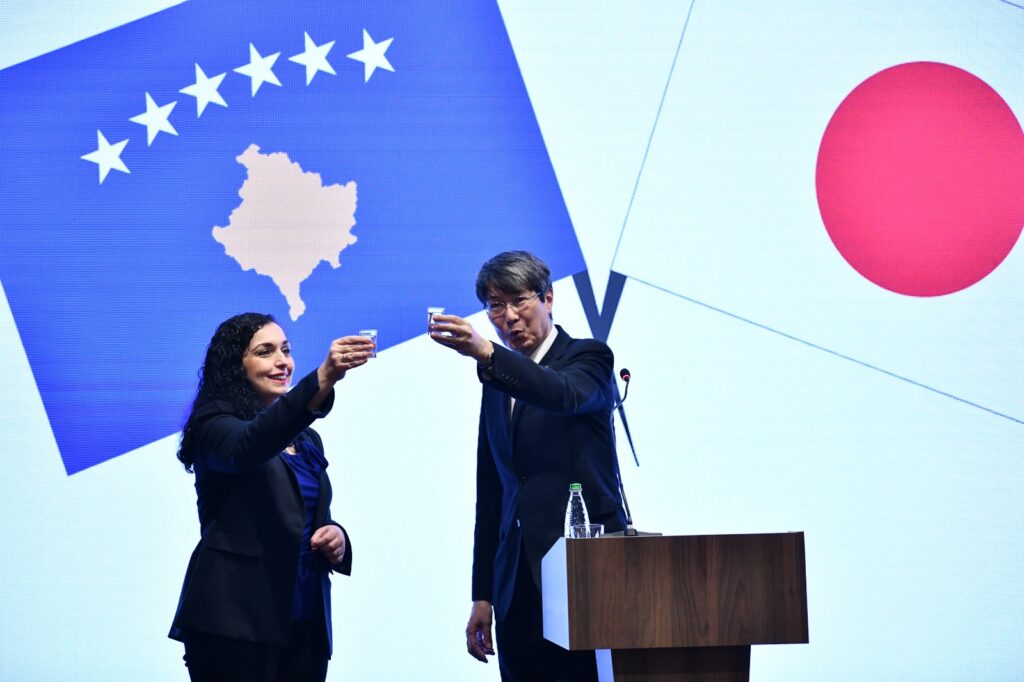
President Osmani received the credentials of new Japanese Ambassador to Kosovo Kiminori Iwama
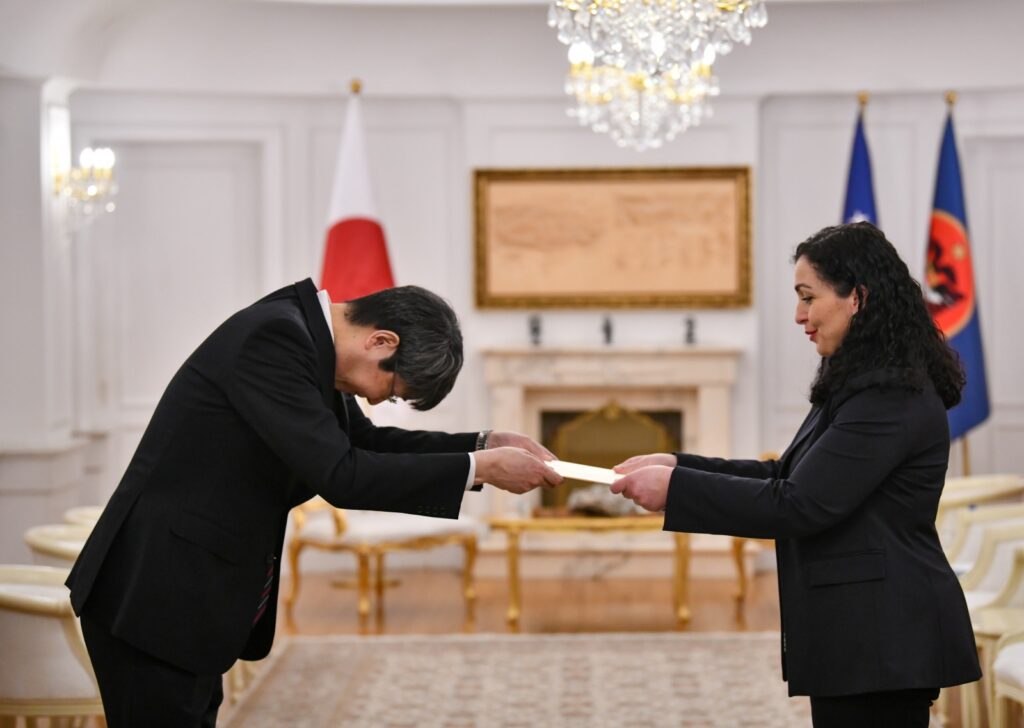
The President of the Republic of Kosovo Vjosa Osmani, received today the credentials of the new Japanese Ambassador to Kosovo, Kiminori Iwama. After welcoming the new Japanese Ambassador and wishing him success in his tenure, President Osmani conveyed her heartfelt congratulations on the occasion of the birthday of Emperor Naruhito of Japan, which is being celebrated today with a reception organized by the Embassy of Japan in honour of this day. During the meeting, President Osmani praised Japan as a long-term strategic partner and expressed gratitude for Japan’s continued support to Kosovo, especially through the Japan International Cooperation Agency (JICA). She emphasized Japan’s valuable contribution to Kosovo’s development in various fields, including the environment, political and diplomatic affairs, media, healthcare facilities, food safety, information technology, etc. President Osmani also emphasized the importance of further expansion of cooperation in trade, investment, culture, healthcare and education, mentioning the projects of Japanese educational scholarships and cultural exchange programs for the youth of Kosovo. President Osmani also discussed with Ambassador Iwama her planned and agreed visit to Japan in June of this year.
President Osmani receives the credentials of the Jordanian Non-Resident Ambassador, Hazem Issam El-Khatib Al-Tamimi
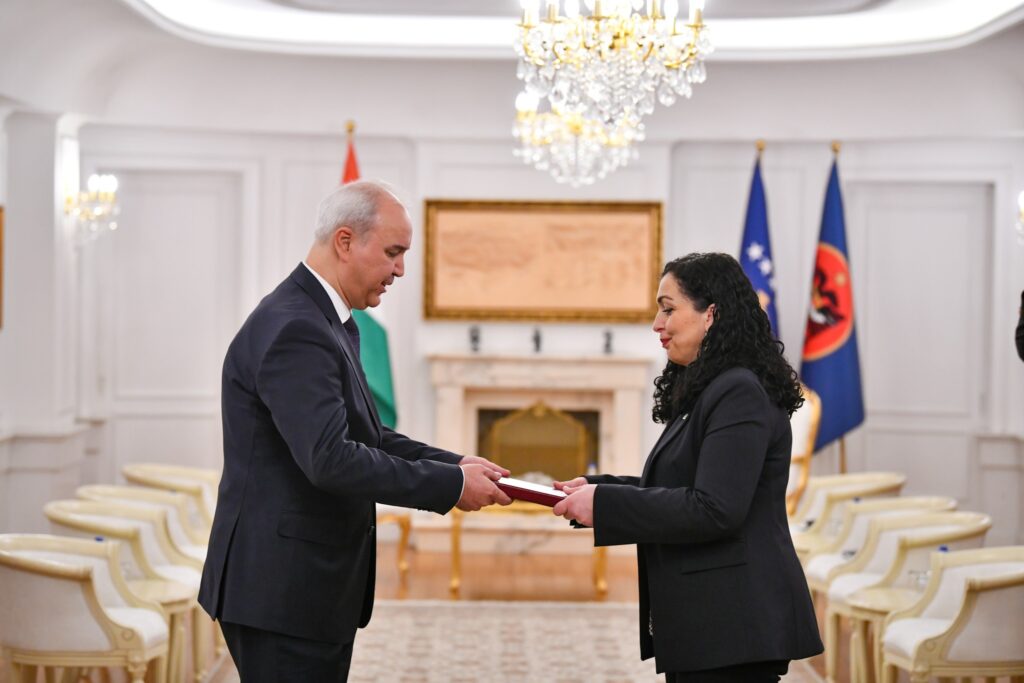
The President of the Republic of Kosovo Vjosa Osmani, today received credentials from the new non-resident ambassador of Jordan to Kosovo, Hazem Issam El-Khatib Al-Tamimi. Wishing him a warm welcome and success during his tenure, President Osmani expressed her deep gratitude for Jordan’s continued support to Kosovo and the excellent relations between the two countries. President Osmani emphasized the importance of Jordan’s support for Kosovo in international forums and continued support for Kosovo’s membership in international organizations. At the meeting with Ambassador Al-Tamimi, President Osmani emphasized the need to intensify political dialogue and cooperation in the field of security, as well as the opportunities for the expansion of cooperation in various areas of common interest. During the meeting, President Osmani’s official visit to Jordan, upon an invitation of King Abdullah II, was also discussed, with the aim of further deepening the excellent relations between our two countries.
President Vjosa Osmani’s address at the opening of the “National resilience – challenges and the way forward” conference
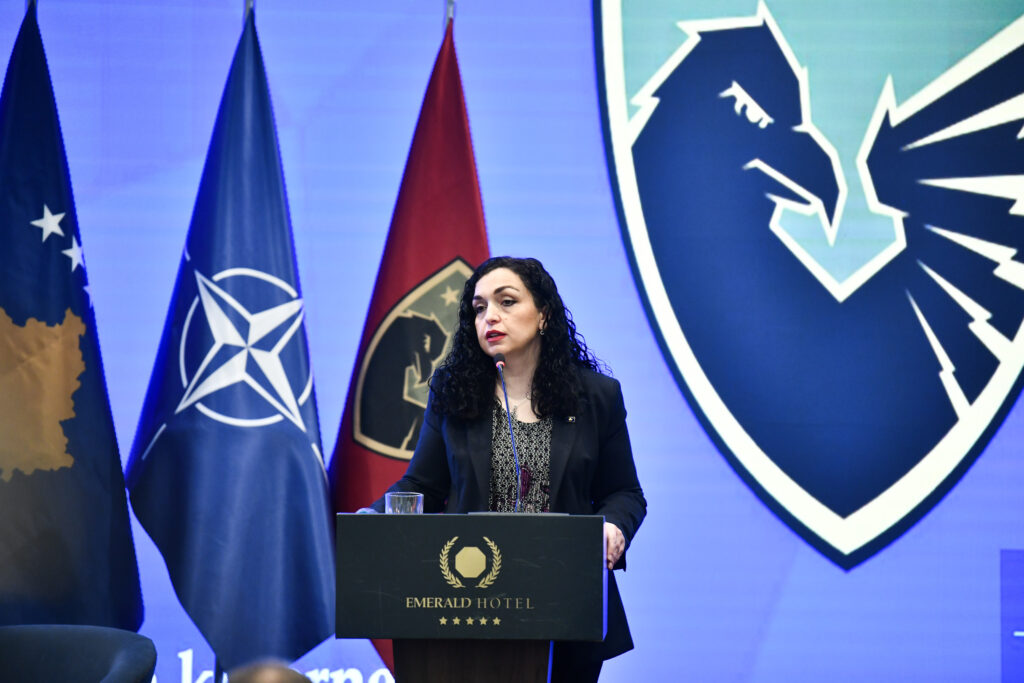
Honorable Prime Minister Kurti, Honorable Minister Maqedonci, Honorable General Bashkim Jashari, Commander of the Kosovo Security Force, Honorable General Christian Nawrat, Honorable Ministers, Director of Police, Heads and representatives of local and international institutions, Representatives of our security institutions, Ladies and gentlemen, National resilience is not just a theoretical concept, but it is the foundation on which our security, development and future as a state are built. A state is only as secure as its security links are strong. At a time when security threats are more complex than ever – from conventional wars to hybrid attacks and cyber challenges, Kosovo must be ready for the challenges we face today and for those of the future. We need a security architecture that is innovative, flexible and prepared to face any scenario. Kosovo has historically proven resilience, so it is up to us to turn it into a long-term strategy for national defense and security. Security is not just the absence of threats, but resilience against any situation we face. The National Comprehensive Defense Program represents a concrete commitment to building a strong and sustainable defense system. Therefore, in this line, the strengthening of our defense capacities and integration into NATO are strongly interconnected. The development of the Kosovo Security Force according to the highest NATO standards remains our strategic, national priority. We aim for a modern, professional, interoperable army ready to face any challenge side by side with other allied armies within NATO. This goal of ours is within the framework of our state vision for the fastest possible membership in this Alliance. Therefore, continued investment in armaments as well as in our military personnel and their well-being is vital, as is continued investment in other security institutions. In a world where hybrid threats are becoming increasingly sophisticated, economic resilience is equally important, protection from hybrid attacks is also indispensable. Our country must invest in improving critical infrastructure and developing a sustainable economy, with particular emphasis on energy security and the protection of important systems. Economic development is one of the key pillars of our national resilience, as it ensures stability and the ability of a country to cope with various crises and challenges. A strong economy then supports defense, i.e. sufficient resources in the field of defense as well as the continuous improvement of critical infrastructure, and the development of social and healthcare systems, all key to a more advanced system of state sustainability. On the other hand, hybrid attacks, which also include combined military, cyber, economic and information operations, or rather disinformation as the case may be, are real challenges to our national resilience. In this regard, cybersecurity is essential, being part of these hybrid threats. With the increase of the dependence on technology, the protection of critical infrastructure and data becomes an absolute priority. Moreover, last year, with the United States of America, precisely for this purpose, I signed the Agreement on Combating Foreign State Information, which is an important step to protect our information system from interference and disinformation, thus ensuring transparency and sustainability in the digital age. More specifically, this Memorandum of Understanding with the US focuses on the exchange of information between our countries, as well as expertise and best practices to address disinformation campaigns against us as a state, which threaten our stability and national security. We aim to do the same with the EU’s sister program – FIMI (Foreign Information Manipulation and Interference), which is a project that aims to address and combat manipulation and interference through disinformation coming from foreign, malign elements. This project is part of a broader EU strategy to strengthen protection against hybrid threats and to guarantee the democratic sustainability of member states and partner countries. As technology develops and our reliance on digital systems increases, we must be prepared to protect our data and networks from potential cyberattacks. Therefore, investing in advanced technology and training experts in this field are essential to ensure a stable and secure digital environment. We are working closely with our strategic partners to build advanced capabilities in this area and to ensure effective protection against cyberattacks. Honourable participants, In national or regional emergencies, effective cooperation between institutions and the engagement of citizens, including all ethnic groups, is essential. Our institutions must remain ready and coordinated at all times. To be successful in facing these security challenges, we need the comprehensive involvement of all links in our society. The example of our response to the recent terrorist attack on the Ibër-Lepenc canal has clearly shown the importance and power of inter-institutional coordination, but above all the extraordinary professionalism of our security institutions and first responders. At the same time, given the current geopolitical and regional security context, national resilience is more than just a need, it is our obligation to future generations. A prepared and unified society is the key to success in facing challenges of any kind. We have shown this both during the active peaceful resistance and during our liberation war of the 1990s. The Republic of Kosovo and its citizens have proven in the past, as well as in the present, the clear and firm determination that our path of development and progress is oriented towards and rests on the inherent European and Euro-Atlantic values. Our painful but glorious history has taught us the importance of unity, of faith in our values and of our strength to face any challenge. Therefore, to strengthen the foundations of national resilience, it is essential to invest in the protection of critical infrastructure such as: energy, water, transport and communications. Another important element of national sustainability is regional and international cooperation. Challenges such as: migration, terrorism, multiple threats including cyber threats and climate change require a coordinated approach with our strategic partners. In this regard, the role of NATO and allied countries, led by the USA, remains vital. Their support has been and continues to be a strong pillar of our national sustainability. Kosovo has shown that it has consistently been and is
President Osmani pardons the remaining part of an offender’s sentence for humanitarian reasons
The President of the Republic of Kosovo, Vjosa Osmani, pursuant to her constitutional and legal powers, signed tonight the decree by which the offender Arza Cakolli, for humanitarian reasons, was pardoned the remaining part of her sentence, following the review of the proposal by the Pardon Commission and in compliance with legal procedures. The decision was made due to exceptional circumstances, as the convict gave birth to her first child while serving her sentence and is currently in the Correctional Center for Women in Lipjan, together with her baby. In making the decision to pardon, other factors were also taken into account, including the fact that the convict has not committed any criminal offense before, the criminal offense for which she was convicted is for “Endangering the Public Traffic”, i.e. an accident was committed unintentionally, while it was proven that she was not under the influence of alcohol or other substances when the accident occurred. In addition, the health challenges suffered by the mother and baby have also been taken into account. The convict began serving her sentence of 1 year and two months in prison in July 2024, and was due to be released from prison on September 14th of this year. The file with the proposal, reviewed by the Commission and the President’s legal team, has reached the President’s desk today. Therefore, taking into account humanitarian factors and the professional assessments of all relevant institutions, Madam President has decided to pardon the remaining part of her sentence.
Regional Center of Excellence for Women, Peace and Security in Kosovo continues its activities
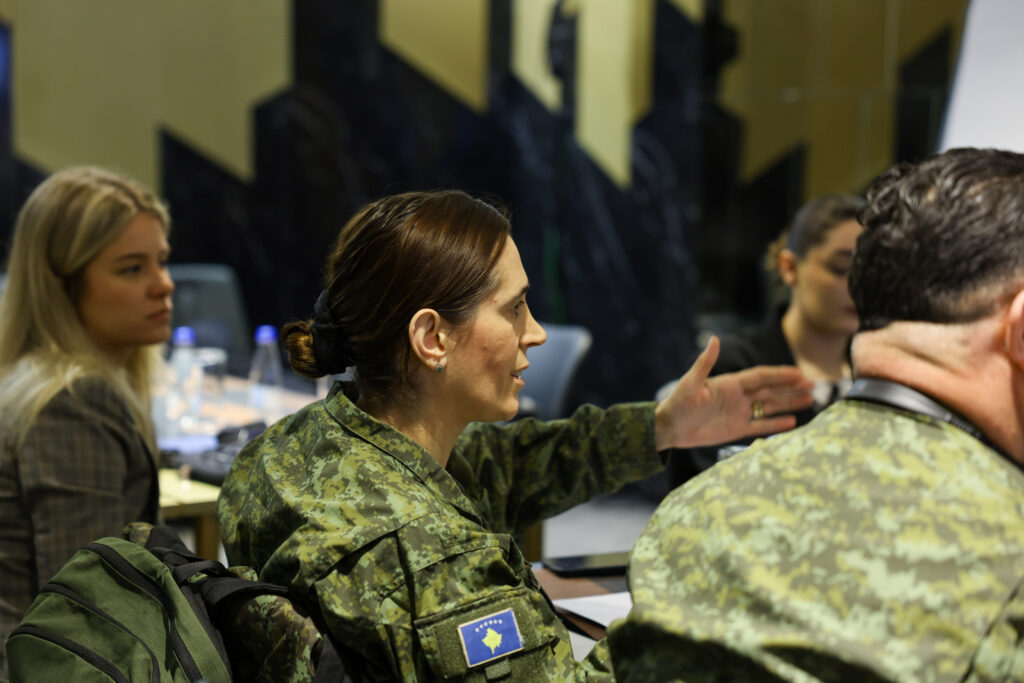
The Regional Center of Excellence for Women, Peace and Security in Kosovo held a two-day workshop on the topic “Building on Progress: Further Elevating Kosovo’s Leadership on the Women, Peace and Security Agenda”. The workshop focused on the importance of National Action Plans (NAPs) for Women, Peace and Security as a tool for greater gender equality, increased peace and inclusive security. The main purpose of the workshop was to present, through the international expert on NAPs, Mirsad Jacevic, the international perspectives of the countries that have adopted and implemented NAPs, with a special emphasis on their successes and challenges in relation to them. The workshop addressed all these aspects of NCPs with representatives of government institutions, civil society and the international community, as key stakeholders in the field. This event was organized by the Regional Center of Excellence for Women, Peace and Security in Kosovo, established within the Office of the President of the Republic of Kosovo.