
President Justina Shiroka Pula’s address at the Assembly of the Republic of Kosovo
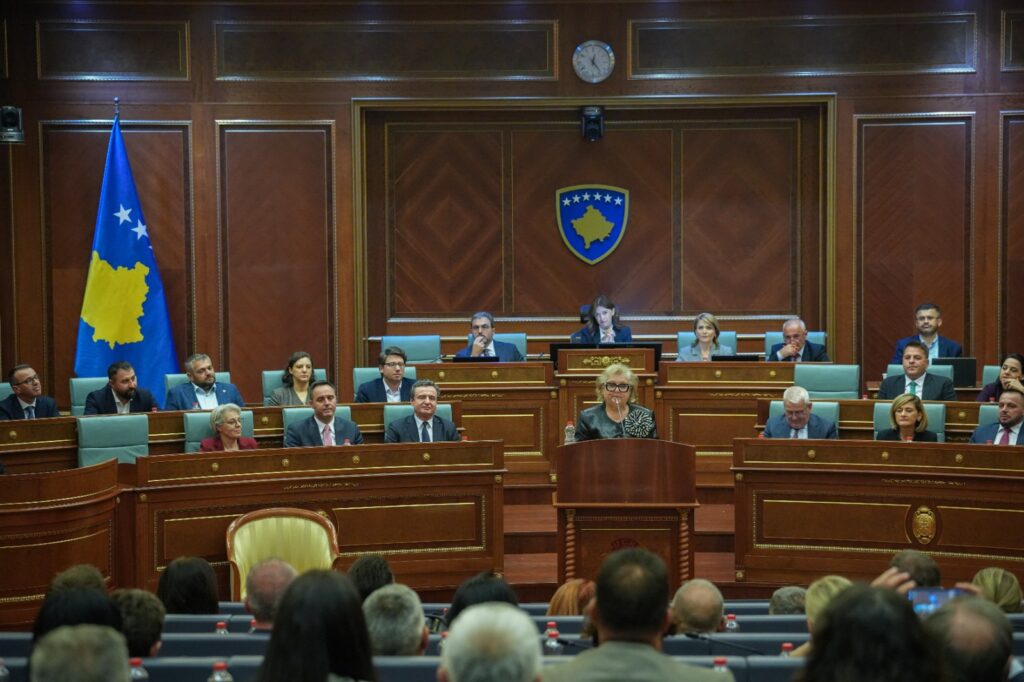
Honorable Speaker of the Assembly, Honorable Members of Parliament, Representatives of institutions and the diplomatic corps, Dear citizens, Today, I assume the office of President of the Republic of Kosovo with great honor and a full sense of responsibility. This mandate does not belong to a single person. It belongs to our citizens, our institutions, and the state for which many generations made sacrifices. I will be the President of all citizens, without political, ethnic, or social distinction. I will work for unity, justice, development, and the strengthening of our institutions. Kosovo must move forward as a democratic, secure state with a clear Euro-Atlantic orientation and strong friendships with our allies. I will uphold the Constitution, the interests of the Republic, and the dignity of our citizens. I believe in Kosovo, I believe in its people, and I believe that together we can build a better future for generations to come. God bless the Republic of Kosovo!
Justina Shiroka Pula elected President of the Republic of Kosovo
The Assembly of the Republic of Kosovo, in its session held on October 6th 2026, elected with 81 votes Ms. Justina Shiroka Pula as President of the Republic of Kosovo. The President of the Republic of Kosovo, Justina Shiroka Pula, subsequently took the oath of office in front of the members of the Assembly of the Republic of Kosovo.
Acting President Haxhiu: Families deserve the truth, and war crimes must be met with justice
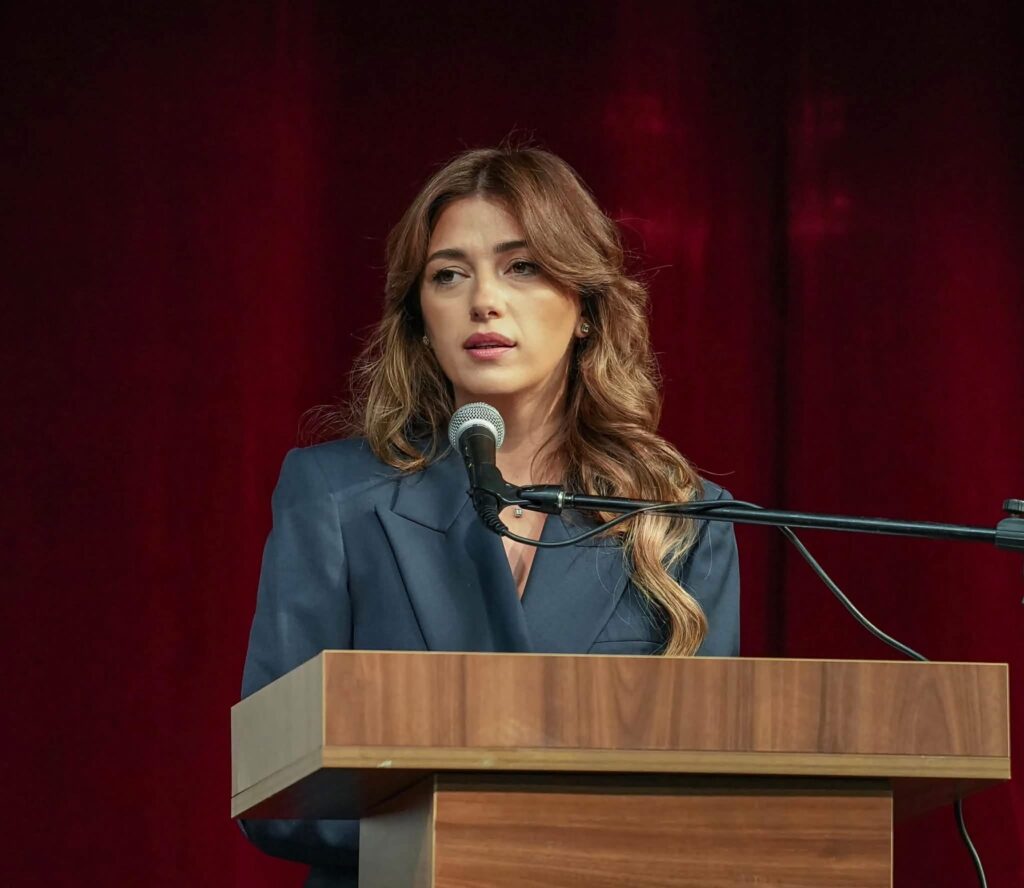
The Acting President of the Republic of Kosovo, Albulena Haxhiu, today attended the Commemorative Meeting for Adem Beqiri, Idriz Rrecaj and Salih Mëziu. In her address, Acting President Haxhiu said that, after 27 years of searching, their families had finally received answers about the fate of their loved ones, who would now be able to rest in peace. “On 19 April 1999, Serbian forces abducted 23 Albanian civilians from Skenderaj and Mitrovica, known as the “Group of Intellectuals”. They were detained in Melajë, in Kalludër i Vogël, mistreated and executed, and their bodies were concealed to cover up the crime”, said Acting President Haxhiu. She further said that excavations in Kalludër and Jabukë, together with DNA analyses, had confirmed the identities of Idriz Rrecaj, Adem Beqiri and Salih Mëziu. “They were found in unmarked graves, but now they will rest under their own names, and their families will have a place where they can remember and honour them. My gratitude goes to everyone who worked with dedication to find and identify them. The search must continue for the other 20 members of the group and for every person who has been forcibly disappeared. Families deserve the truth, and war crimes must be met with justice”, Acting President Haxhiu stressed. Acting President Haxhiu extended her deepest condolences to the Beqiri, Rrecaj and Mëziu families. “May the memory of Adem Beqiri, Idriz Rrecaj and Salih Mëziu, as well as of all those who fell and were killed for the freedom of Kosovo, live on forever!” said Acting President Haxhiu.
Acting President Haxhiu: I urge every woman today not to postpone her check-up until tomorrow
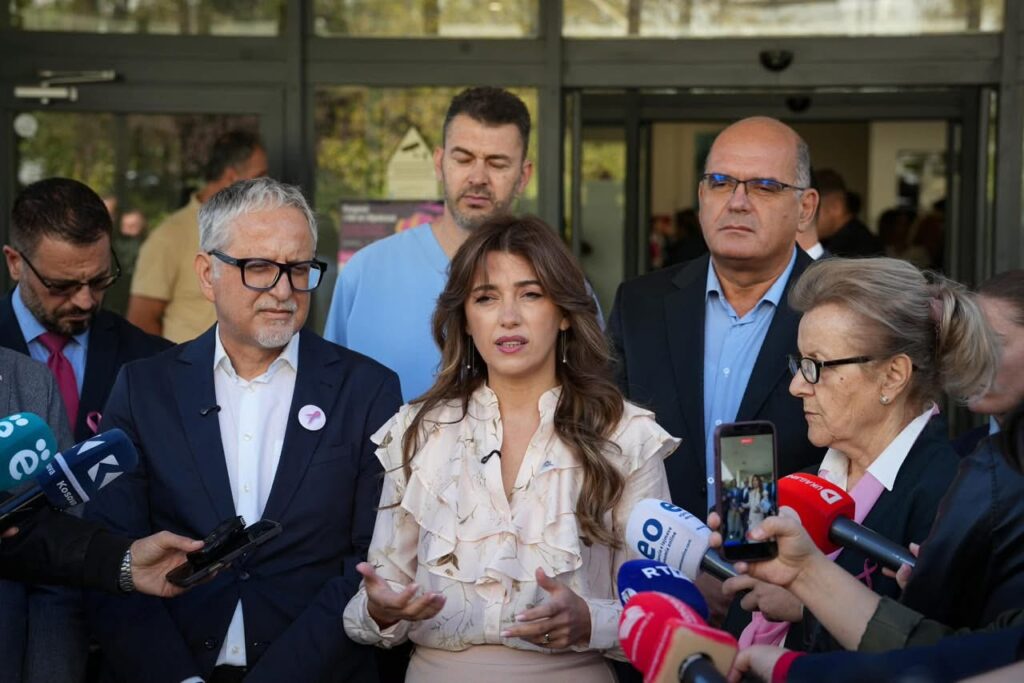
The Acting President of the Republic of Kosovo, Albulena Haxhiu, together with the Minister of Health, Arben Vitia, distributed oncology care packages as part of the activities marking Breast Cancer Awareness Month—”Pink October.” On this occasion, Acting President Haxhiu stated that, within the framework of Pink October—the month dedicated to breast cancer awareness—they visited women battling the disease to show their support, address the challenges and needs these women face, and stand by them during a difficult period of their lives. “On this occasion, today we also distributed packages to meet their needs—a gesture of solidarity as well as institutional support. I would like to take this opportunity to emphasize once again that the health of women and girls in the Republic of Kosovo is of great importance. Therefore, I urge every woman not to postpone her check-up until tomorrow, but to undergo screening immediately. As you know, mammography is free of charge. I also call upon the families of those affected by breast cancer to support them, because, as I mentioned, their health is vital not only to our society but also to the institutions of the Republic of Kosovo,” stated Acting President Haxhiu. She further added that investments have been made in recent years. “Yesterday, at the Assembly of the Republic of Kosovo, we launched the breast cancer awareness campaign—right in the place where laws are enacted and the budget for the Republic of Kosovo’s institutions is allocated,” the Acting President emphasized. She expressed her gratitude to the Oncology Clinic—specifically the director and the entire staff, including doctors, nurses, and all others who stand by patients during the most difficult moments of their lives. “I wish full health and a long life to the women facing this disease, and I say to them: stay strong. Institutions and society stand with them during these very difficult times. Many of them are here today—we have already met some, and we will have the opportunity to meet others after this conference—but their strength and the energy they convey to us are truly extraordinary,” said Acting President Haxhiu.
Acting President Haxhiu: Each generation was handed out this university from the hands of the preceding one, defended it, advanced it, and handed it over to those who followed.
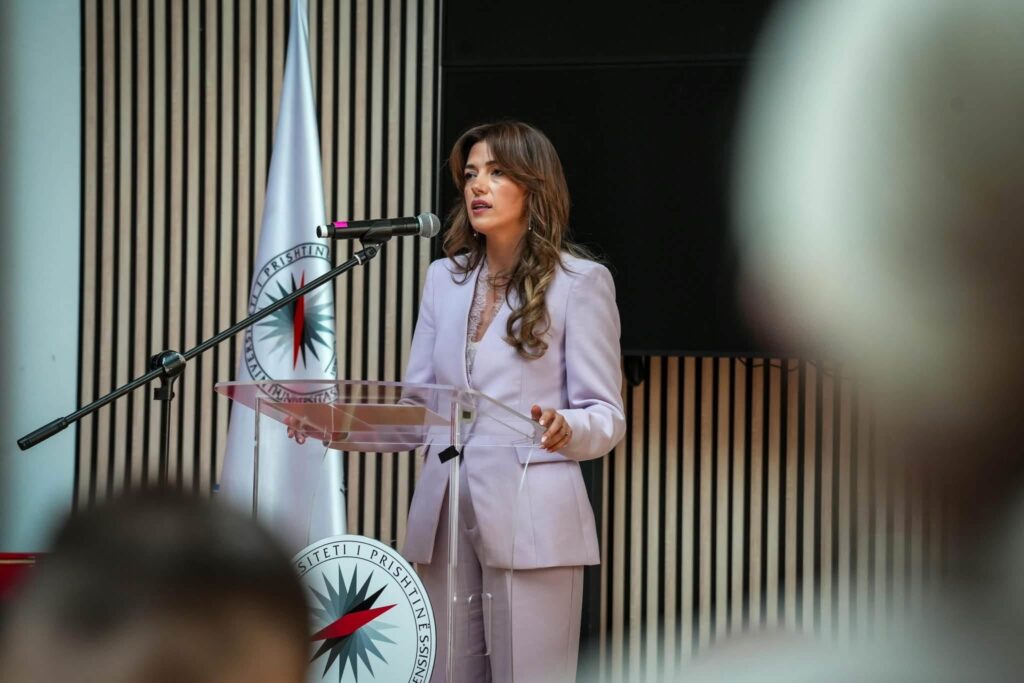
The Acting President of the Republic of Kosovo, Albulena Haxhiu, participated today at the ceremony marking the Student Day at the University of Prishtina. In her address, Acting President Haxhiu stated that there are universities whose history is written primarily in lecture halls, libraries, and laboratories. She stated that the history of the University of Prishtina was also written in the streets, in protests, in homes converted into classrooms, and—above all—by generations of students who refused to remain indifferent to the times in which they lived. “In his lecture ‘The Mission of the University,’ the philosopher Ortega states that the student lies at the heart of the university. More than the disciplines taught there and more than the professors who teach, the university exists for the student. Ortega expected something more from the university than merely the preparation of skilled professionals. He believed that the university should help the student grasp the great idea of their time and be capable of responding to it,” said Acting President Haxhiu. According to her, if there is a university where this idea holds special significance, it is the University of Prishtina; for, as Acting President Haxhiu noted, its history is largely the history of generations that understood what the times demanded of them and took action. “In the late 1960s, the great idea of the era for us was self-determination—the creation of our own institutions. In November 1968, young people and students took to the streets in protest, demanding, among other things, the establishment of the University. Just over a year later, we established our University. In 1981, students from the University of Prishtina launched a widespread movement with the call ‘Kosovo: A Republic.’ The regime responded with violence, imprisonment, and persecution. Yet, the demands of that generation did not fade away; they remained alive in the generations that followed,” emphasized Acting President Haxhiu. She went on to say that a decade later, the challenge was different. “In 1991, when the Serbian regime expelled Albanian students and professors from university buildings, the imperative of the time was to ensure the institution did not cease to exist. Families opened their doors, rooms were transformed into classrooms, and private edifices became offices. An entire university continued to function outside its own buildings. For six consecutive years, the academic year began in those spaces every October 1st. Then came October 1st 1997. After years of keeping the University alive outside its own facilities, a new generation of students decided the time had come for the resistance to move into the open. The immediate demand was a return to university premises, but its significance was far broader: it was a call for freedom, dignity, and the right to live and act in one’s own land without subjugation or humiliation,” stated Acting President Haxhiu. She further added that students answered the call of the Independent Student Union and, together with their professors, gathered in the Velania neighborhood. “From there, thousands of students, professors, and citizens set out toward the center of Prishtina and the university campus, demanding a return to their premises. Yet, that march was far more than a plea to open the university doors; it was an act of open defiance against a regime that had long sought to keep Albanians excluded from institutions, voiceless, and stripped of their rights. Confronted by dense cordons of Serbian police, the protest was violently suppressed. Protesters were beaten and arrested in full view of journalists, diplomats, and the international community. Yet, something else occurred that day—something the regime had not anticipated: the fear of the Serbian police, which had long seemed invincible, began to shatter on the streets of Prishtina,” emphasized Acting President Haxhiu. Acting President Haxhiu noted that the world gained a clearer view of the events unfolding in Kosovo, while a society long forced to live under oppression demonstrated its readiness to openly resist it. “After October 1st, further protests followed. Kosovo was entering a new phase of its resistance—now an armed one—which would continue until liberation. The call for the October 1st protest came from the students, while professors stood alongside and in support of them. Rector Ejup Statovci led the way. He was aware of the risks he was taking and the potential consequences of confronting the regime, yet he did not waver. He demonstrated through his actions that the student lies at the heart of the university,” stated Acting President Haxhiu. She further noted that today we are inside the University, within the very spaces for which the students of that time took to the streets. “And when we look at the history of the University of Prishtina as a whole, we realize something very important: each generation was handedout this university from the hands of the preceding one, defended it, advanced it, and handed it over to those who followed. Many of the students from that era teach here today. Others work in the institutions of the Republic of Kosovo, as well as in science, the economy, culture, and public life. Yet, this history does not end with them,” she stated. According to her, every generation faces its own great challenge; she added that the generations before them had the duty to strive for the university and the republic, to defend this university, and to fight for freedom. Addressing the students, Acting President Haxhiu said that a different task lies before them: to build, upon this foundation of freedom, a state that serves its citizens well and a Kosovo that takes its place among other free nations in Europe and the world. “This is another challenge—perhaps less dramatic than that faced by the generations who took to the streets, yet no less important. For this, the country needs well-prepared doctors, engineers, teachers, lawyers, economists, artists, and researchers. But it also needs people who understand the times they live in—people who do not settle for what they are simply told, who ask questions, who question the status quo, and who take responsibility and
Acting President Haxhiu received the President of the European Commission, Ursula von der Leyen
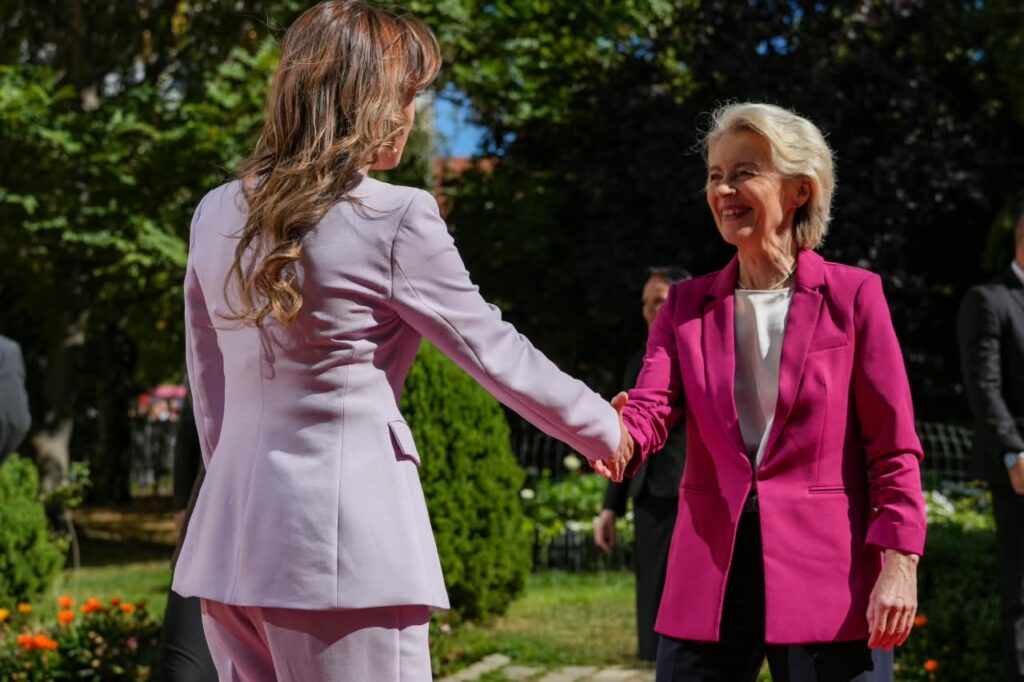
The Acting President of the Republic of Kosovo, Albulena Haxhiu, received today the President of the European Commission, Ursula von der Leyen. The meeting focused on political developments in the country and the need to elect a President within the remaining timeframe. Acting President Haxhiu expressed her concern—and that of the citizens of Kosovo—regarding the unjust decision of the Specialist Chambers in The Hague. “I emphasized that Kosovo’s institutions will continue to support the defense teams of Hashim Thaçi, Kadri Veseli, Rexhep Selimi, and Jakup Krasniqi during the appeal process. In this regard, we will work on formulating a joint state strategy, coordinating actions with defense teams and experts, to ensure our support serves them as effectively as possible throughout this process,” said Acting President Haxhiu. Acting President Haxhiu further highlighted the need for the European Union to review Kosovo’s membership application—submitted on December 14, 2022—and called for President von der Leyen’s direct engagement in this process. “I also discussed the implementation of the Growth Plan and the reforms that lie ahead. Kosovo has submitted the Reform Agenda, ratified the relevant agreements, and begun benefiting from pre-financing,” said Acting President Haxhiu.
At the Assembly of the Republic of Kosovo, we launched the “Pink October” campaign, dedicated to breast cancer awareness.
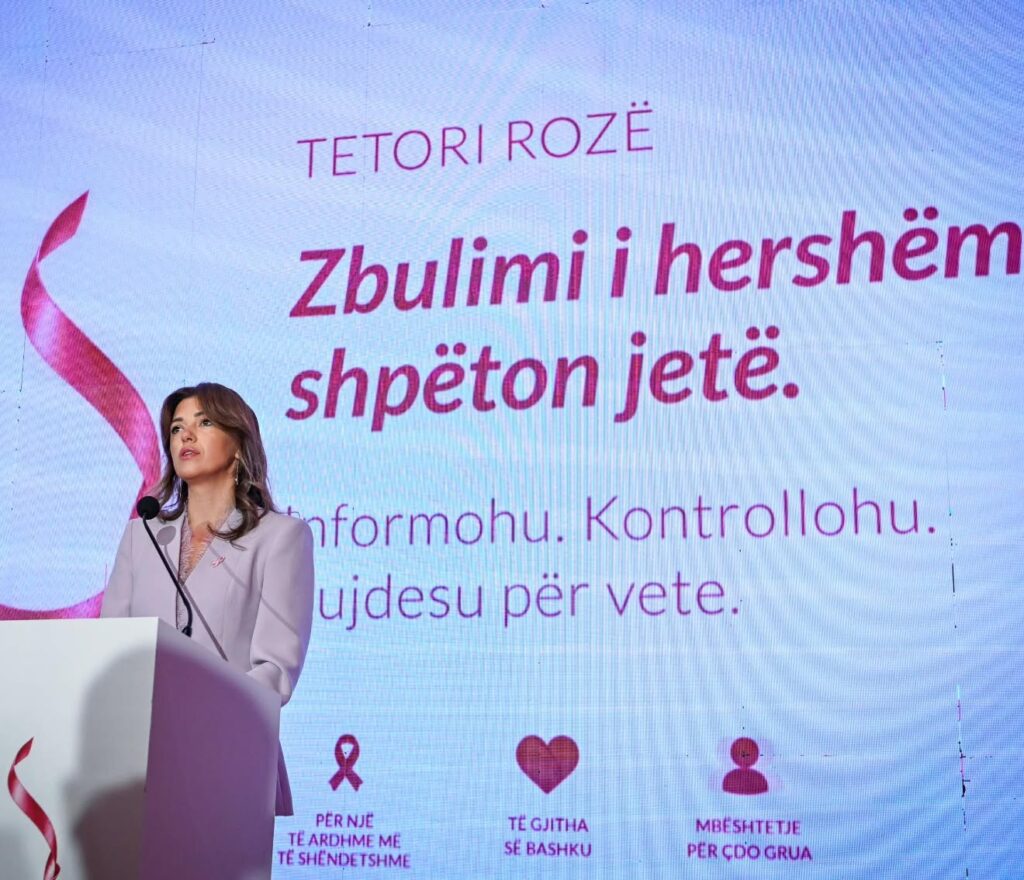
In my address, I emphasized that in this institution—where laws are passed and public funds are allocated—we have a responsibility to ensure the necessary resources for women’s healthcare. A medical check-up should not be postponed due to distance, costs, or the inability to step away from family obligations. Many women are accustomed to putting their own needs last. Each of us can help lighten their burden, allowing them time to attend to their health without feeling guilty about the chores left undone that day. When October ends and the pink ribbons are taken down, someone will still be waiting for a diagnosis, while another will be starting their first day of treatment. Our care and commitment must continue for as long as they are needed.
Acting President Haxhiu: Afrim Maliqi remains in our memory as a poet, critic, and journalist, but also as an activist and a martyr for Kosovo’s freedom
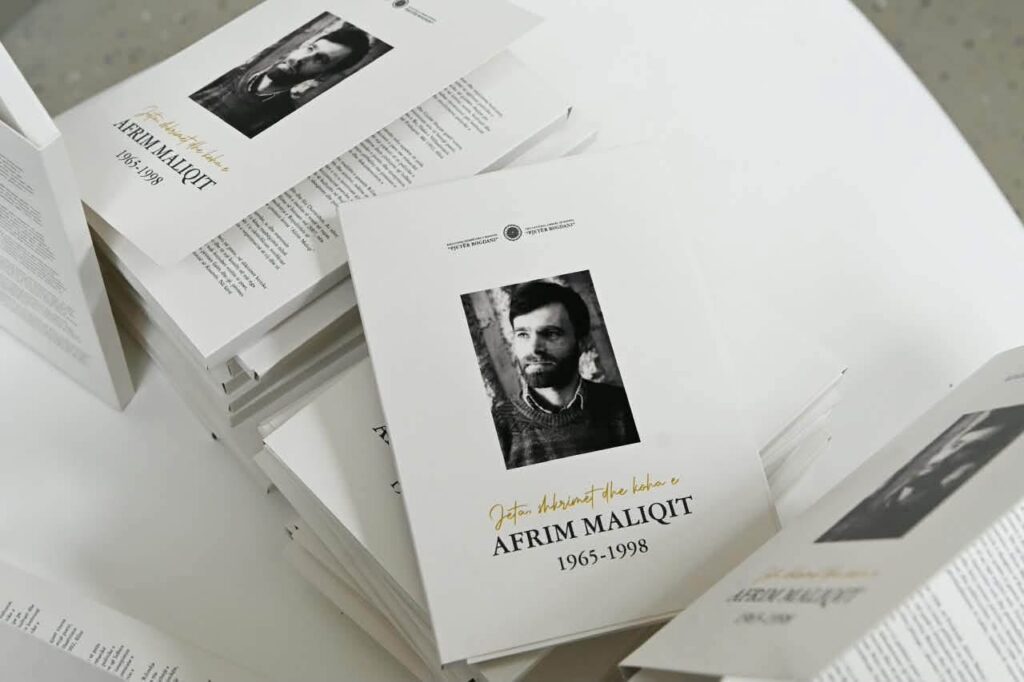
The Acting President of the Republic of Kosovo, Albulena Haxhiu, attended the opening of an exhibition today dedicated to the poet, publicist, journalist, and activist Afrim Maliqi. In her address to the attendees, Acting President Haxhiu stated that Afrim Maliqi remains in our memory as a poet, critic, and journalist, but also as an activist and a martyr for Kosovo’s freedom. “In this exhibition, we encounter him in a different way. We meet him through manuscripts where his corrections are still visible, and through letters he wrote to his loved ones. We see him through photographs from various stages of his life, drawings others made of him, and a family postcard. These are documents that were not created for public display, yet today they bring us closer to Afrim. And, through him, they also bring us closer to the era in which he lived and wrote,” said Acting President Haxhiu. She further noted that we usually remember the 1990s through major events—repression, exclusion, violence, and war—but that documents like these also reveal what daily life was like during that era: how a newspaper operated under pressure, how a line of text was edited, or how a letter was written to one’s family. “These documents also trace Afrim’s path. He came to journalism from a background in literature. At the Bujku newsroom, he began by writing about culture and education. However, the unfolding years demanded more of him. He started writing about the discrimination Albanians faced in their workplaces, as well as the escalating repression and violence. Every such article carried its own risks, and Afrim was well aware of this. To the Serbian authorities, a voice like his posed a significant obstacle,” stated Acting President Haxhiu. Acting President Haxhiu added that, alongside his journalism, he continued to write poetry, essays, and literary criticism. “For Afrim, literature and journalism were not two separate worlds. They stemmed from the same attentiveness to the country, the times, and its people. Over the years, this commitment also took the form of direct action for Kosovo’s freedom. On December 2, 1998, Afrim Maliqi was killed in Prishtina in an ambush by Serbian forces, alongside his comrades from Llap: Hyzri Talla and Ilir Durmishi. All three fell as martyrs. Afrim was only 33 years old. His friends remember him as a quiet, kind young man, yet one with very sharp convictions. Today, we honor all three with our utmost respect,” added Acting President Haxhiu. She further noted that Afrim Maliqi’s memory and legacy have been honored over the years. “On November 28, 2012, President Atifete Jahjaga awarded him the Order of Freedom. In Podujevë, the ‘Afrim Maliqi’ literary award bears his name. This exhibition adds something else to this remembrance: the trace of his own hand,” she emphasized. Regarding this, the Acting President Haxhiu expressed gratitude to the National Library of Kosovo and its staff for handling these documents with the care that such a legacy demands. “I extend special thanks to Sevdije Maliqi, Afrim’s wife, who—together with Munish Hyseni—compiled his writings into two volumes in 2007. Owing to that work, today we have more of Afrim’s writing to read. Thank you from the bottom of my heart,” said Acting President Haxhiu. She further noted that a portion of what Afrim left behind has not yet been collected. “It remains preserved in notebooks and on loose sheets of paper, in the homes of his friends and relatives. Therefore, I support the idea of consolidating everything into an ‘Afrim Maliqi’ Personal Collection here at the National Library of Kosovo. Preserving this legacy is the responsibility of our institutions. It is a responsibility toward Afrim Maliqi, toward his generation, and toward those who will come after us,” she emphasized. Acting President Haxhiu remarked that Afrim wrote during years when the space for the Albanian word was shrinking day by day. “Today, his manuscripts have their place in the National Library. But his work also belongs to the reader. The best way to remember him is to read him,” stated Acting President Haxhiu.
Acting President Haxhiu: public funds acquire meaning when they are transformed into beneficial work, tangible results, and numerous opportunities for the citizens of the Republic of Kosovo
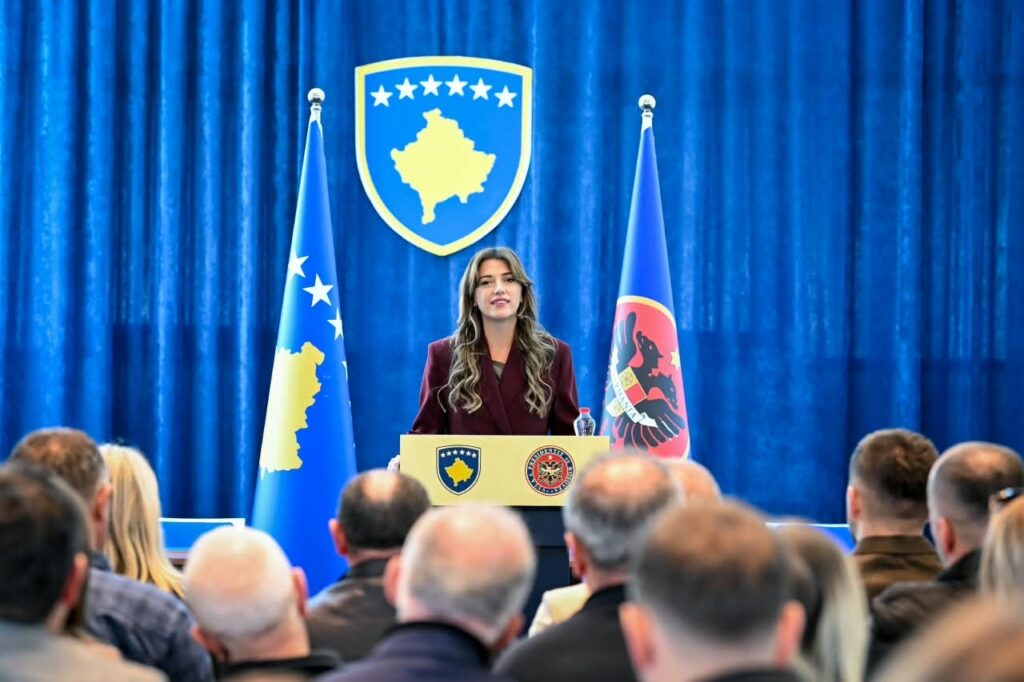
The Acting President of the Republic of Kosovo, Albulena Haxhiu, welcomed the beneficiaries of the Office of the President’s first public call for 2026 to the Presidency today. In her remarks, Acting President Haxhiu stated that 74 beneficiaries were selected through the Office of the President’s first public call for 2026, with a total of 150,000 euros allocated to fund their projects. “The selected projects cover areas of particular importance—both to me as Acting President and to our society and the institutions of the Republic of Kosovo—specifically those related to the protection of human rights and freedoms, gender issues and socio-economic integration, sports, art, culture, healthcare, state representation, and matters of interest to communities in the Republic of Kosovo,” emphasized Acting President Haxhiu. According to her, these 150,000 euros acquire true meaning and value through the work that you will carry out. She further stated that each of the selected projects stemmed from a specific need, idea, or concrete experience; it is now your responsibility to transform these ideas into tangible work, visible results, and opportunities that serve the citizens of the Republic of Kosovo. “Ultimately, this is precisely why institutions support such initiatives. You are well aware that in the Republic of Kosovo, government ministries—the executive branch—as well as the Presidency and other institutions, support projects led by civil society organizations,” she affirmed. Acting President Haxhiu noted that the signing of these contracts marks the beginning of your responsibility to implement the projects as approved and to utilize public funds both responsibly and transparently. “Public funds acquire true meaning when they are transformed into beneficial work, tangible results, and abundant opportunities for the citizens of the Republic of Kosovo. Your work within the community—supporting groups in need, as well as initiatives in culture, education, sports, and human rights—complements the work of institutions and strengthens the bonds between them and among the citizens themselves,” added Acting President Haxhiu. She stated that the Office of the President will continue to support initiatives that serve the public interest and create greater opportunities for participation, development, and inclusion within our society. “I thank each and every one of you for your work, dedication, and commitment; I wish you great success in carrying out your projects and hope that the results of your efforts will be felt across all communities of the Republic of Kosovo—without distinction—and by all citizens of the Republic of Kosovo,” emphasized Acting President Haxhiu. In her concluding remarks, Acting President Haxhiu noted that there were organizations and individuals whom they were unable to support this time, but added that they would launch another call for applications and encouraged everyone to apply.
Acting President Haxhiu: today I joined “Race for the Cure Kosova,” hoping the race’s message reaches women who were not among us
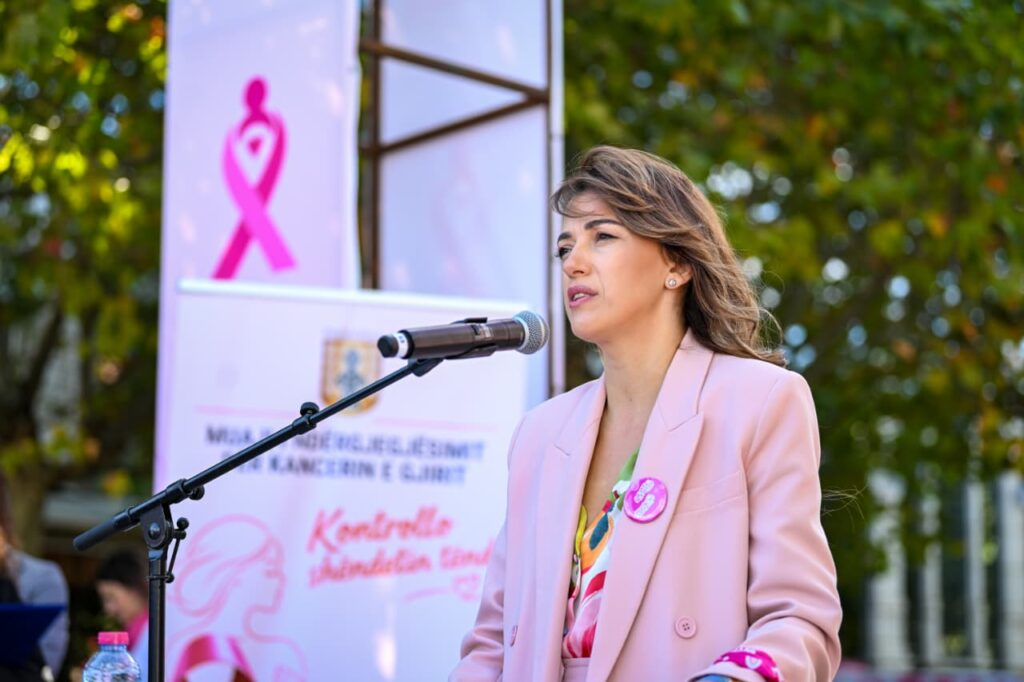
The Acting President of the Republic of Kosovo, Albulena Haxhiu, joined “Race for the Cure Kosova” today. “Today I joined ‘Race for the Cure Kosova,’ hoping that the message of this race reaches the women who were not among us—those who have put off their check-ups while caring for others, those who fear the results, or those who still struggle to access the healthcare they need,” said Acting President Haxhiu. Acting President Haxhiu further stated that when discussing breast cancer, time takes on a different significance; we have a responsibility to ensure women do not lose that time waiting or facing obstacles that we can—and must—help alleviate. “That is why today I urged women to get checked on time and to remind their daughters, mothers, sisters, friends, and colleagues to do the same; because in this race, it does not matter who finishes first. What matters is that no woman arrives too late,” emphasized Acting President Haxhiu.