
Dear Prime Minister Kurti
Dear Charge D’affair Anu Pratipati
Excellencies, distinguished guests, ladies and gentlemen,
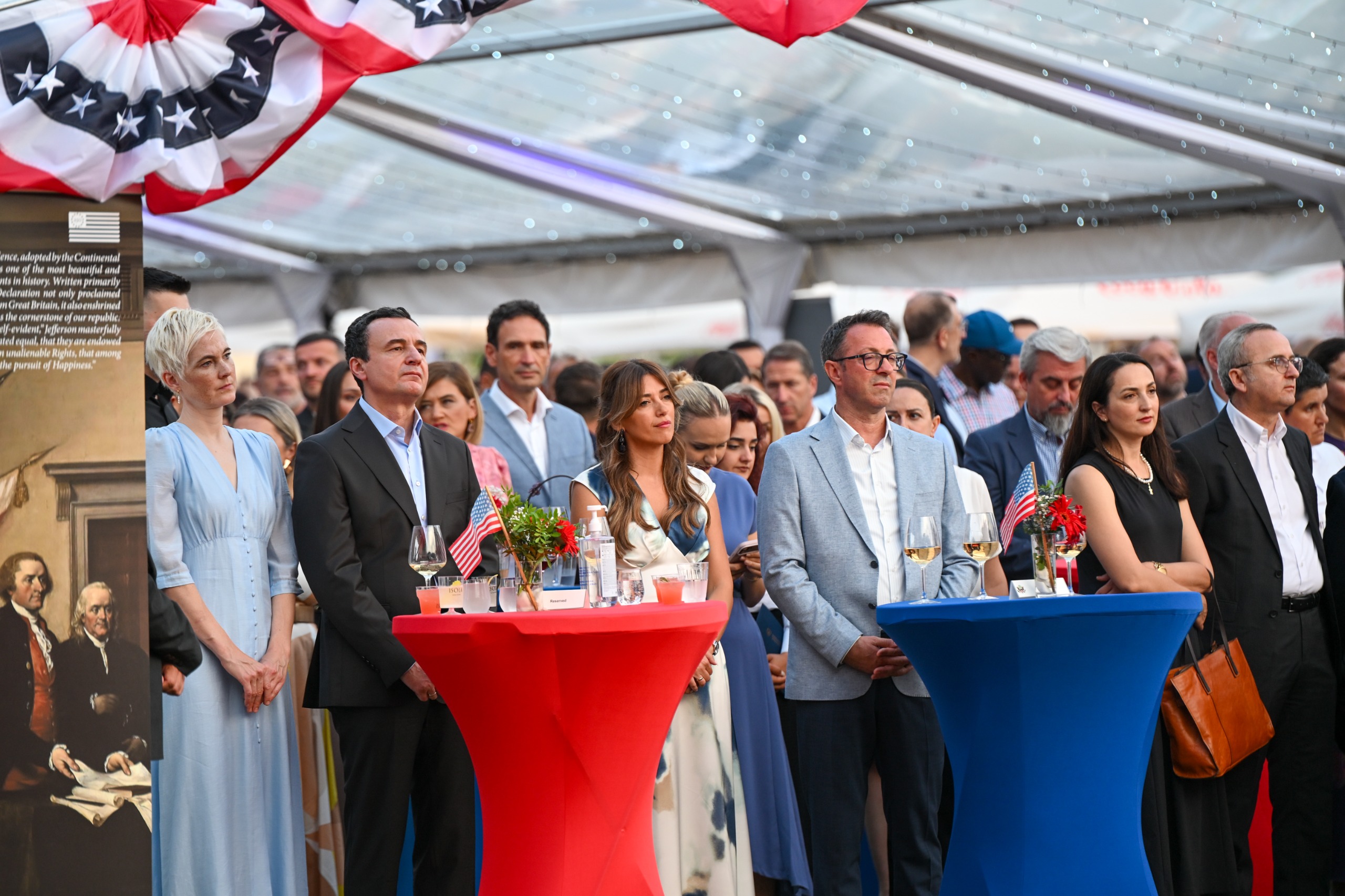
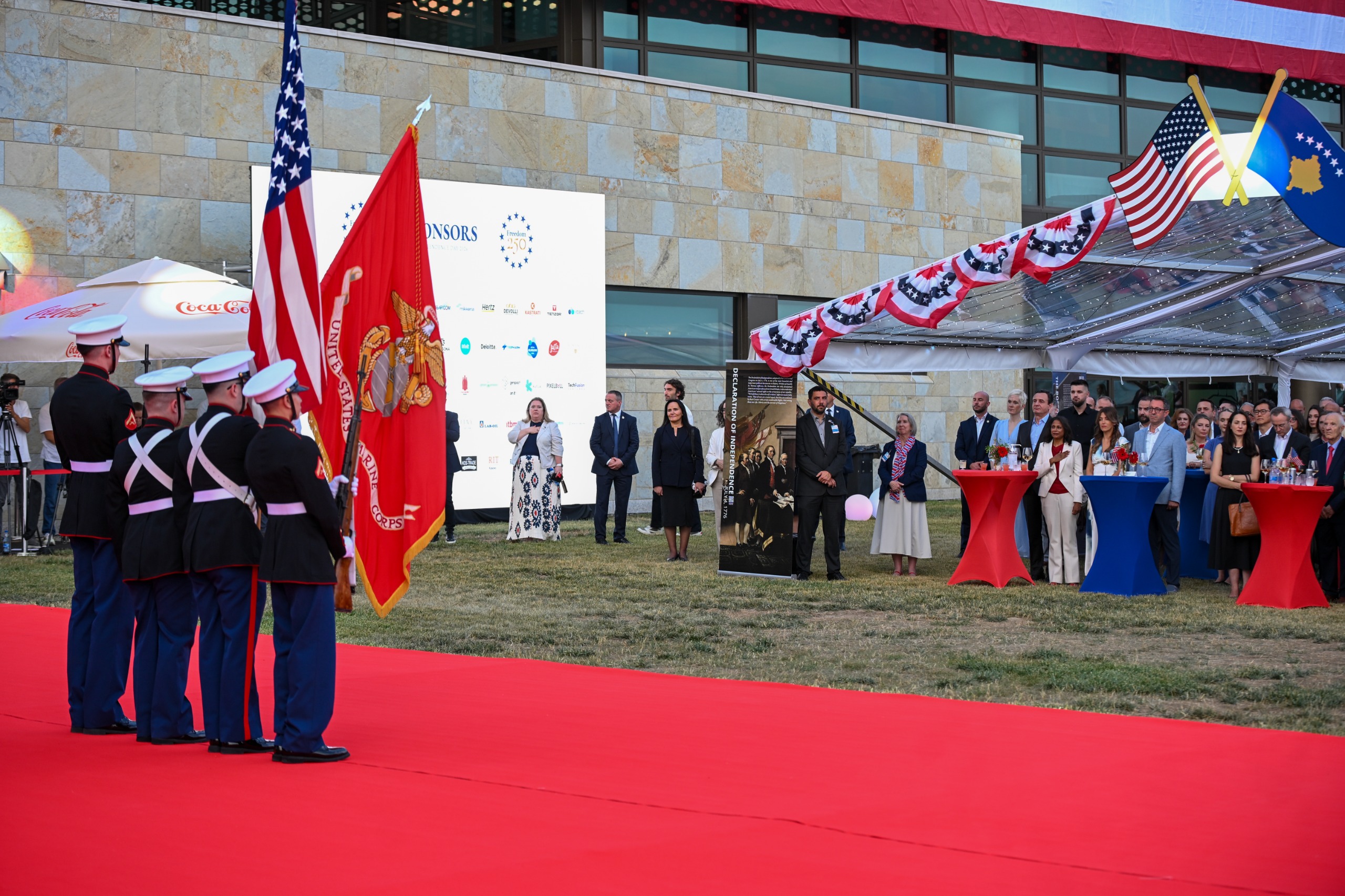
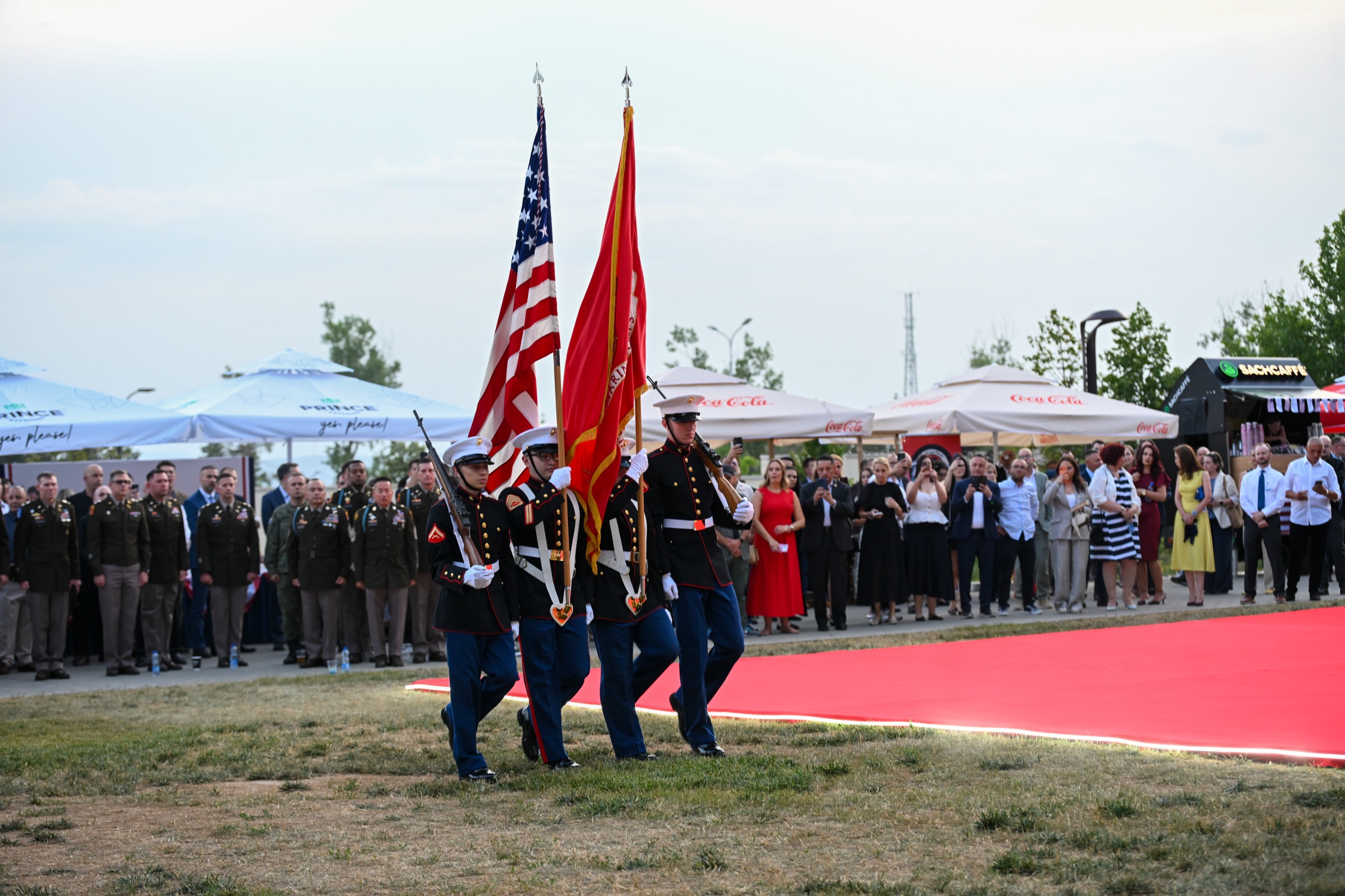
Tonight, we celebrate 250 years of American independence.
A number like that can easily become ceremony. In America’s case, it returns us to a revolution that began with a very concrete political question: who has the right to govern, and where does that right come from?
The answer given in 1776 was radical for its time and remains demanding today. Power does not stand above the people. It receives its legitimacy from them, and it must be restrained by law, representation and equal citizenship.
Today, these words belong to many democratic struggles. But they entered modern history through a revolution that challenged an empire.
Albanians learned early that American principles mattered most when a nation’s future was being decided without its people in the room. At the Paris Peace Conference, after the First World War, Albania’s independence was exposed to the decisions of others. President Wilson gave the Albanian cause political force when he said, simply and decisively, “Albania ought to be independent.”
By then, Albanian public life in America had learned how to organize, publish and argue its case before the world.
In Boston, Fan Noli gave this history unusual force. An Orthodox priest who became one of the defining Albanian figures of the twentieth century, he was educated at Harvard, translated Shakespeare and Cervantes, organized Albanian public life in America, and later served as Prime Minister of Albania. Noli understood that language could become an institution before a state was strong enough to protect it. He helped turn an immigrant community into a national force.
Faik Konica, a writer and diplomat whose strength was precision, gave this effort another kind of force. He had already used European journals to present the Albanian cause to the world as a political and cultural reality. In America, he worked through Vatra, the organization that gathered Albanians across the United States, and through Dielli, the newspaper that gave their cause a public voice. Later, as Albania’s representative in Washington, he carried that voice into official diplomacy. Through their work, America gave some of the strongest Albanian political minds of the twentieth century a public arena.
Hasan Prishtina brings Kosova into this history. Born in Vushtrri, educated in Thessaloniki and Istanbul, and elected to the Ottoman parliament, he knew how easily small nations could be discussed by others and decided over by others. In the aftermath of the First World War, he gave Kosova’s voice its place within the broader Albanian demand for self-determination.
Kosova was not yet a state, but the claim that would later define its modern history was already there. A people must have a say in its own future.
Eight decades later, that claim returned under fire.
When autonomy had been revoked, public life dismantled, and civilians forced from their homes, the right of a people to decide its future could no longer remain a matter of words. Under President Bill Clinton, with Secretary Madeleine Albright at the centre of American diplomacy, The United States stood (stud) at the forefront of NATO’s intervention, giving political and diplomatic force to the effort that stopped the violence and opened the path to Kosova’s freedom. For the people of Kosova, American leadership became part of our own national story as it changed the course of our history.
That freedom became the Republic of Kosova. It took shape in institutions, elections, courts, security forces and a constitutional order that belongs to all its citizens.
Two hundred and fifty years after American independence, we honour the United States first for the idea with which it began: that power must answer to the people.
For Albanians, and for the Republic of Kosova today, that idea became real through history. It became real when American leadership helped turn the right to freedom from a claim into a future.
Tonight, our congratulations come with the gratitude of a sovereign Republic. We remember that American support helped make our freedom possible, and we know that the best way to honour that support is to build a state worthy of it.
Across generations, the friendship between Kosova and the United States has grown through citizens, institutions and the difficult work of defending freedom in public life.
Whitman wrote that the United States are “the greatest poem.” Albanians found their line in that poem early, in newspapers, churches, associations, letters, public meetings and in the long work of making a small nation visible to a powerful country.
We honour that friendship with gratitude, with memory, and with the responsibility to build a state worthy of the freedom we gained.
Happy 250th Independence Day to the United States of America.
This post is also available in: SQ
