
Presidenti Thaçi: Kosovo remains committed to unhindered mobility within the region
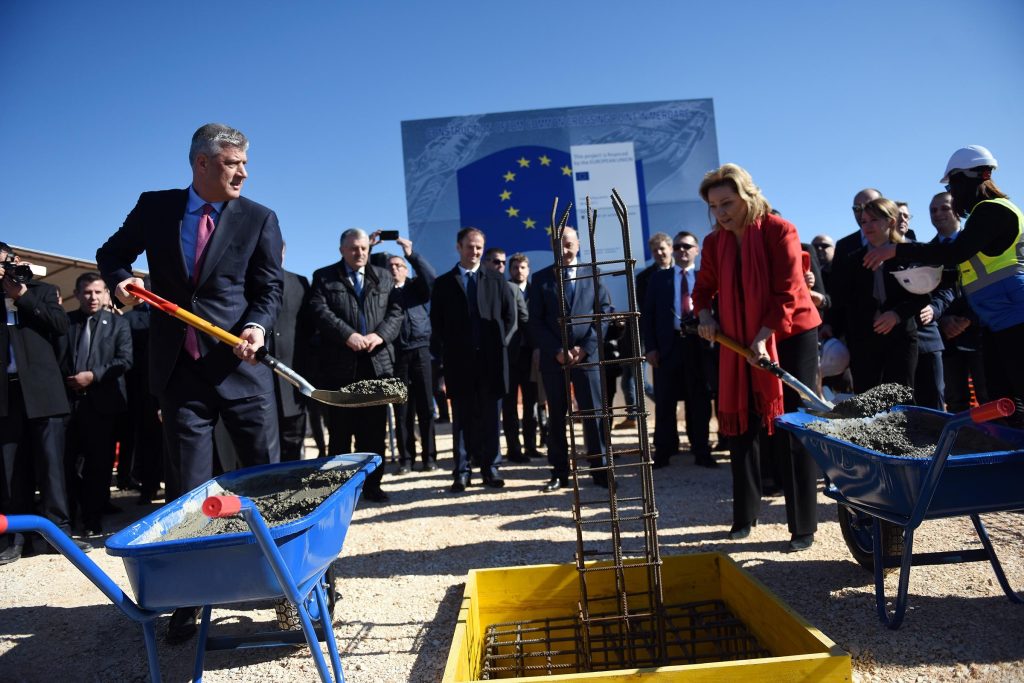
Merdare, 16 February 2017 – The President of Kosovo, Hashim Thaçi, together with the Prime Minister Mustafa, Minister Tahiri and the Head of the EU Office in Kosovo, Nataliya Apostolova, today laid the cornerstone of a new border crossing point between Kosovo and Serbia in Merdare.
President Trump congratulates President Thaçi on Independence Day
Prishtina, 16 February 2017 – The President of the United States, Donald Trump, congratulated the President of the Republic of Kosovo, Hashim Thaçi, on country’s Independence Day.
President Thaçi hosted a delegation of the Kosovo Ashkali on the 14th anniversary of their Flag Day
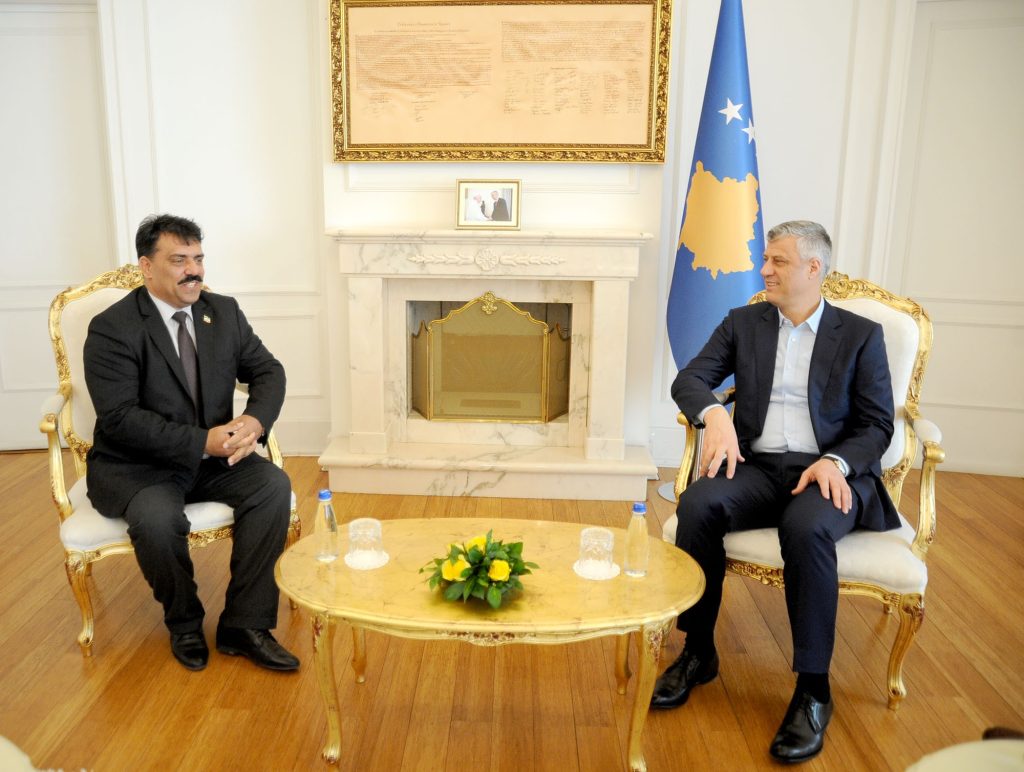
Prishtina, 15 February 2017 – President of the Republic of Kosovo, Hashim Thaçi, today hosted a delegation of Kosovo Ashkali, headed by MP Danush Ademi.
President Thaçi hosted Chief Diplomat of Norway, discussed about preserving the peace and stability in the region
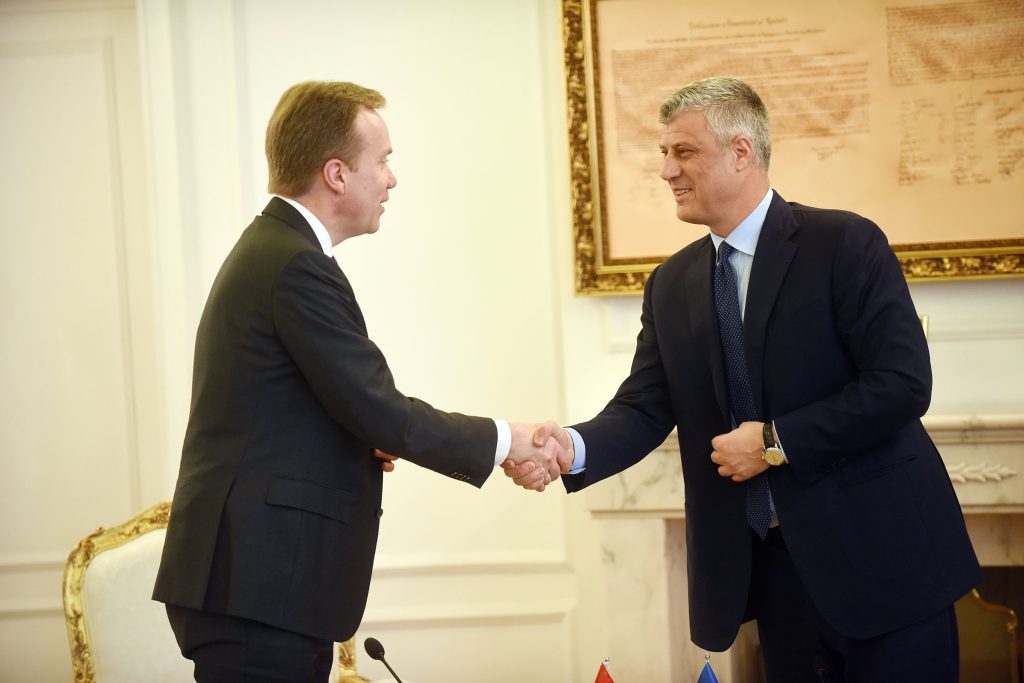
Prishtina, 14 February 2017 – President of the Republic of Kosovo, Hashim Thaçi, hosted today the Minister of Foreign Affairs of Norway, Borge Brende, whereby discussed on deepening the cooperation between Kosovo and Norway.
President Thaçi: Great Britain is a strategic partner of Kosovo
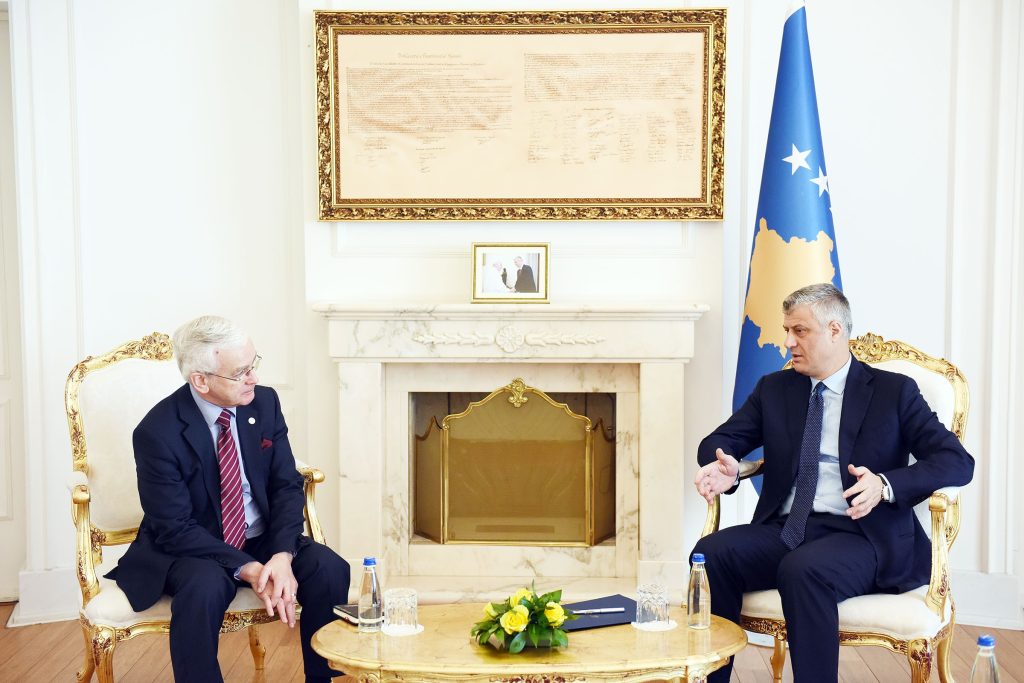
Prishtina, 14 February 2017 – President of the Republic of Kosovo, Hashim Thaçi, hosted today in a meeting a delegation of the British Parliament headed by MP Martin Vickers.
Speech of President Thaçi at the Regional Conference on the Safety of Journalists
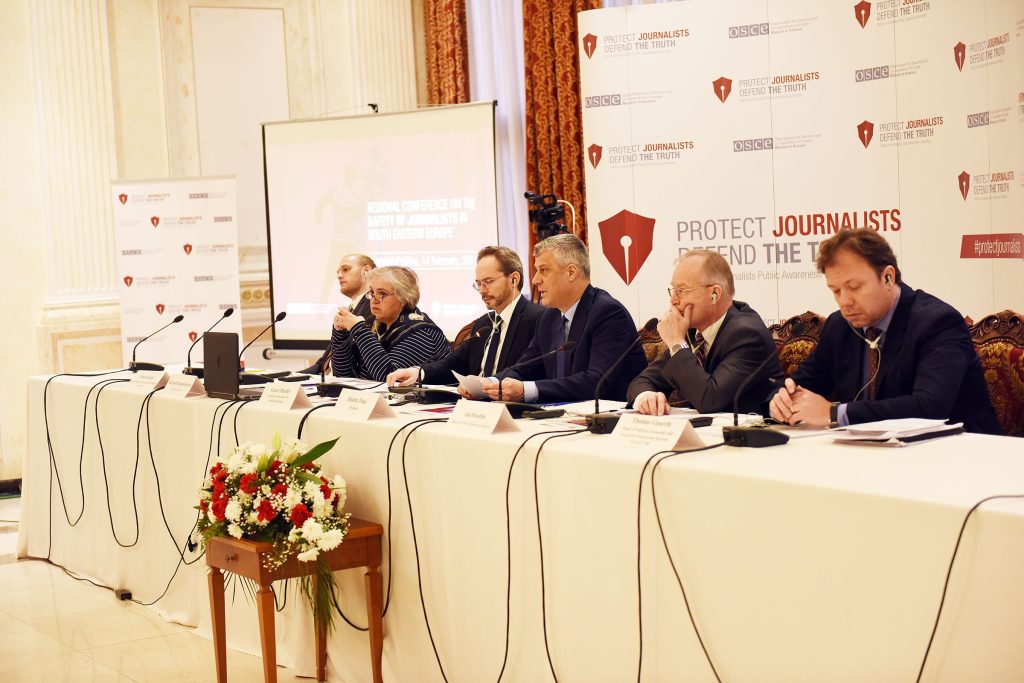
Honourable ambassador Brathu, Honourable ambassador Apostolova, Honourable ambassador Fandler, Honourable ambassador Papadopulo, Honoured representatives of media and civil society, Ladies and gentleman, Allow me first of all to wish you welcome in Kosovo and to congratulate OSCE mission in Kosovo for organizing this conference, which is important for journalism in Kosovo and in the region. I am sure that the discussions that will take place in here, as well as the campaigns that will be launched, will contribute even more in strengthening the profession of journalism in our region. Ladies and gentleman, Journalism in Kosovo is probably not the oldest in terms of tradition, but is among the bravest in the region. Journalists in Kosovo were among the first ones that were engaged to pluralism, democracy, equality, human rights and freedom of expression. Whereas, since post-war period in Kosovo, great efforts are made to install a journalism that is professional, reliable and that will always be in service to the public. We had two important circumstances that have resulted in brave journalism. First, the free and appropriate journalism has begun in Kosovo during the time of repression and apartheid. The journalists were precisely among the first ones who have faced the repression and efforts to stop the voice that demanded justice and equality. In these circumstances, it is enshrined the courage to confront the authority, whatever that authority might be. But were also cultivated the values, such as fairness, professionalism, zeal to investigate and to seek accurate information, and the courage to publish any information. This carried its own price. Journalists have always been the target of those who tried to install their policies through violence and repression. They were attacked, violated, kidnapped and killed. There are journalists whose fate is not known since the war. Yesterday, as the President of Republic of Kosovo, I have taken an initiative to establish a Commission for Truth and Reconciliation in Kosovo. In the light of seeking the truth on what happened in Kosovo during the war, this commission will also work to enlighten the fate of every journalist who has suffered at that time. Secondly, after the war, we had great international support in building a professional journalism, of the highest standards. It was the OSCE mission which has led the efforts to build a professional journalism in Kosovo. Journalists and media in general were trained, either in the context of studying the journalism at the University of Prishtina, or through the trainings of existing journalists. It is supported the establishment of organizations that protects the journalists, journalists' rights, but also organizations that protect the profession of journalist. Support was provided in drafting legislation that protects the work of journalists and the journalists themselves. Today, journalists in Kosovo are protected by law. In Kosovo, journalists cannot be punished for the journalist work, but also the journalists are not obliged to reveal their sources at the court. This is done in order to protect the credibility, integrity and professionalism of journalism as a profession. But this does not mean that the work of journalists is easy. In Kosovo as well, journalists and journalism in general faces pressures related to their work. Articles on corruption, extremism, radicalism, equal rights for every community, whether ethnic communities or other communities such as LGBTI, the most vulnerable groups such as women and children, places the journalists under direct threat and risk. In Kosovo there are mechanisms that protect the journalists in this field as well. Kosovo Police is committed to protect journalists, when the need arises. This is done either by providing escort and security for them, or by investigating the source of threat and sanctioning those who threaten the journalists. This has resulted in a courageous, dynamic and powerful journalism in Kosovo. Ladies and gentleman, Allow me to say a few more words about the challenges of journalism today. Even in here, Kosovo is in the same line with the world, not only with the achievements but also with the present challenges. The main challenge for journalists and journalism as a profession does not come from outside the profession, but it comes within the profession. Today, thanks to the opportunities that the Internet provides, reporting and distribution of news has become easier than ever before. This has caused other people to exercise the profession of journalism, whose goal is not the journalism, but they see this as a mean to realize their other ambitions. This erodes from inside the integrity, professionalism and credibility of the profession of journalist. Currently it is not a challenge, at least in Kosovo, freedom of expression of journalists. The challenge is the abuse and misuse of freedom of expression that is done by those whose profession is not journalism. Even in here, the journalists themselves have the main role in protecting the profession of journalism. Organized in institutions that are established by representatives of media that monitor the observance of professional standards, the journalists themselves are the ones who protect their profession from abuse. It is up to the rest to support the journalists in cultivating an environment that values and appraises, but also preserves and protects the professional journalism. I believe that in this conference you will find the answers on today's challenges of journalism, not only the challenges encountered here in Kosovo, but in the world as well. Thank you!
President Thaçi: Journalists must protect their profession against abuses of the freedom of expression
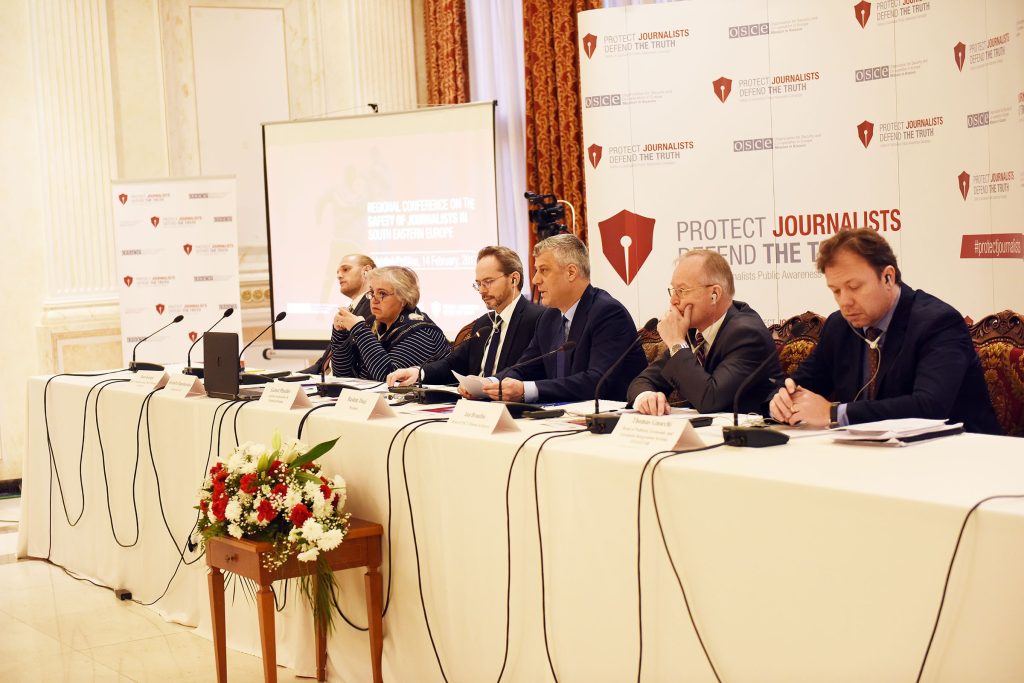
Prishtina, February 14, 2017 – The President of Kosovo, Hashim Thaçi, today participated in the regional conference on safety of journalists, attended by journalists' associations of the countries of the region, together with directors and chief editors of major media in the Western Balkans.
President Thaçi's address at the consultative meeting on the establishment of the Truth and Reconciliation Commission
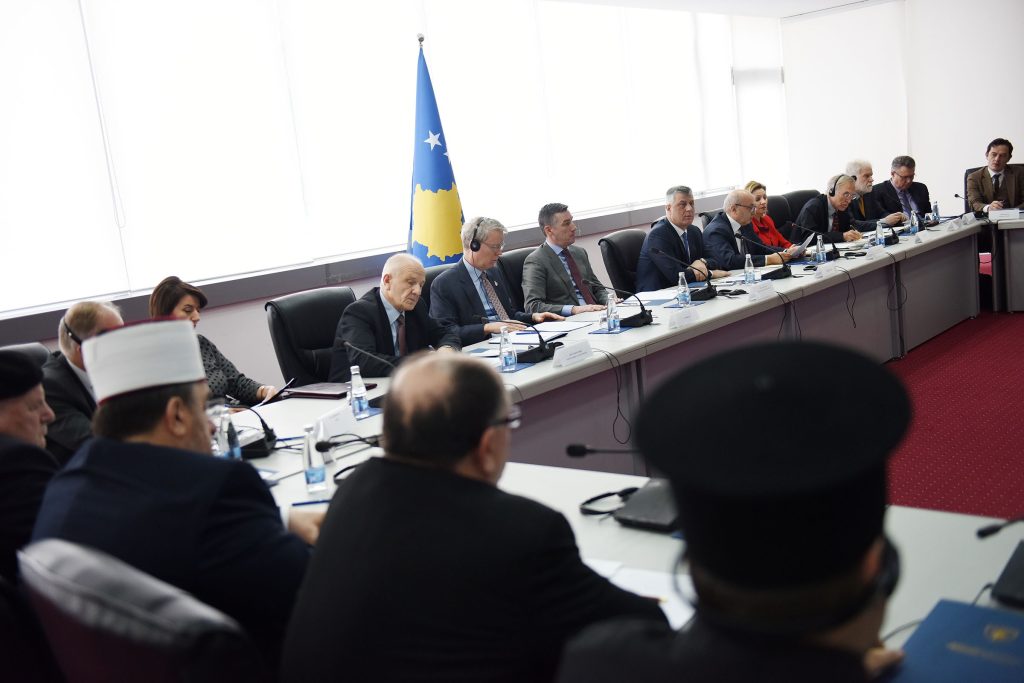
Honourable Speaker of the Assembly, Mr. Kadri Veseli, Honourable Prime Minister of Kosovo, Mr. Isa Mustafa, Honourable Ambassador Delawie, Honourable Ambassador Apostolova, Honourable Ambassador Brathu, Honourable ministers, ambassadors, members of parliament, friends and supporters of Kosovo Professionals from civil society, media, academia, Ladies and gentleman, This year marks the 18 years, i.e. almost 2 decades, since the end of war in Kosovo, nine years from independence. It is true that we have a long way since then. Kosovo is built. Our destroyed cities, villages, and homes are rebuilt. We built democratic and rule of law institutions. We established the police forces, which are today considered as the best and most just in the Balkans. In fact, at first glance, today in Kosovo one may not see any sign that only two decades ago there was war here. However, the horrors of war and the grief for the life lost, our beloved ones killed or missing, are not vanished. Many mothers, whether Albanian, Serbian and from other communities, want to know where their sons and daughters are. Still there is a gap between communities and this gap can still keep us in the depths of hatred and hostility caused by war. Let me briefly reflect on a visit I had a few days before in Brezovica. There I met many Serbs. Some of them worked at the ski centre, many of them were unemployed. They share the same worries and concerns as their fellow citizens Albanians. Citizens of Kosovo, according to all surveys made, have the same concerns: the new jobs, economic standard, a better life for their children and their children's children. I believe that you agree that something important has not been addressed in post-war Kosovo. Pain caused by the war still weighs on the hearts and minds of every Kosovo. Divisions and fears that caused the war are still alive. Animosities that caused the war are still alive. Language and vocabulary triggered by these animosities, that have caused war, still dominate our society discourse. Kosovo and the Balkans society as a whole is still hostage to these old narratives. It is very painful to see that today, the generations born after the war, see other party, see peers from other community, as enemies and danger, and, not as a neighbour, as fellow citizens. Kosovo society cannot build a better future if it remains hostage to the past. Ladies and gentlemen, I have invited you here today to introduce you with my idea for the foundation on which to build a better future for all of us. To tell the truth and agree to our past. And on this truth and reconciliation, then build our future. I myself have been in war and I saw and experienced the horrors of war. I saw the devastation of war, hatred caused by war. During the war I have built my belief by committing myself to not allow these horrors to be repeated, to anyone. Also, I have seen and experienced that suffering is the same, for each parent, for each child for each siblings, regardless of their nationality. Suffering of a Albanian family does not differ from the suffering of Serb or Roma family when it comes to their beloved. As President of Kosovo, meetings I had with families of the missing persons, from all communities, have been very significant. I have noticed that their pain united them; they have known each other through their pain. They are familiar with their cause. First and fastest Albanian-Serb reconciliation occurred between family members of the missing persons. Recognizing each other's suffering made them become almost like a family working for a common goal, closing the chapter of their missing family members. They are the best example for the rest of us on how to turn our eyes toward a future and to close the chapter of the past. The truth cleans and frees people, and helps and leads to reconciliation between nations and states. The truth heals societies from revenge and hatred. The goal here is to start a new life for all citizens, by forgiving but not forgetting, by recognising and admitting crimes, and by expressing pangs against evil. This will not sacrifice justice, but it will help. Recognising the truth is essential for justice. This does not mean crime atonement, cleansing from evil, or someone to hide behind ignorance, falsehood, silence or concealment of crime. The truth must be known, regardless how bitter or ugly may be. Younger generations need to know, what did the previous generations; children need to know more for their parents. Mutual trust must be earned, not by denying, but by taking responsibility, respecting the dignity and integrity of the parties. This initiative and this first consultative meeting follow many consultations that I made with leaders of reconciliation around the world, including laureates of Nobel Prize for peace. I have discussed and thought thoroughly on how to initiate such a process of public support, and how to start the process of truth and reconciliation. I met many Albanians, Serbs, Turks, Roma, Ashkali and Egyptians to discuss this idea and this concept. The forum we aim to establish does not replace the justice (judiciary). There will be no compromise with justice, because the truth emanates from justice. This forum will also not be a substitute for dialogue between Kosovo and Serbia in Brussels, but it will be a facilitator to reaching new agreements for interstate reconciliation. One might ask if this what we are doing today is too late? It's true that we're late, but we are the first in the Balkans, therefore, I wish that Kosovo will be a model for others. One might ask whether the apology shall take place first, and then the reconciliation? But, dear guests, truth and reconciliation are not achieved with conditions, but with good will and good feeling. The Commission on Truth and Reconciliation is not seeking to replicate the methodology of other instruments of no country in the world.
President Thaçi: Truth and Reconciliation Commission will facilitate justice
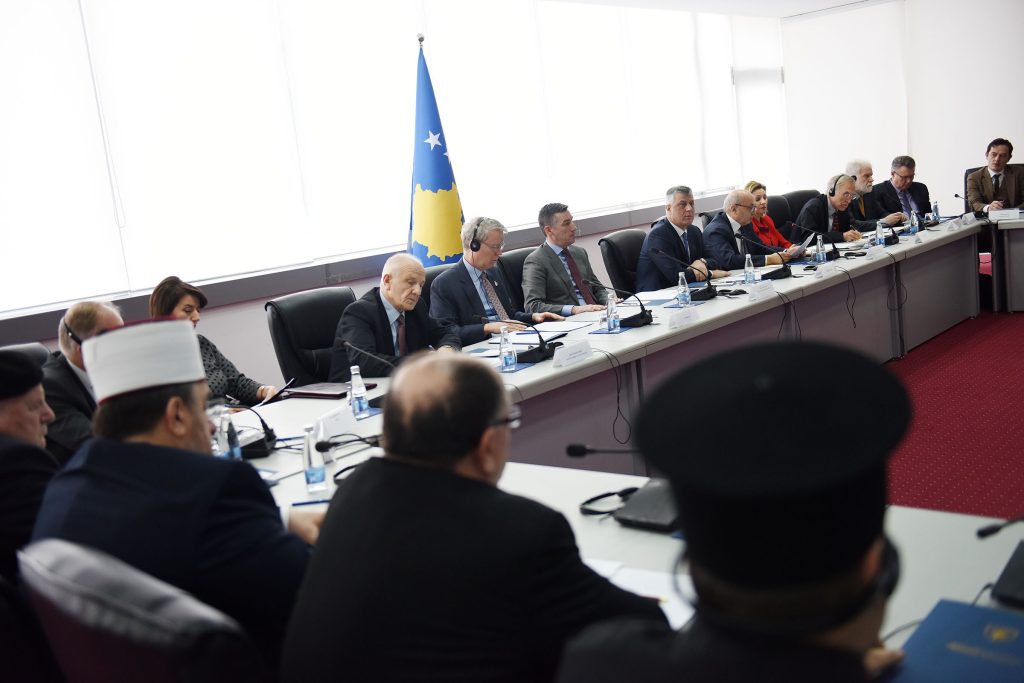
Prishtina, 13 February 2017 – President of Kosovo, Hashim Thaçi, brought together highest state officials, religious clerics, the diplomatic corps, heads of judicial institutions and civil society to a consultative meeting on the establishment of the Commission for Truth and Reconciliation.
President Thaçi met with President Juncker, they called to vote the demarcation
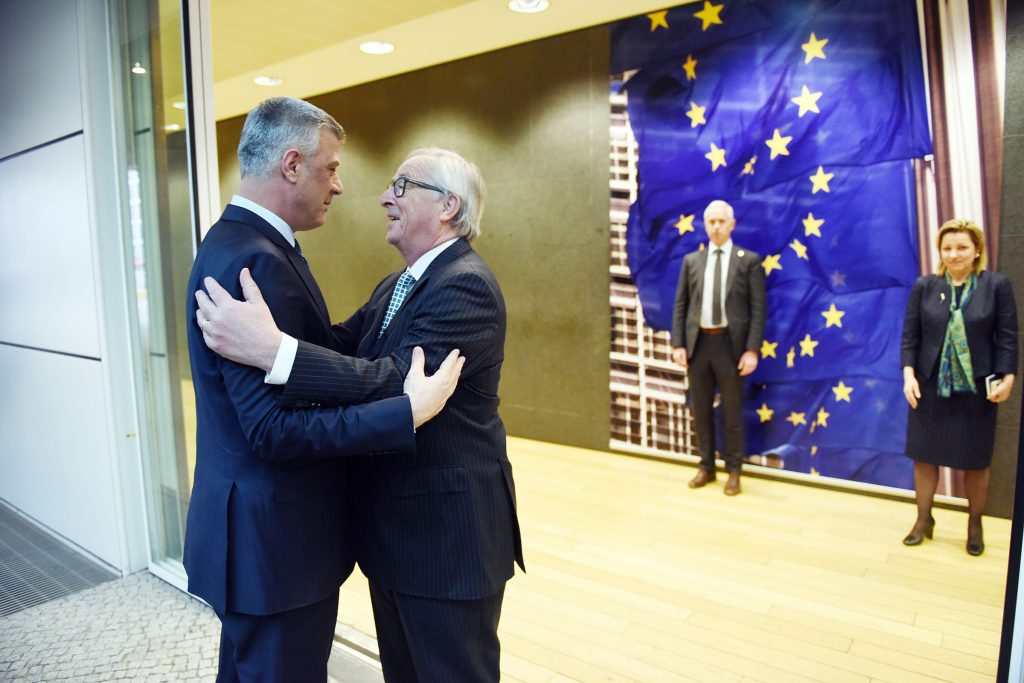
Brussels, February 09, 2017 – The President of the Republic of Kosovo, Hashim Thaçi, was received today by the President of the European Commission, Jean-Claude Juncker, with whom he discussed about all issues of mutual interest in the relations between Kosovo and the European Union.