
President Thaçi received Ambassador Pekka Metso
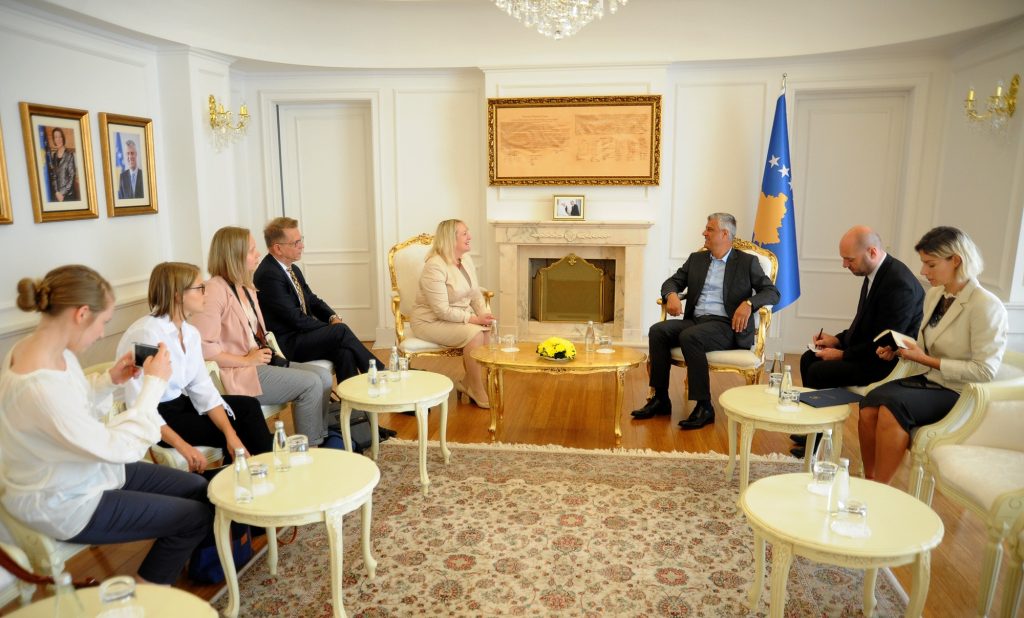
Prishtina, 29 August –President of the Republic of Kosovo, Hashim Thaçi, received today the Ambassador Pekka Metso, Plenipotentiary Ambassador for inter-cultural and inter-religious dialogue processes at the Finnish Ministry of Foreign Affairs in Helsinki, with whom he discussed about commitment for dialogue in the region.
President Thaçi: I will personally commit myself to clear up the fate of all missing persons in Kosovo
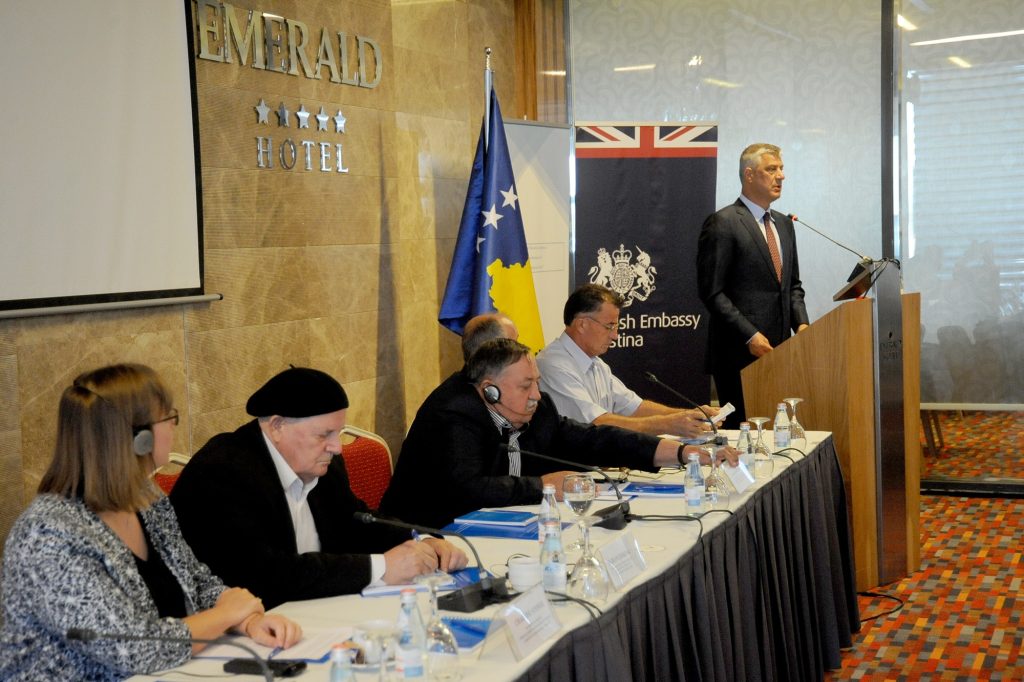
Prishtina, August 23, 2017- The President of the Republic of Kosovo, Hashim Thaçi, attended today the conference organized by the Resource Center for Missing Persons.
President Thaçi: Bajram Rexhepi was distinguished for courage, professionalism and humanism
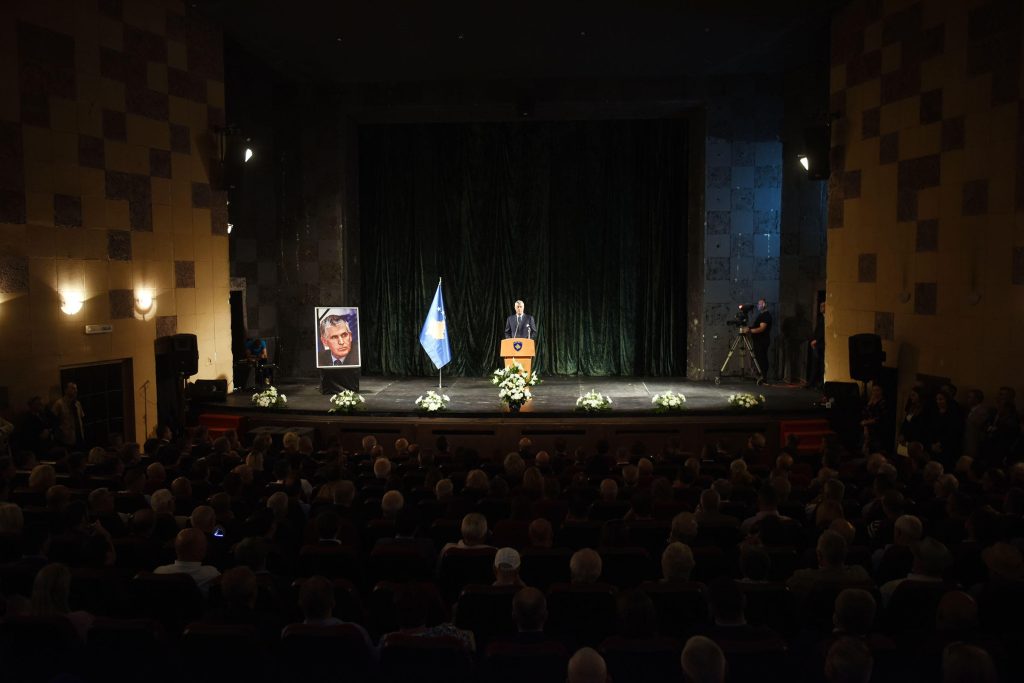
Prishtina, August 22 – The President of the Republic of Kosovo, Hashim Thaçi, participated today at the commemorative meeting in honor of former Kosovo Prime Minister, Bajram Rexhepi, who passed away yesterday after a serious illness.
President Thaçi declares Tuesday a day of mourning in Kosovo
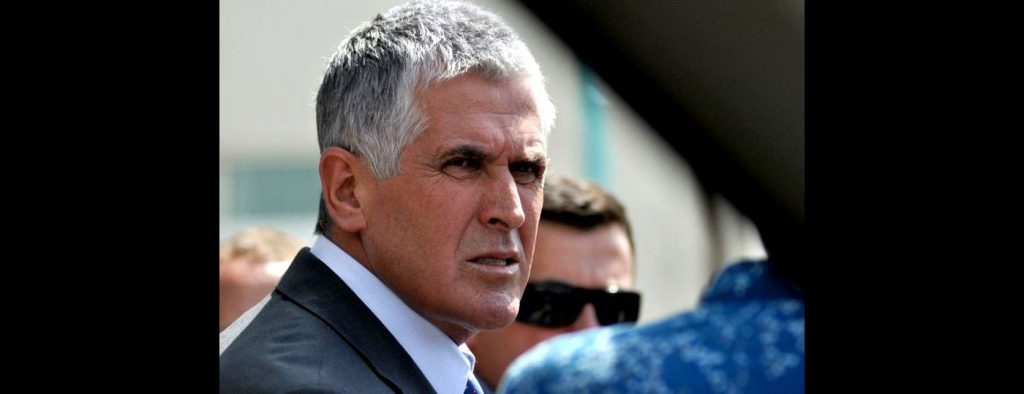
Prishtina, August 21 – The President of the Republic of Kosovo, Hashim Thaçi, has declared Tuesday, August 22, 2017, a day of mourning in Kosovo, in honor of former Kosovo Prime Minister Bajram Rexhepi, who passed away today in Turkey after a serious illness.
President Thaçi expressed his condolences to family Rexhepi
The President of the Republic of Kosovo, Hashim Thaçi, sent a telegram of condolences to the Rexhepi family, following the premature death of former Kosovo Prime Minister Bajram Rexhepi.
Last train to a lasting peace
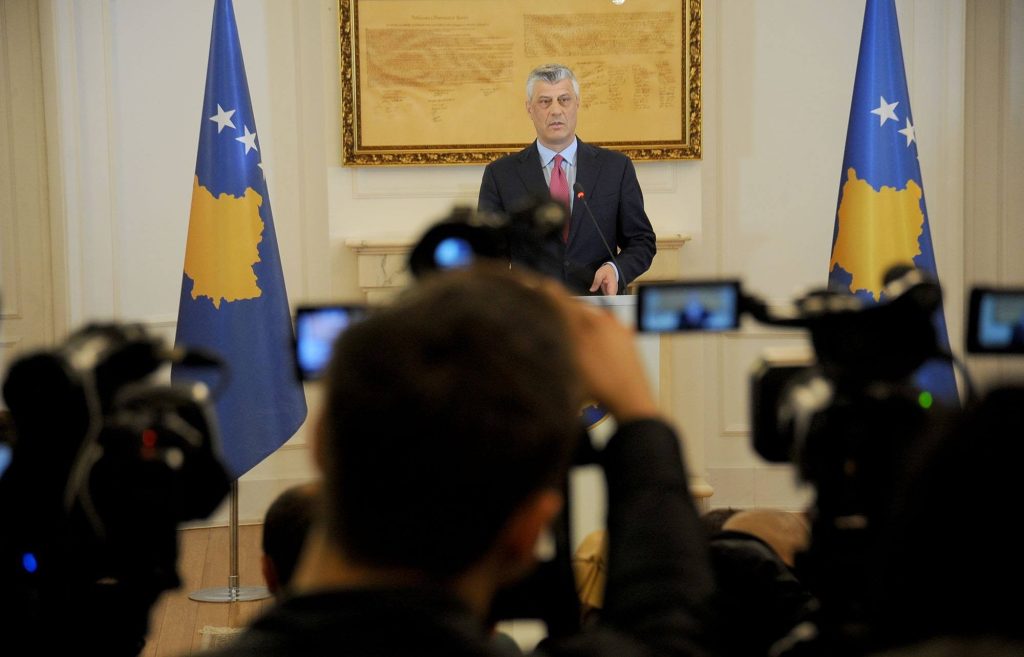
By Hashim Thaçi Kosovo and Serbia have been negotiating under the auspices of the European Union and the strong support of the United States towards the goal of normalisation of relations for over six years now. While we have to recognise that important strides have been taken in that direction culminating with signing of the First Agreement on Principles Governing the Normalization of Relations between Kosovo and Serbia in 2013, full normalisation of relations remains an unattained goal. Our two countries and peoples aspire to build a better future, one where they are fully integrated in the European family (and in Kosovo’s case the Euro-Atlantic family too) and to a future where they enjoy a higher standard of living and state of wellbeing than is currently the case. But it is unlikely that these goals can be reached with the continuation of what is essentially a frozen conflict between our two countries. So far, Kosovo and Serbia have had three rounds of international negotiations: in Rambouillet in 1999, in Vienna in 2005-2007 and now in Brussels since 2011. I have been part of all three negotiations and I am proud to say that Kosovo always agreed to the deals that were mediated by the international community. Serbia on the other hand, does not recognize the independence of Kosovo and continues to put a lot of resources in undermining our efforts to solidify Kosovo’s standing internationally. Due to this hostile attitude, Serbia’s aspiration for membership in the EU remains uncertain. Hence, both countries are blocked and their Euro-Atlantic future depends on their ability to reach a historical final agreement on normalisation of relations and reconciliation. The negotiations in Brussels have dragged on. The April 2013 agreement was a political triumph, but it has now been four years since it was struck and the implementation of some of the items from that agreement is still lagging. While the technical nature was a prerequisite to get the talks off the ground, it is now time to address the elephant in the room; the issue that makes the implementation of even the most technical agreements difficult: the lack of reconciliation and mutual recognition. The credibility of the negotiations has been called into question even as we make progress in certain areas, because it is clear to any observer of these dialogues that the antagonism between the countries is as alive today as it has ever been. For instance, while the Brussels talks produced an agreement on Kosovo’s participation in regional organisations, Serbia keeps campaigning vigorously against membership bids to international organisations made by Kosovo, even when those memberships would benefit the cultural heritage of the Serbian Orthodox Church in Kosovo (the bid for UNESCO) or the Kosovo Serbs. The incremental successes on isolated points have all been important, but at this speed, our relations would become normalised perhaps 100 years from now. It has become obvious that the time has come for a bigger and bolder vision and leadership to address the issues between us for good. The fundamental issue is of course that we continue to view each other as adversaries.. Sweeping our deep divisions under the carpet is no solution and will not lead to reconciliation. We cannot agree on where we are going if we have fundamental disagreements about where we are coming from. This is why I have redoubled my efforts in dealing with some of the most difficult questions about our past through establishing a Truth and Reconciliation Commission. Ultimately, we believe the way forward would be to sign a final Agreement on Normalisation and Reconciliation between our two countries. Through it, we would commit to resolve all disputes by peaceful means. Ultimately, the historical agreement between Kosovo and Serbia should include the mutual recognition as the only way to end all the disputes once and for all. Achieving this end goal is extremely difficult for both countries and it requires brave and smart leadership. I strongly believe that both in Kosovo and in Serbia the leadership remains committed to what our people expect from us – to make peace with each-other. For that to happen, we all need to be creative and be prepared to make further compromises. It should become clear to everyone that doing this for the sake of lasting peace for our people and the generations to come is imperative. Just as the final resolution of our conflict has to recognise both historical and current realities, it also needs to address the demands of the future. The future of Kosovo and Serbia, indeed as that of the rest of the Balkans, is as friendly neighbours within the European Union. I am convinced that normalisation and reconciliation is the first step to free us from the weight of the past, and a step that will propel us into a brighter future. It goes without saying that once we do that, the European Union should recognise our efforts, and that as we shift a gear in our corner of Europe, a gear must be shifted on the accession train in Brussels and European capitals alike. We must make sure we do not miss the last train to a lasting peace. Source: Frankfurter Allgemeine Zeitung Link: http://plus.faz.net/politik/2017-08-17/462fe353cf3cee824fdbbbd629847f72/?GEPC=s3
Last train to a lasting peace
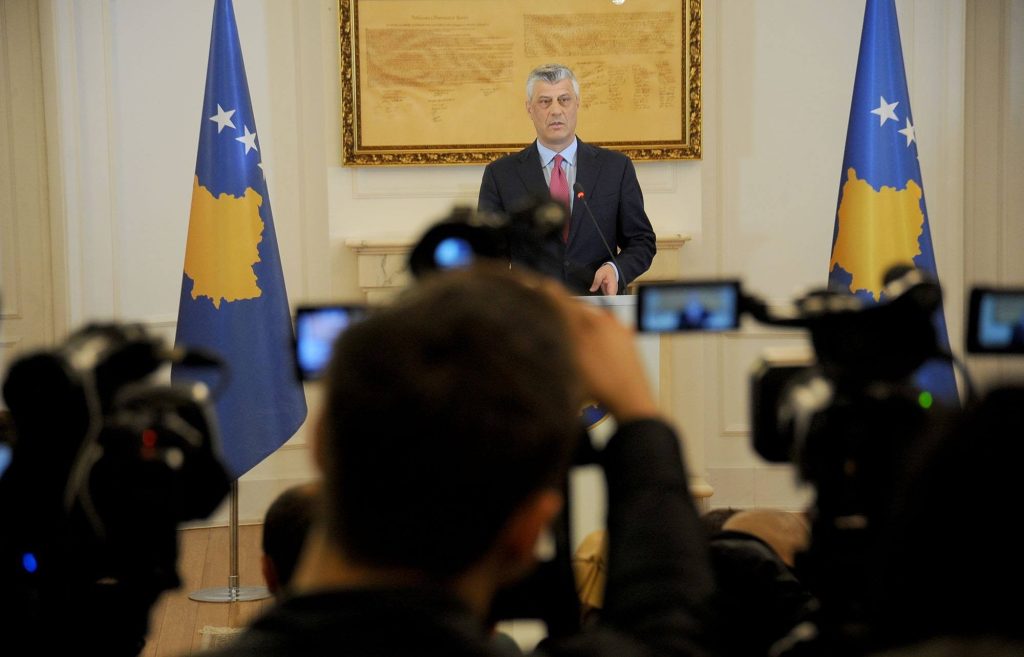
By Hashim Thaçi Kosovo and Serbia have been negotiating under the auspices of the European Union and the strong support of the United States towards the goal of normalisation of relations for over six years now. While we have to recognise that important strides have been taken in that direction culminating with signing of the First Agreement on Principles Governing the Normalization of Relations between Kosovo and Serbia in 2013, full normalisation of relations remains an unattained goal. Our two countries and peoples aspire to build a better future, one where they are fully integrated in the European family (and in Kosovo’s case the Euro-Atlantic family too) and to a future where they enjoy a higher standard of living and state of wellbeing than is currently the case. But it is unlikely that these goals can be reached with the continuation of what is essentially a frozen conflict between our two countries. So far, Kosovo and Serbia have had three rounds of international negotiations: in Rambouillet in 1999, in Vienna in 2005-2007 and now in Brussels since 2011. I have been part of all three negotiations and I am proud to say that Kosovo always agreed to the deals that were mediated by the international community. Serbia on the other hand, does not recognize the independence of Kosovo and continues to put a lot of resources in undermining our efforts to solidify Kosovo’s standing internationally. Due to this hostile attitude, Serbia’s aspiration for membership in the EU remains uncertain. Hence, both countries are blocked and their Euro-Atlantic future depends on their ability to reach a historical final agreement on normalisation of relations and reconciliation. The negotiations in Brussels have dragged on. The April 2013 agreement was a political triumph, but it has now been four years since it was struck and the implementation of some of the items from that agreement is still lagging. While the technical nature was a prerequisite to get the talks off the ground, it is now time to address the elephant in the room; the issue that makes the implementation of even the most technical agreements difficult: the lack of reconciliation and mutual recognition. The credibility of the negotiations has been called into question even as we make progress in certain areas, because it is clear to any observer of these dialogues that the antagonism between the countries is as alive today as it has ever been. For instance, while the Brussels talks produced an agreement on Kosovo’s participation in regional organisations, Serbia keeps campaigning vigorously against membership bids to international organisations made by Kosovo, even when those memberships would benefit the cultural heritage of the Serbian Orthodox Church in Kosovo (the bid for UNESCO) or the Kosovo Serbs. The incremental successes on isolated points have all been important, but at this speed, our relations would become normalised perhaps 100 years from now. It has become obvious that the time has come for a bigger and bolder vision and leadership to address the issues between us for good. The fundamental issue is of course that we continue to view each other as adversaries.. Sweeping our deep divisions under the carpet is no solution and will not lead to reconciliation. We cannot agree on where we are going if we have fundamental disagreements about where we are coming from. This is why I have redoubled my efforts in dealing with some of the most difficult questions about our past through establishing a Truth and Reconciliation Commission. Ultimately, we believe the way forward would be to sign a final Agreement on Normalisation and Reconciliation between our two countries. Through it, we would commit to resolve all disputes by peaceful means. Ultimately, the historical agreement between Kosovo and Serbia should include the mutual recognition as the only way to end all the disputes once and for all. Achieving this end goal is extremely difficult for both countries and it requires brave and smart leadership. I strongly believe that both in Kosovo and in Serbia the leadership remains committed to what our people expect from us – to make peace with each-other. For that to happen, we all need to be creative and be prepared to make further compromises. It should become clear to everyone that doing this for the sake of lasting peace for our people and the generations to come is imperative. Just as the final resolution of our conflict has to recognise both historical and current realities, it also needs to address the demands of the future. The future of Kosovo and Serbia, indeed as that of the rest of the Balkans, is as friendly neighbours within the European Union. I am convinced that normalisation and reconciliation is the first step to free us from the weight of the past, and a step that will propel us into a brighter future. It goes without saying that once we do that, the European Union should recognise our efforts, and that as we shift a gear in our corner of Europe, a gear must be shifted on the accession train in Brussels and European capitals alike. We must make sure we do not miss the last train to a lasting peace. Source: Frankfurter Allgemeine Zeitung Link: http://plus.faz.net/politik/2017-08-17/462fe353cf3cee824fdbbbd629847f72/?GEPC=s3
President Thaçi met the former President of the Swiss Confederation, Micheline Calmy-Rey
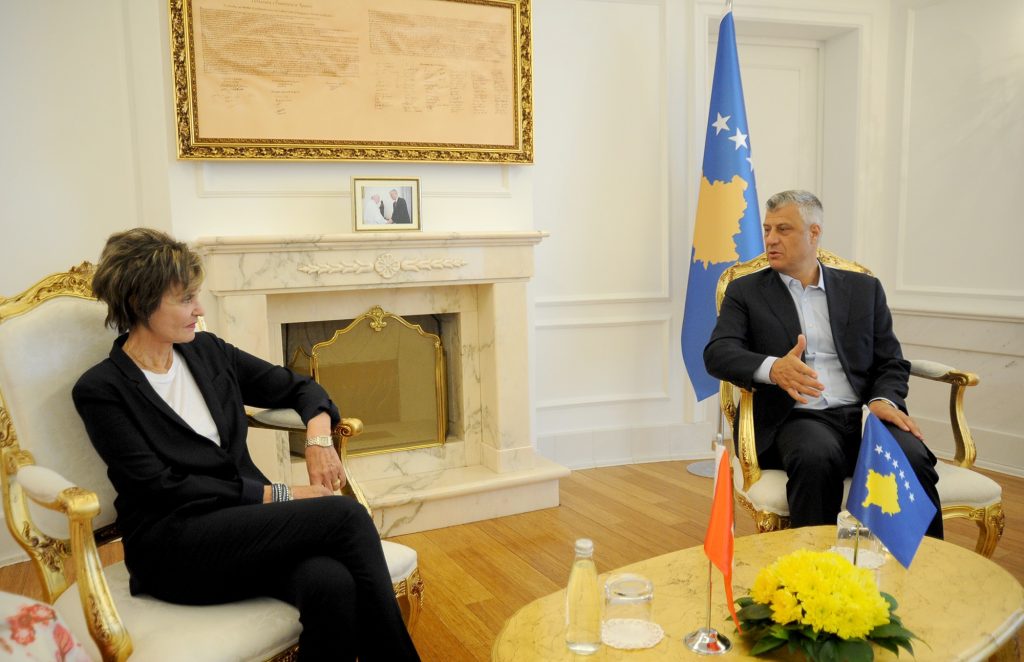
Prishtina, August 3 – The President of the Republic of Kosovo, Hashim Thaçi, received today the former President of the Swiss Confederation, Micheline Calmy-Rey, whom he welcomed to Kosovo and thanked for the support she has always given to Kosovo.
REGULATION (P) NO. 03/2016 ON THE PROCEDURE OF GRANTING AUTHORIZATIONS BY THE PRESIDENT FOR THE SIGNING OF INTERNATIONAL AGREEMENTS AND ON THE PROCEDURE FOR THE RATIFICATION OF INTERNATIONAL AGREEMENTS BY THE PRESIDENT

President Thaçi's speech at the Adriatic Charter Summit 'US-Adriatic Charter' (A5)
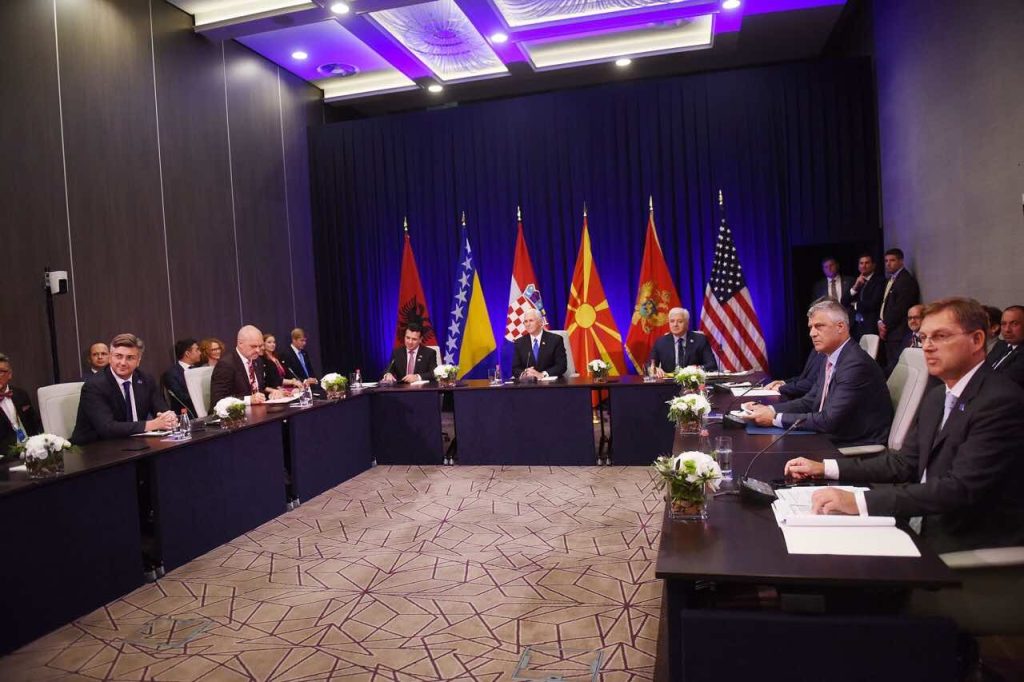
Honorable Vice President Pence Honorable Prime Minister Markovic and Prime-Minister Zaev, Honorable Prime-Ministers Dear participants, Ladies and Gentleman When the Adriatic Charter was established, in 2003, our region had just come out of a terrible cycle of wars and crises. Although finally at peace, we soon realized that peace is not self-sufficient, but only a precondition for creation of other values. Values of cooperation, progress and integration. Many would have found it impossible to believe that 14 years after, the idea of the Adriatic Charter would have developed and grown with new members, becoming this wonderful family of nations, that share the same goal, and same values, the ones of euro Atlantic integration. Allow me to express my gratitude to our hosts today, especially the Prime Minister of Montenegro. Montenegro’s membership into NATO was the best news our region received in a long time. Honorable Mr. Vice President, Prime Ministers, I am honored to sit in this table, as the President of the most pro American and pro NATO nation on earth. Since NATO intervention, USA and NATO soldiers helped keep peace in Kosovo, and helped us move forward. But now, 18 years since the end of the war, and almost a decadesince independence, we believe that the time has come for Kosovo to give back. Kosovo is ready to become contributor of the regional and international security. We no longer want to be only observers in important forums like this one. We deserve to be a member. A full- fledged member. The same way we want to be members of NATO. It is not enough for NATO to be in Kosovo. We need Kosovo in NATO. We understand that in order to get there, Kosovo needs finish the transition of Kosovo Security Forces and to establish a multiethnic army. And I promise this is our goal. We will do this in full coordination with NATO and with our partners. This force will be a multiethnic, professional, defensive force that would proudly represent all its people. And that would be ready to stand side by side USA solders and NATO solders wherever needed. Honorable Mr. Vice President, Your visit here couldn’t be more timely. It is a recognition of our achievements. But let me also emphasize that there are still unfinished businesses in our region. There are still forces that try to disrupt and to delay our Euro-Atlantic orientation. But I have no doubt, that just as you showed leadership in 2003, when you helped establish Adriatic charter, you will continue to show leadership in the years to come. We need you, our region needs you, Europe needs you. Europe cannot afford black holes. And Brussels should not delay further reaching to the region. This delay is creating a vacuum. And anti-western ideologies and influences, be it Russian influence or fundamental Islamism, are rushing to fill this vacuum. Mr. Vice President, future is the most important feature of theidentity. What you want to become sometimes is often more important than what you are. And while we are not still members of NATO, Kosovo and the rest of the region sees their future there. As a region that once was defined by conflict and bloody wars, we have learned the hard way that dialogue is the only wayforward. And today, seating here as equals, despite the differences, we have much more in common. Kosovo has its important role to play for peace and stability in the region. Dialogue with Serbia is an important part of this process. I can reassure you all, that Kosovo remains committed and is willing to accelerate this process in order to reach a final agreement on normalization of relations and reconciliation with Serbia. Not only because we owe it to all of you, but most importantly, because we owe it to our children. Our children should not grow up in fear of each other. We are neighbors and for the rest of our lives we will be living next to each other. Geography we won’t be able to change. But future we will change. As our shared saint Mother Teresa said “I can do things you cannot, you can do things I cannot; together we can do great things. “ Thank you for your attention.