
President Osmani will be participating at the United Nations Security Council meeting on Kosovo
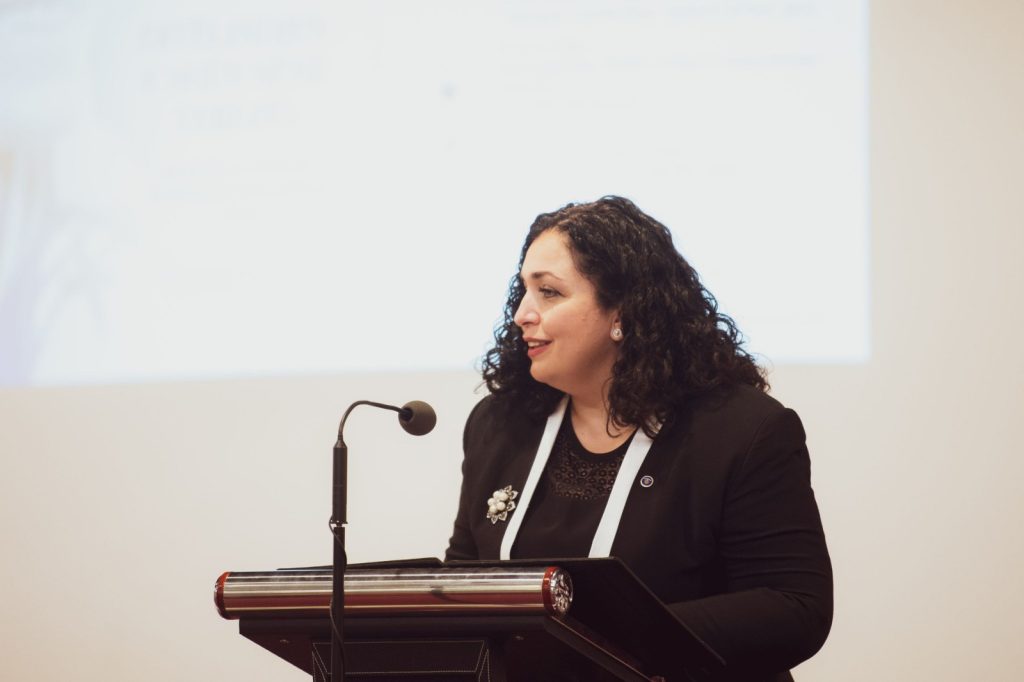
The President of the Republic of Kosovo Vjosa Osmani has departed for New York, to participate at the forthcoming United Nations Security Council meeting related to the periodic reporting of the UN Secretary-General Special Representative on the latest developments in Kosovo. President Osmani will be presenting the achievements of the state of Kosovo to date, the challenges and perspectives at this UN Security Council meeting.
Statement by President Osmani related to the Kosovo Police action carried out against organized crime
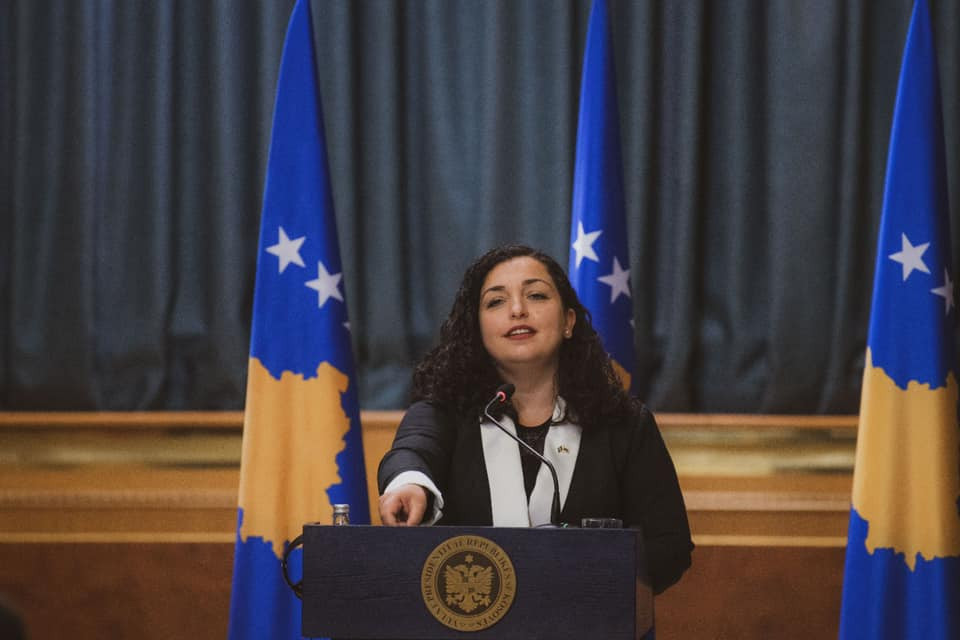
The fight against organized crime is uncompromising and non-negotiable. To negotiate and compromise with crime equals to becoming one of them. Therefore, today's action carried out by Kosovo Police and Kosovo Customs and authorized by the justice institutions, can not be called “action in the north”, as it was a venture carried out in different parts of Kosovo against individuals of different ethnicities, and that its common denominator was smuggling and organized crime. This type of crime has always been multiethnic. A certain number of Albanians in the south and a certain number of Serbs in the north, also people of other ethnicities, often assisted by certain politicians have been organizing this crime for years. But those days are over. The fight against organized crime does not bear the signature of ethnicity but the signature of criminal groups. Anyone who tries to present it differently is aiding the criminal groups which the EU has been fighting for two decades now. And now that this fight against crime has become uncompromising, real and non-negotiable, we expect the EU to remain committed to the values of the rule of law that it stands for.
President Osmani awards the KFOR Commander in Kosovo Major General Franco Federici the Presidential Military Medal on the occasion of the end of his mandate

The President of the Republic of Kosovo Vjosa Osmani has awarded the KFOR Commander in Kosovo Major General Franco Federici the Presidential Military Medal for contribution in service of peace, security and stability during his mandate at the helm of these troops. President Osmani emphasized the readiness to continue the cooperation with KFOR, adding that NATO membership remains Kosovo’s strategic goal.
Statement by the President of the Republic of Kosovo Vjosa Osmani regarding the Non-Aligned Movement Conference in Belgrade
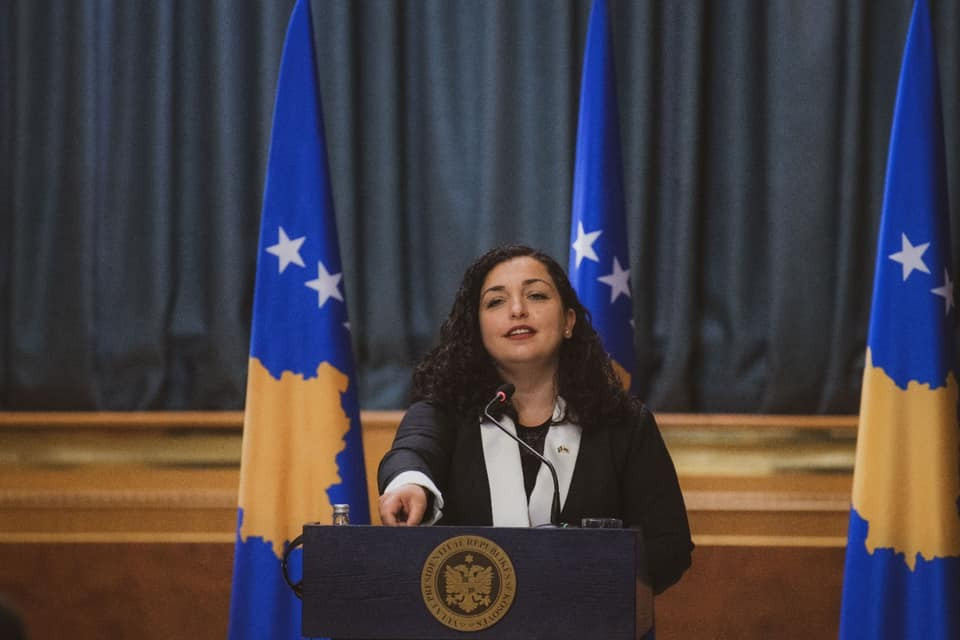
Serbia is continuing its efforts to undermine the state of Kosovo with forged arguments and narratives. Lately, at the Non-Aligned Movement (NAM) conference being held in Serbia, it is once again misusing its observer state status in order to distort the truth about the state of Kosovo.
President Osmani received at the meeting the new director of the UNICEF Kosovo office Mrs. Nona Zicherman
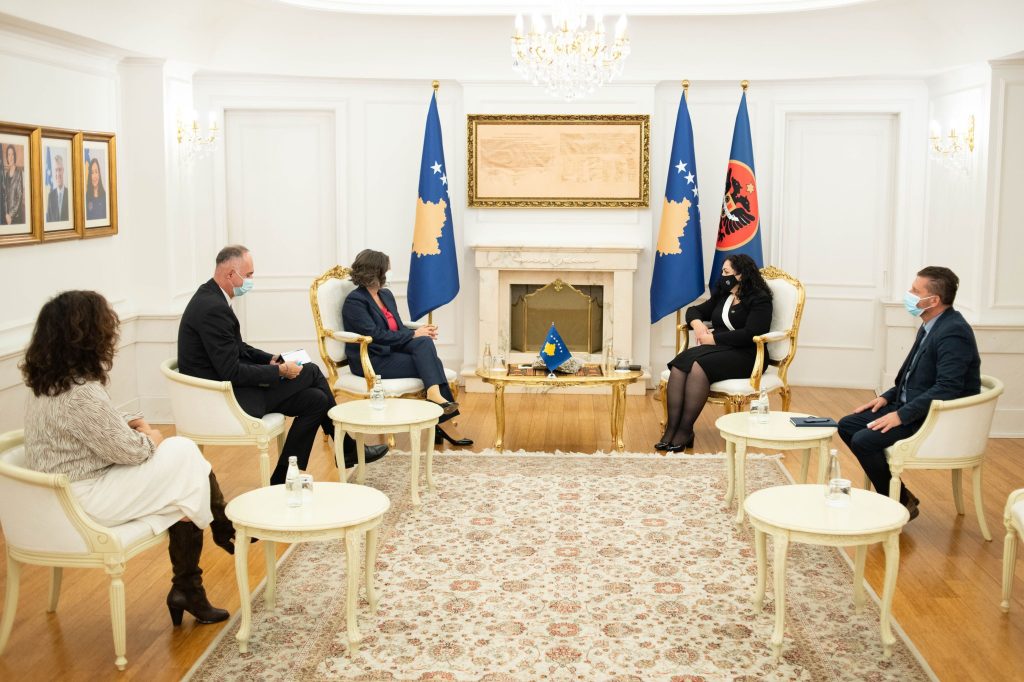
Prishtina, October 11th, 2021 – The President of the Republic of Kosovo Vjosa Osmani received at a meeting the new Director of the UNICEF Kosovo office Mrs. Nona Zicherman, whom she congratulated on her new tenure and wished her success in forthcoming engagements. President Osmani also expressed her readiness for the continuation of the cooperation with UNICEF.
President Osmani met with the “Prishtina” girl's football club
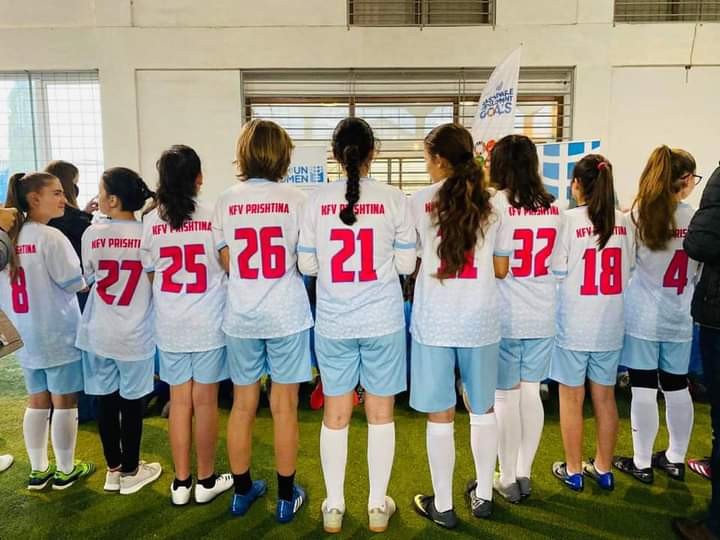
The President of the Republic of Kosovo Vjosa Osmani met with the members of the”Prishtina” girl's football club on International Girl Day.
President Osmani received the credentials of the new Ambassador of the Kingdom of Saudi Arabia
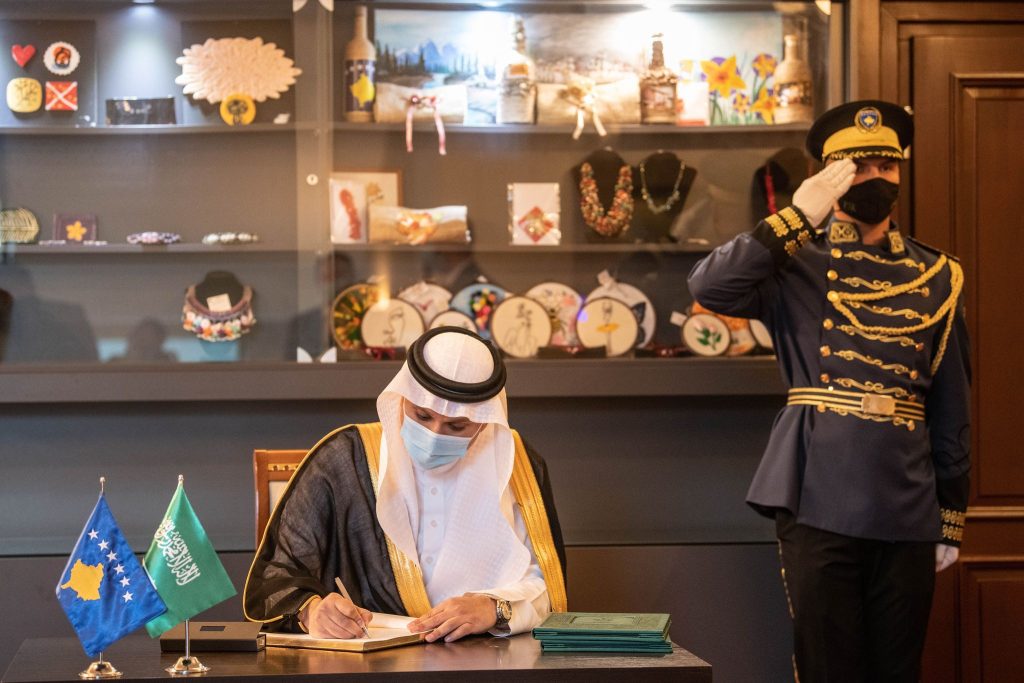
Prishtina, October 8th 2021 – The President of the Republic of Kosovo Vjosa Osmani
received today at a meeting the new non-resident Ambassador of the Kingdom of Saudi
Arabia to the Republic of Kosovo Faisal Ghazi Ismail Hifzi, on the occasion of
presentation of his letters of credence.
President Osmani's address on World Habitats Day
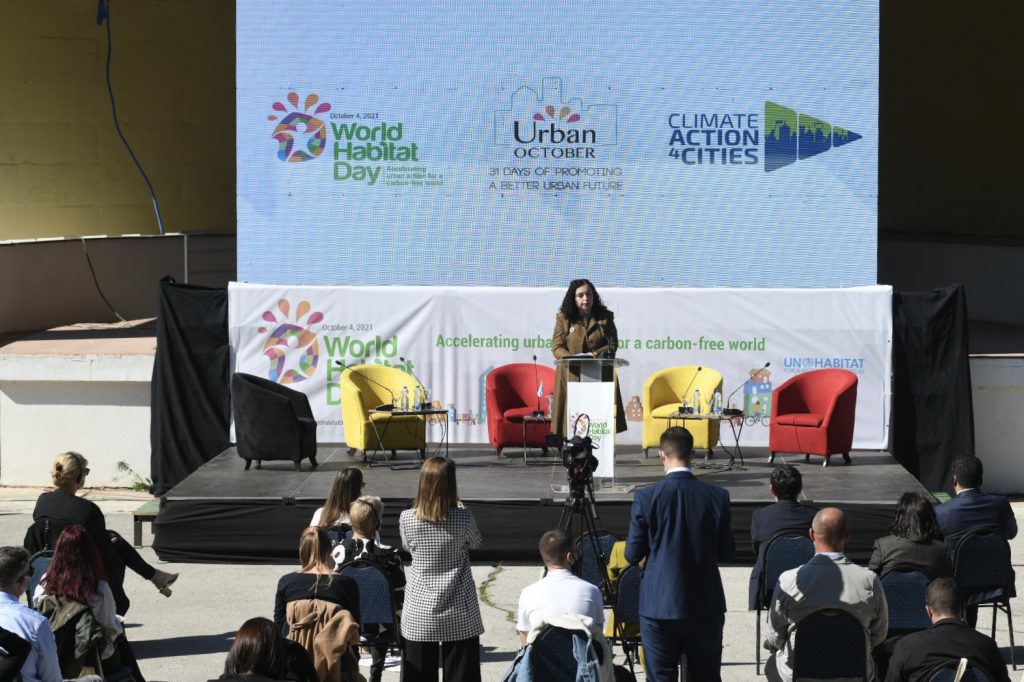
Distinguished guests, Honourable Prime Minister Mr. Kurti, Honourable Head of the UN-Habitat Office in Kosovo Mr. Siddique Honourable Minister Aliu, Honourable UN Development Coordinator Mrs. Richardson Honourable deputies, academics, representatives of civil society, Ladies and gentlemen, It is now 2021, and we are only 9 years away from 2030 – the year when we aim for the whole world to find itself in a position in which we enjoy greater well-being, a higher standard of living-when poverty and hunger will be under control, almost fully eradicated, and when living within our settlements will contribute to our physical and mental health. This was the beginning of the Sustainable Development Goals, which were formulated and designed with the idea of ​​mobilizing our societies for greater awareness of the daily impact of our actions on the ecosystems around us and on the planet on which we live. The 2030 agenda has a single goal – it aims that by 2030 we all live better, with greater well-being and more equality. Today we are also only 29 years away from 2050. In accordance with the Paris Agreement, within this period we must work hard and work closely together to remove carbon from the axis of our human and economic activity. This is the second pandemic year and the pandemic has revealed much more clearly than ever before the problems in the management and policy-making systems of our time. It is clear to us that things cannot continue to be done as we have done them for a long while. In addition to raising awareness of the importance of working together to protect collective health, the pandemic should also serve as a call to make things differently, more inclusive and with a more lasting impact. And above all, as a call to take responsibility at all levels. In this journey, collective responsibility and individual responsibility go head to head, because success will be possible only when everyone, from both the local and central level, state and non-state actors work together and become part of finding solutions to the problems and challenges we face. It is more than fair that statistics show that cities today make up more than 50% of the planet's population, 80% of global economic output, two-thirds of global energy consumption, and more than 70% of annual global emissions, we need to come together today to discuss ways to accelerate action at the urban level to contribute towards a carbon-free world. Not long ago, the Secretary-General of the United Nations said: “Cities are where the climate battle will be won or lost.” And with the growing trends of urbanization, the central role of cities will continue to grow more and more. It is predicted that by 2050, more than 70% of the world's population will live in cities. In other words, the need for urban infrastructure is growing so it is high time we acted. Therefore, our next best opportunity to truly act in this direction is today, because the right time to invest in our wise cities was yesterday. And as we talk today about the importance of action in this regard, we all have the opportunity to make a difference very quickly. The first option is to select those who will be in charge of planning and policy-making at the local level in your municipality. Not that I want to politicize this presentation, but in these local elections I invite you to use the campaign days to communicate with your favourite candidates and ask them directly to make sure that their programs include as much as possible of what we already refer to as the “Green Agenda”. Do not miss this opportunity – start asking for the necessary change. Start from your municipality! Start in your hometown! One thing is clear. While every day has its unique requirements, the main sectors that directly contribute to building sustainable and smarter cities of the future are: mobility, energy, environment, and urban planning. And it is the identification and proposal of appropriate policies in these areas that will help us achieve the desired results. To succeed in this direction, in addition to the will, but also to the budget – we must above all have the vision in order to achieve this goal. And today I am here to say that I feel that the new institutions of Kosovo do not lack vision. Our institutions are clear about why we need to work hard for a carbon-free future. To you who we are seeing here today, it is quite clear why we must act in this direction. Our young people are proving every day that they know more and more each day and are aware of why we should leave carbon footprints behind. Therefore, as never before, I see that we have the golden opportunity to join forces to make change possible in this regard. Therefore, I invite you to work together to build and implement smart, sustainable and green cities. To work together for a future where instead of fossil fuels such as coal, we choose renewable energy sources. Instead of isolation, we choose inclusiveness. Instead of concrete, we choose green spaces. Instead of private transport, we focus on public transport. In a nutshell, a future where we enable the coexistence of economic development with the protection of ecosystems and habitats that surround us. And during the journey, we must ensure that our work is guided by the principles of promoting and guaranteeing gender equality and inclusion. This is our only chance to score a real success. And at the end, in order that all that both I and Mr. Siddique said, and I believe that we will also hear from the Prime Minister and others, to become a reality, Kosovo must have its place at the table, and have its voice in COP26 in order for us to be heard. It is not just that climate change affects only United Nations member states. You can no longer isolate Kosovo and on
President Osmani's address on World Habitats Day
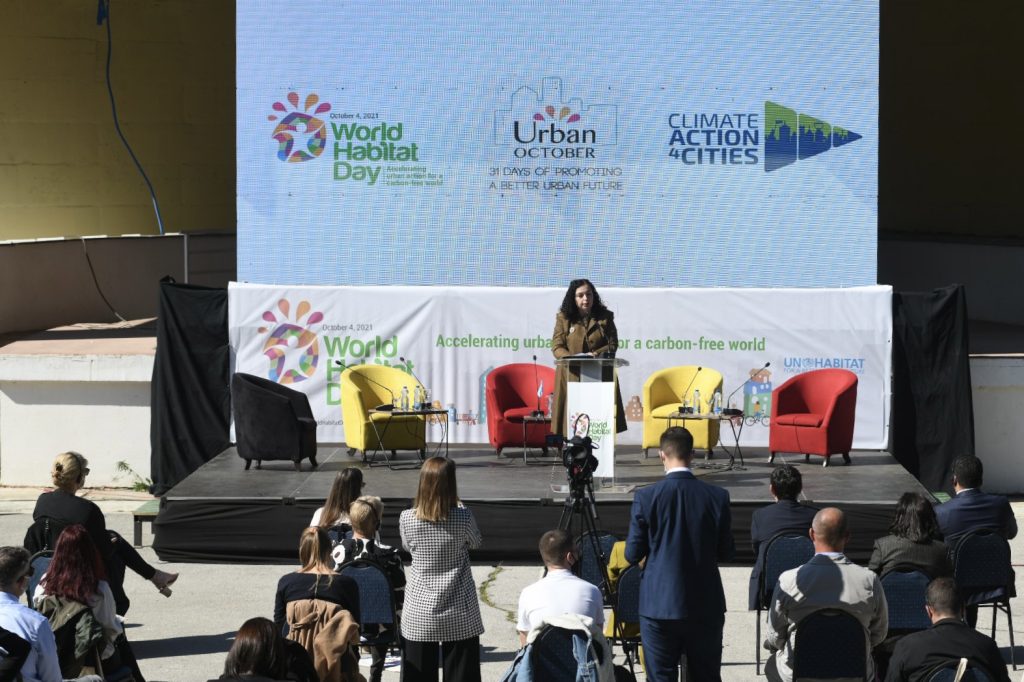
Distinguished guests, Honourable Prime Minister Mr. Kurti, Honourable Head of the UN-Habitat Office in Kosovo Mr. Siddique Honourable Minister Aliu, Honourable UN Development Coordinator Mrs. Richardson Honourable deputies, academics, representatives of civil society, Ladies and gentlemen, It is now 2021, and we are only 9 years away from 2030 – the year when we aim for the whole world to find itself in a position in which we enjoy greater well-being, a higher standard of living-when poverty and hunger will be under control, almost fully eradicated, and when living within our settlements will contribute to our physical and mental health. This was the beginning of the Sustainable Development Goals, which were formulated and designed with the idea of ​​mobilizing our societies for greater awareness of the daily impact of our actions on the ecosystems around us and on the planet on which we live. The 2030 agenda has a single goal – it aims that by 2030 we all live better, with greater well-being and more equality. Today we are also only 29 years away from 2050. In accordance with the Paris Agreement, within this period we must work hard and work closely together to remove carbon from the axis of our human and economic activity. This is the second pandemic year and the pandemic has revealed much more clearly than ever before the problems in the management and policy-making systems of our time. It is clear to us that things cannot continue to be done as we have done them for a long while. In addition to raising awareness of the importance of working together to protect collective health, the pandemic should also serve as a call to make things differently, more inclusive and with a more lasting impact. And above all, as a call to take responsibility at all levels. In this journey, collective responsibility and individual responsibility go head to head, because success will be possible only when everyone, from both the local and central level, state and non-state actors work together and become part of finding solutions to the problems and challenges we face. It is more than fair that statistics show that cities today make up more than 50% of the planet's population, 80% of global economic output, two-thirds of global energy consumption, and more than 70% of annual global emissions, we need to come together today to discuss ways to accelerate action at the urban level to contribute towards a carbon-free world. Not long ago, the Secretary-General of the United Nations said: “Cities are where the climate battle will be won or lost.” And with the growing trends of urbanization, the central role of cities will continue to grow more and more. It is predicted that by 2050, more than 70% of the world's population will live in cities. In other words, the need for urban infrastructure is growing so it is high time we acted. Therefore, our next best opportunity to truly act in this direction is today, because the right time to invest in our wise cities was yesterday. And as we talk today about the importance of action in this regard, we all have the opportunity to make a difference very quickly. The first option is to select those who will be in charge of planning and policy-making at the local level in your municipality. Not that I want to politicize this presentation, but in these local elections I invite you to use the campaign days to communicate with your favourite candidates and ask them directly to make sure that their programs include as much as possible of what we already refer to as the “Green Agenda”. Do not miss this opportunity – start asking for the necessary change. Start from your municipality! Start in your hometown! One thing is clear. While every day has its unique requirements, the main sectors that directly contribute to building sustainable and smarter cities of the future are: mobility, energy, environment, and urban planning. And it is the identification and proposal of appropriate policies in these areas that will help us achieve the desired results. To succeed in this direction, in addition to the will, but also to the budget – we must above all have the vision in order to achieve this goal. And today I am here to say that I feel that the new institutions of Kosovo do not lack vision. Our institutions are clear about why we need to work hard for a carbon-free future. To you who we are seeing here today, it is quite clear why we must act in this direction. Our young people are proving every day that they know more and more each day and are aware of why we should leave carbon footprints behind. Therefore, as never before, I see that we have the golden opportunity to join forces to make change possible in this regard. Therefore, I invite you to work together to build and implement smart, sustainable and green cities. To work together for a future where instead of fossil fuels such as coal, we choose renewable energy sources. Instead of isolation, we choose inclusiveness. Instead of concrete, we choose green spaces. Instead of private transport, we focus on public transport. In a nutshell, a future where we enable the coexistence of economic development with the protection of ecosystems and habitats that surround us. And during the journey, we must ensure that our work is guided by the principles of promoting and guaranteeing gender equality and inclusion. This is our only chance to score a real success. And at the end, in order that all that both I and Mr. Siddique said, and I believe that we will also hear from the Prime Minister and others, to become a reality, Kosovo must have its place at the table, and have its voice in COP26 in order for us to be heard. It is not just that climate change affects only United Nations member states. You can no longer isolate Kosovo and on
The President on the 24th anniversary of student protests: The remembrance of October 1st is a call for prudent and determined action towards strengthening of the statehood of Kosovo
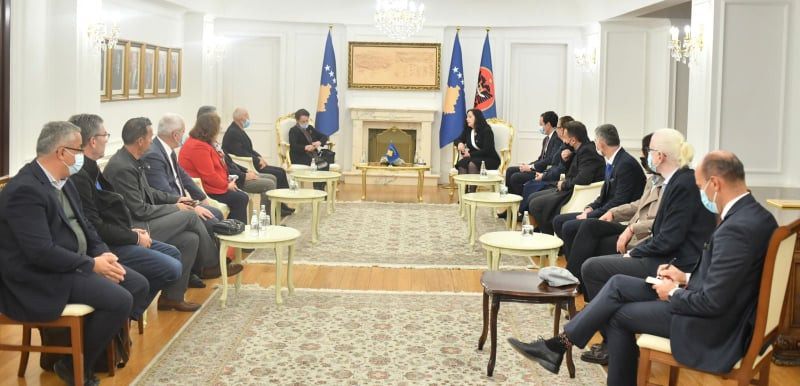
The President of the Republic of Kosovo Vjosa Osmani accompanied by the Prime Minister Albin Kurti, on the 24th anniversary of the student protests on October 1st, received at a meeting the wife, family members and associates of the former rector of UP Ejup Statovci.