
Konferenca e sotme për media e Presidentes Vjosa Osmani

Doc
Conclusions of the Council on Democracy on actions against gender-based violence
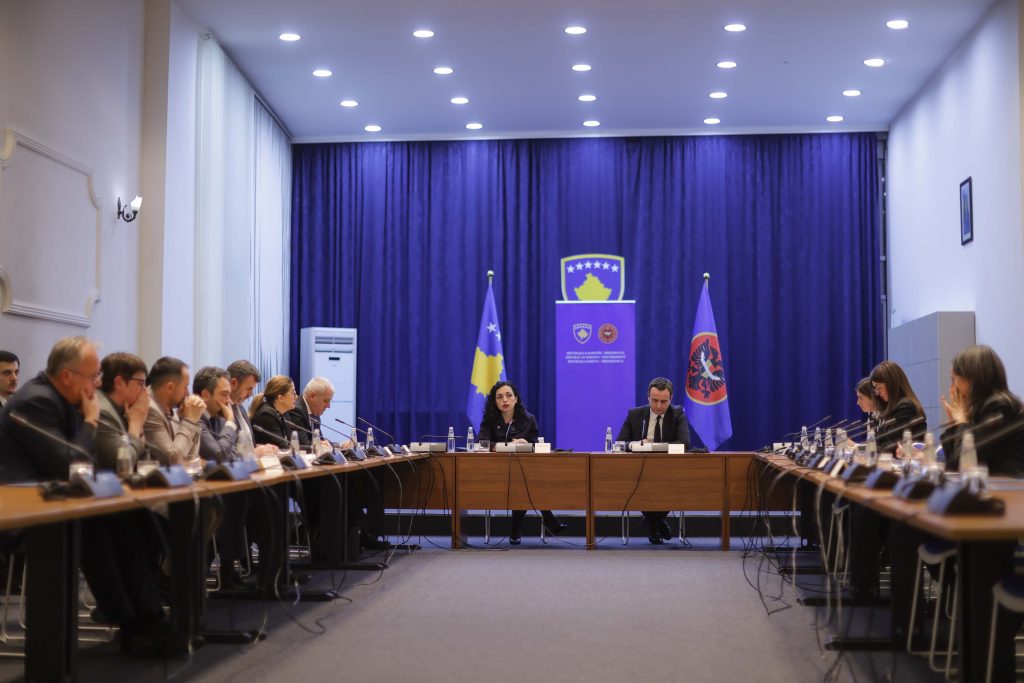
The Council on Democracy and Human Rights, at the meeting held on December 2nd, 2022, released as conclusions the specific recommendations on the issues listed below, which relate to gender-based violence. This document will be further supplemented with an action plan. The recommendations are as follows:
President Osmani received the heads of the International Committee of the Mediterranean Games
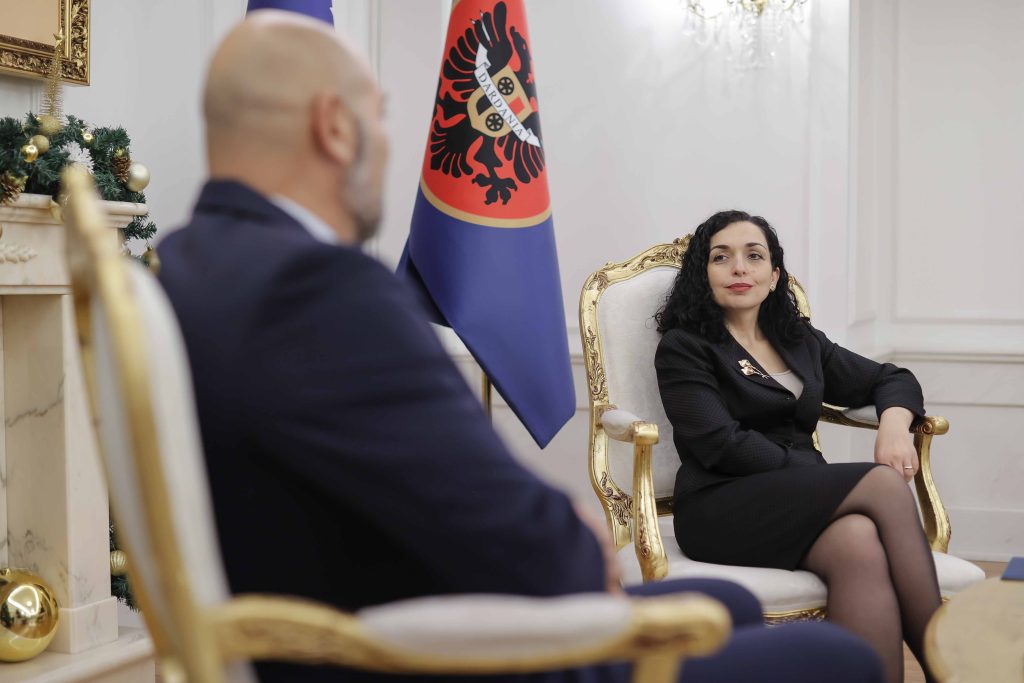
The President of the Republic of Kosovo Vjosa Osmani received today the heads of the International Committee of the Mediterranean Games, led by its president Davide Tizzano and the secretary general Iakovos Filippoussis, accompanied by the heads of the Kosovo Olympic Committee.
President Osmani meets with the Global Disability Congress participants
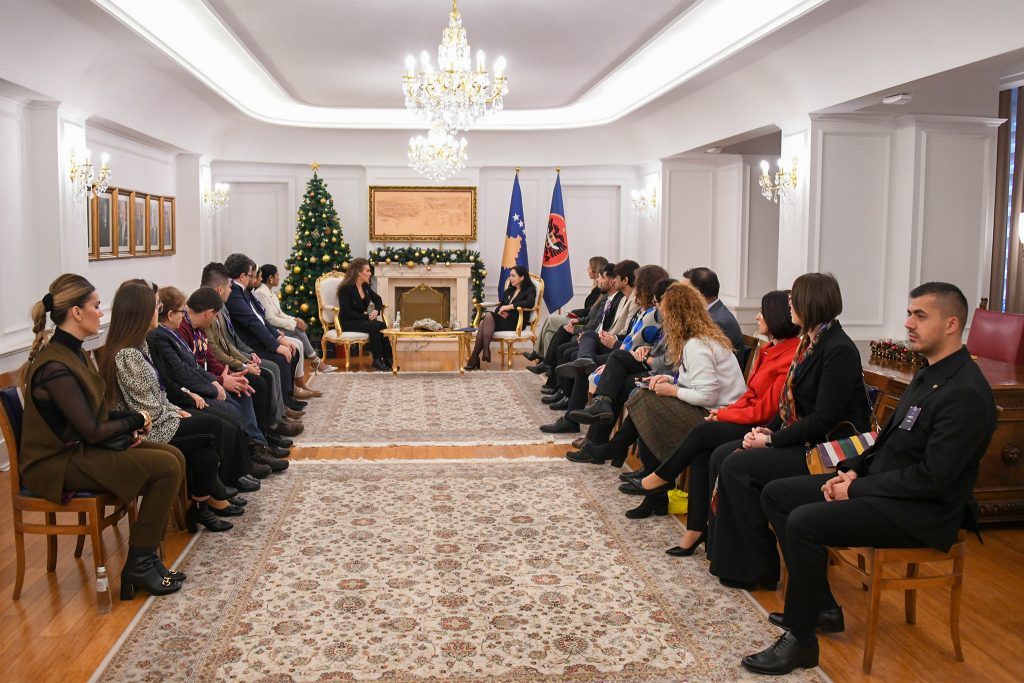
The President of the Republic of Kosovo, Vjosa Osmani, received in the meeting the participants of the Global Disability Congress, which is taking place in Prishtina supported by the Presidency of the Republic as well.
The President: There will never be policemen and soldiers from Serbia in the territory of the Republic of Kosovo again
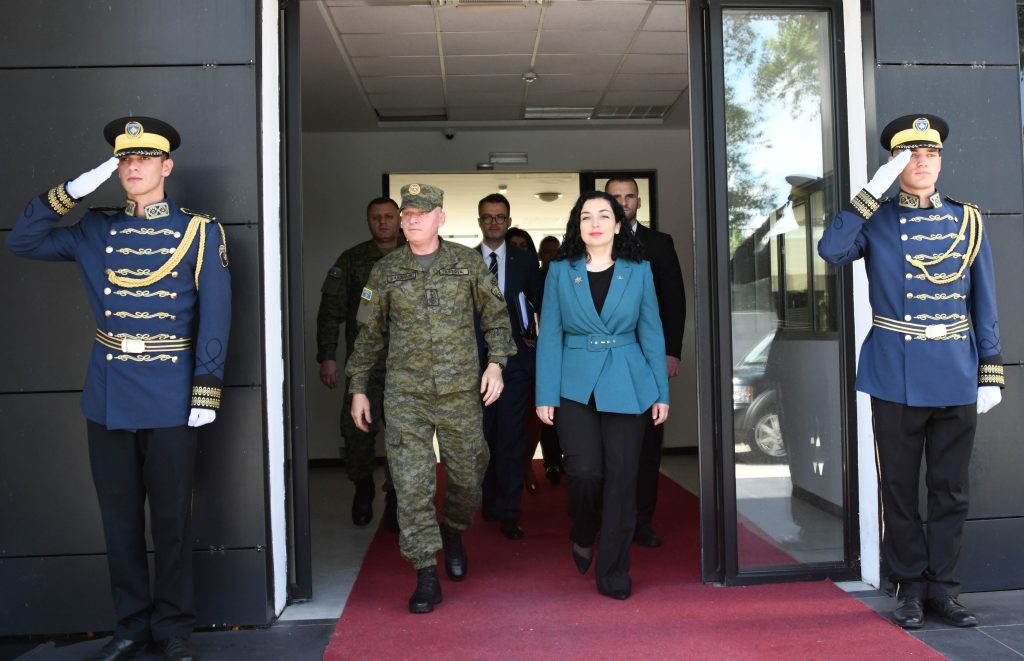
The President of the Republic of Kosovo, Vjosa Osmani Sadriu, reacts after yesterday's wounding of a member of the Kosovo Police and after the attack on journalists.
President: The more we read books, the brighter the future for our children and our country is
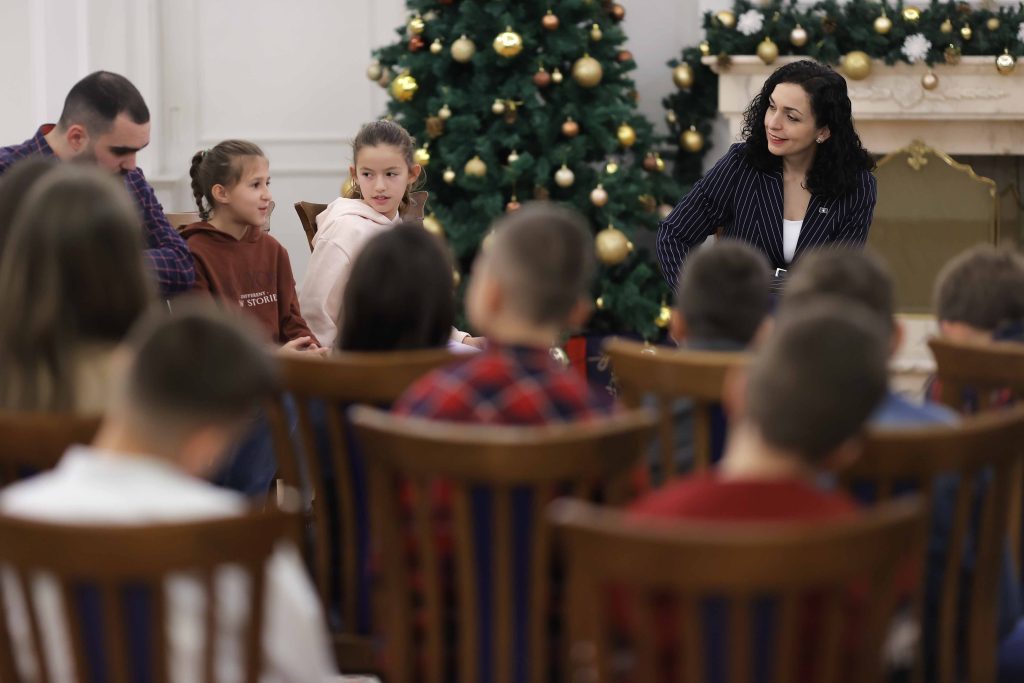
The President of the Republic of Kosovo, Vjosa Osmani Sadriu, received this morning a group of 8-12-year old students from several schools in Kosovo, with whom she discussed the book.
Fjalimi i Presidentes Vjosa Osmani para studentëve të Universitetit të Prishtinës "Hasan Prishtina" rreth dhunës mbi baza gjinore
Fjalimi i Presidentes Vjosa Osmani para studentëve të Universitetit të Prishtinës "Hasan Prishtina" rreth dhunës mbi baza gjinore
President Osmani's speech at the “16 Days of Activism against Gender-Based Violence”, organized by the University of Prishtina
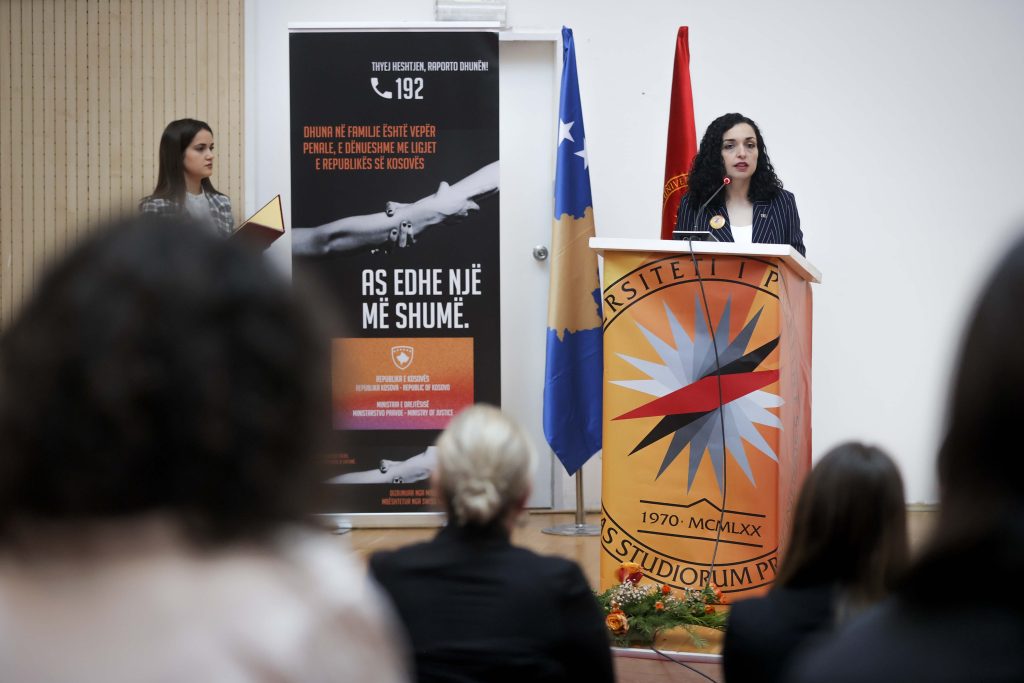
Dear Rector Professor Qerimi, It's so good to see you present here among professors and students! Dear Minister Haxhiu, Dear representatives of the institutions of the Republic of Kosovo, including representatives of the University of Prishtina and International Organizations, Dear Mr. Frank Power, Dear activists, Dear participants, Dear representatives of the media, Every time I return to the spaces of the University of Prishtina I feel very happy because for me this is a second home. For years, it has been the place where we have engaged together with many professors that I see today and unfortunately many of the challenges that we dealt with many years ago still continue to exist, so we need to join forces in order to fight the inequalities that exist in our society. Today I returned to the University of Prishtina for some other reason, namely for a cause that deals with a phenomenon that has shaken the foundations of our society. We are coming to the end of the 16 Days of Activism against Gender-Based Violence and I feel that this should be one of the most successful campaigns but, in fact, it has turned into one of the most hurtful campaigns we have ever had. Within an extremely short period, from the first day when we met with the Minister of Justice to launch the 16 Days campaign against gender-based violence until today, we have lost two more women. Two men killed their wives in diabolical and macabre ways and they are no longer with us. As a result of these misfortunes, the campaign itself for the 16 days of activism against gender-based violence, as well as awareness about it, become increasingly important. In our efforts to address the causes and consequences of femicide, domestic violence in general and gender-based violence, the commitment and active involvement of educational institutions is of particular importance. I don't say this simply because it sounds like the most appropriate thing to say in an activity like this in the premises of the University of Prishtina, but I say it fully convinced that the formation of thought, the formation of a person's judgment and evaluation is deeply dictated by what we read and what we learn, and it is projected to us as early as in the school classrooms and then later also in the university spaces. Today I started the day with a group of students between the ages of 8 and 12 and I was extremely pleased that a 9-year-old boy said that one of the main lessons they learned these days in the reading club was the importance of gender equality, and this shows that only such a mindset of educating the generations, be they young or not, can lead to success, and in particular, the eradication of gender-based violence will be possible only when they are educated in such a spirit, both, boys and girls. Families are just as important as educational institutions and their role. Families can play an extraordinary role in our struggle to eradicate patriarchal norms that result in violence, as well as in the development of social and emotional skills, which are extremely important so that this is done in a synchronized and well-thought-out spirit, and then this should be done with our educational institutions, both at the pre-university and university levels. I now believe that it is clear to everyone that when we talk about femicide, in general about gender-based violence, we are actually talking about a common wound where the victims are individuals, but the wound is collective, the despair is collective, but also the failure is collective. It is disturbing to see how femicide is accompanied by numerous cases of domestic violence and numerous cases of sexual harassment and sexual violence, which unfortunately in the vast majority of cases is against minors. All these phenomena, apart from the fact that they are named as separate phenomena, actually have a common origin. Their origin is rooted in our collective failure as a society to clearly understand that the life of a girl, of a woman, is equal to the life of a man or a boy. But we have seen many examples, including decisions of our justice institutions, which have alluded to the opposite. The merits of women, their capacities, and their potential is best expressed precisely in school and university spaces. School institutions make us clearly understand that gender inequality is a phenomenon installed through the creation of social norms that give life to inequalities. Otherwise, if performance, diligence, intellect, skills, and miracles that girls and women manifest – especially girls from pre-school institutions to university – were to be taken as a basis throughout their entire academic journey, the message would be clear – girls and women are a transformative force that can only be undermined in conditions where inequality and insecurity prevail. And precisely the existence of the conditions for inequality and insecurity gives rise to the conditions for gender inequality and for the violation of this extraordinary potential that girls and women offer. It is precisely the lack of economic and financial security, the lack of equal access to inheritance, sometimes also the lack of access to justice, and the lack of security provided by responsible institutions, which in some cases, as I already said, feed inequalities and harm our ambitions for equal societies that develop and advance on the principle of dignity and integrity. The 16 days of activism against gender-based violence represent the period during the year when the attention of all relevant institutions and actors is focused precisely on the identification of common mechanisms and methods for combating this phenomenon. But the question is, are the messages clear enough, are the platforms created sufficient, are the collaborations and interactions sufficient and useful, and above all, are we managing to go beyond the circle of ordinary actors with whom we talk about on this topic, are we reaching every layer of society. And the answer is that reaching out only