
President Thaçi: Next year, determining for the Euro-Atlantic perspective
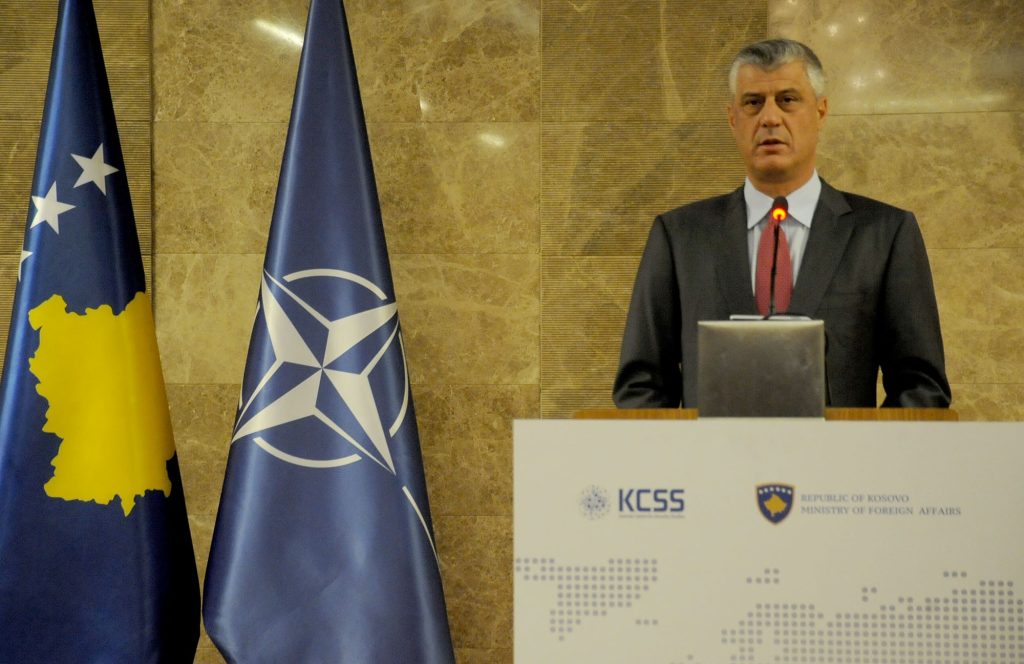
Prishtina, November 13 – The President of the Republic of Kosovo, Hashim Thaçi participated today at the opening of the Conference: “NATO and the Western Balkans: Regional Dynamics in the Era of Global Security Challenges”.
President Thaçi’s speech at the promotion ceremony of the five members of the non-majority communities in the First Batallion of the Kosovo Security Force
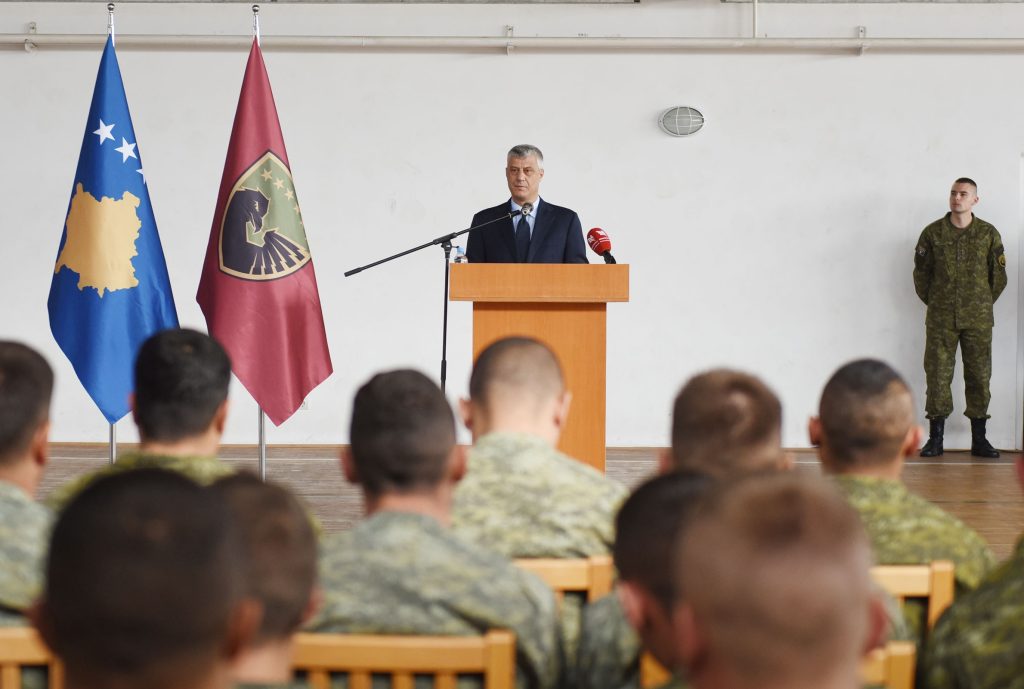
Honorable Minister of the KSF, Honorable KSF Commander, Honorable representatives of KFOR and NATO, General Hopman, Honorable relatives of the KSF members, Honorable members of the KSF, Ladies and Gentlemen, Let me congratulate you for this next great step of the KSF towards the building of a professional and inclusive force, where all the communities of Kosovo take part and is in the service of all the citizens of Kosovo Today we mark the promotion of the five members of the Kosovo Security Force. All come from non-majority communities, thus increasing their presence in the KSF, and contributing to the realization of the aspiration we have for our security force. After having passed the foreseen trainings and tests, these five members of the KSF from today will hold the rank of NCO’s of the KSF. The trainings and tests each member of the KSF passes through are prepared by NATO, according to NATO standards. By this the professionalism of the KSF of NATO level is aimed The members who are promoted today come from non-majority communities in Kosovo. By doing so we realize our aspiration for a multiethnic, inclusive force. The KSF with this once again shows that it is the home of all. With its commitment throughout these years, the KSF shows that it is a force in the service of all the citizens of Kosovo, in every corner of Kosovo Ladies and Gentlemen, the KSF has raised the level of professionalism and preparation at the highest level. It has carried out with responsibility, professionalism, impartiality every task it has been given so far. The KSF has become a force that enjoys confidence from all citizens. It has become an institution that contributes to peace and stability in Kosovo, for a calm and secure life of all citizens. Seeing these achievements of the KSF, we are convinced that this force is ready to take on new responsibilities, new tasks, and contribute to peace and security beyond Kosovo As a Kosovo we aim that from a NATO security resource consumer, to become a contributor to security in the region and beyond, that together with NATO to work for peace in the world. We are working closely with NATO and our partners to realize this transformation and this aspiration. We are grateful for the support we have been given and for the confidence that has been shown to us. This is an obligation for us all, for the KSF in particular, to continue on the path we have started. The Ambassadors of the North Atlantic Council, during their visit this month in Kosovo heard about the achievements of the KSF We are grateful for the visit and for the confirmation of the cooperation we have received from the Ambassadors. We are on the right path. We have to continue with the same dedication, with the same professionalism I wish the KSF members who are graded today good luck in their further career. You are an example for your community, but you are also an example for entire Kosovo. We build our country with work, engagement, professionalism, cooperation between us all. Good luck to you and the whole KSF.
President Thaçi: The KSF, a force in the service of all citizens of Kosovo
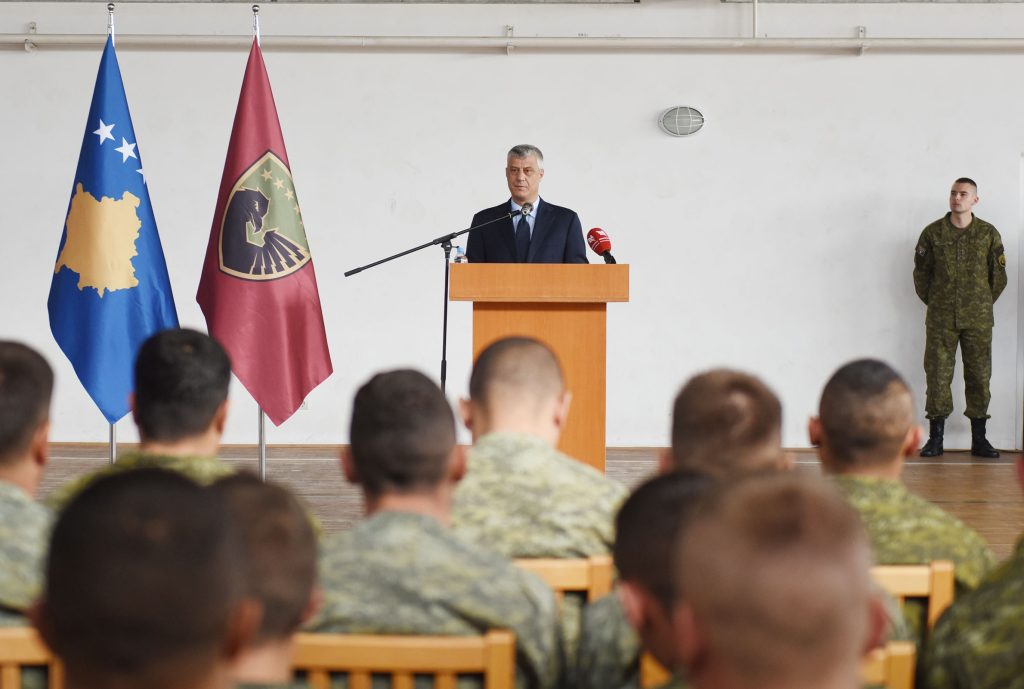
Gjilan, November 13, 2017 – The President of the Republic of Kosovo, Hashim Thaçi, attended today the promotion ceremony of the five members of the non-majority communities in the First Battalion of the Kosovo Security Force.
President Thaçi honors the British martyrs, pays tribute at their memorial
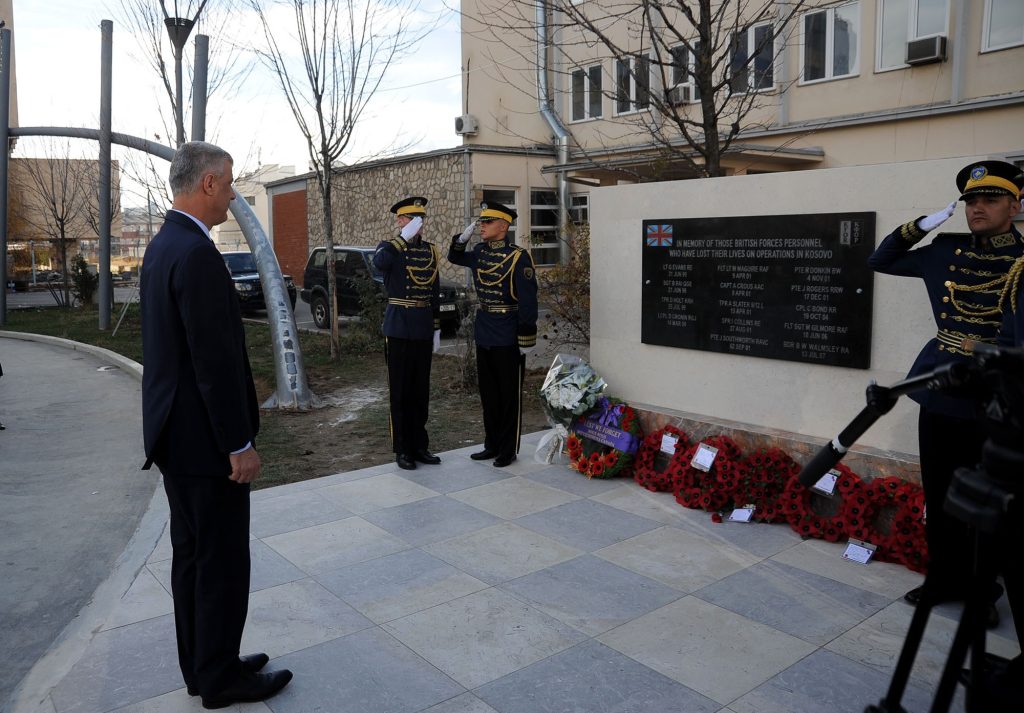
Prishtina, November 12, 2017 – The President of the Republic of Kosovo, Hashim Thaçi, as a sign of honor to the British martyrs, today, on the Memorial Day of the United Kingdom paid tribute at the British Remembrance Memorial on the “Edith Durham” square in Prishtina.
President Thaçi’s speech at the Commemorative Academy for Shotë Galica
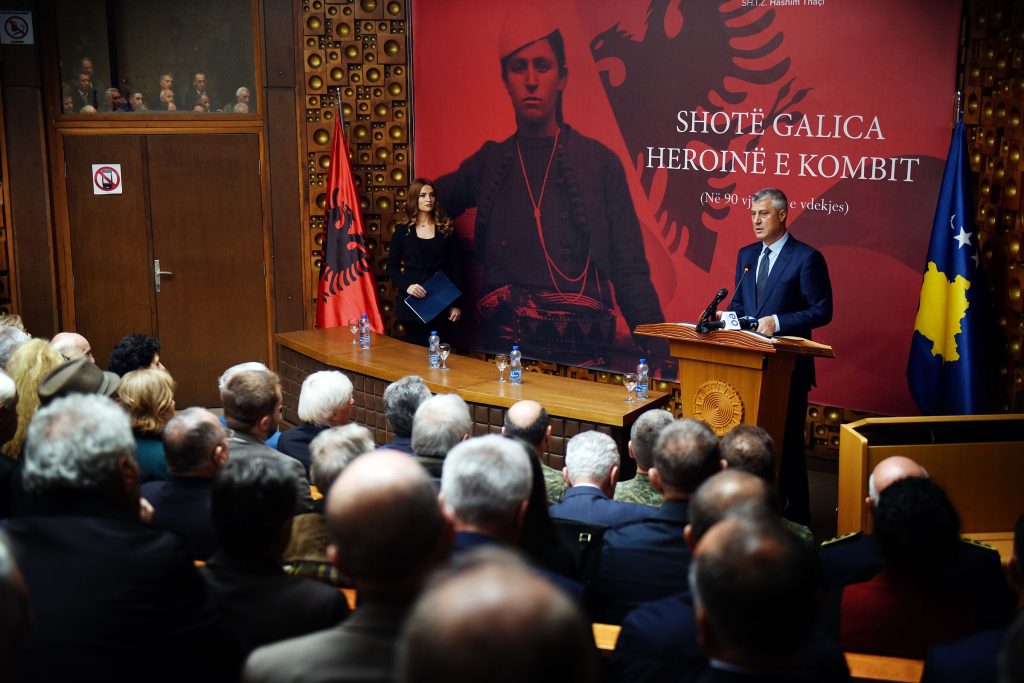
Ladies and Gentlemen, The year 2017 marks the 90th anniversary of the passing away of one of the brightest figures of our national history, Qerime Halili, known as Shotë Galica. Today, with this Academy, we make the highest state and institutional honors to Shotë Galica, the Heroine of the People officially proclaimed in the Republic of Albania, the Heroine of Kosovo, proclaimed in our Republic. We pay homage to Shotë Galica, who beyond the formal decree has turned into a metaphor of the Heroine of the Nation, into a symbol of endurance and bravery. On the occasion of the 90th anniversary of the passing away, based on the legal and constitutional powers I have constituted the decoration “THE ORDER SHOTË GALICA”, with which the distinguished figures of the nation for sacrifice and freedom will be decorated. Ladies and Gentlemen, The Albanians as a nation had entered the twentieth century, tired and overwhelmed by the long slavery. The historical context of Kosovo left outside of Independent Albania in 1912 was quite complex and tragic. In the Balkan wars period, Kosovo had become a place where foreign armies entered and left, leaving traces of material and human destruction. The place where even a yard of the Albanian house was dividend into borders of two temporary states. Therefore, it remains to the Albanian historiography to record and systematize the painful history of the violence that was exerted by the wild invasions during the Balkan wars and during World War I when the Serbian kingdom was violently putting to life the power for the rule of Kosovo. The burning of houses, murder of unarmed people, the deportations of the members of insurgent families in Serbian prisons, displacements outside Kosovo, recruitments for foreign armies, land acquisition for colonization are only part of anti-Albanian actions implemented by the Serbian army and gendarmerie between two world wars These violent and systematic actions, made the Albanian people of Kosova to draw warriors and insurgents from their midst, who disagreed with the division of ethnic lands, with the denationalization, assimilation, displacement and denial of basic human rights. Under such circumstances, armed groups, despite the not equal potentials with the invader, did not agree to be subjected to enemies with high state organization. The Albanian insurgents were not simply rebels or Kaçaks, but were fighters aware for the realization of natural rights for life, for free life, for national and political rights. Kosovo’s insurgent groups were linked to the Kosovo National Protection Committee based in Shkodra, which consisted of ideologues and ideators of Albania’s Independence, of prominent figures such as Hasan Prishtina, Luigj Gurakuqi, Bajram Curri, Hoxhë Kadri Prishtina, Bedri Pejani etc., who never agreed with the Serbian rule of Kosovo and its separation from Albania. Ladies and Gentlemen, In a nearly ten year period, the pillar of the uprising against the deployment of the Serbian military and police power was the armed group of Azem Bejta and Shotë Galica. The high consideration of the ideator of Albania’s Independence, Hasan Prishtina, for the commander of the insurgent groups of the time, Azem Bejta, was not a coincidence. Azem Bejta was distinguished by the born talent of a warrior, with the intuition of the commander and combat strategist, as well as for the rare bravery, proven in every battle. Let me emphasize two features of the rebellious war of that time. One: Despite the fact that the Albanian population was in a poor economic state, despite the fact that it suffered material and human damages from the combat operations of the insurgents, the insurgents found full support from the civilian population. Two: Even though unprecedented terror was exercised on the Albanian population, the insurgents remained loyal to the military code and the ethics of war customs. They never took revenge on unarmed Serb civilians, never massacred bodies, and never ruined and burned Orthodox religious temples. Ladies and Gentlemen, The co-fighters of Azem Bejta were not few in number, being part in severe conditions in coordinated battles and uprisings as the one of 1919. But above all the profile of the famous warrior Qerime Halili – Shotë Galica is a unique phenomenon, wife and co-fighter of the great leader, Azem Galica. Shotë Galica did not leave the combating formation for a single day. She faced the entourages, participated in attacks, helped the weak population to retreat, helped the wounded comrades, drove the orphaned children to Albania, returned to Kosovo from the north of Albania as often as the continuation of the uprisings was necessary. Even after the murder of Commander Azem Bejta in July 1924, Shotë Galica for three more years did not stop her insurgent activity with her fellow fighters until resistance became impossible. Shotë Galica died in severe health conditions in Albania without institutional care. That was the state of the Albanian state of that time, which had numerous problems both in the national and international level. Shota Galica’s death is defined by the fate of the tragic hero, a non-rare end of great figures, who, despite the massive size, end their life unjustly in social and economic misery, without their fault. Ladies and Gentlemen, Despite the tragic end, Shotë Galica turned into a symbol of a loyal woman to the homeland, the heroine fighting for freedom, the warrior ready for sacrifice. Shotë Galica became a symbol of the contribution of the silent heroines of the nation, of mothers, daughters, girls and women who in every historical period faced the good and the bad besides the family and the nation. Shotë Galica is a symbol of the pride and dignity of the Albanian woman. She is a symbol of the mothers, women and sisters who cooked, nourished, cleaned, and healed the Liberation Army fighters everywhere in Kosovo and beyond. Shotë Galica is a symbol of the Albanian mother, of the mother who gave birth to Shotë Galica, Azem Bejta, Shaban Polluzha, Adem Demaçin, Jusuf Gërvalla, Adem Jashari, Zahir Pajaziti, Xheva Lladrovci and many warriors and heroes who fell
The President: Shotë Galica is a symbol of pride and dignity of the Albanian women
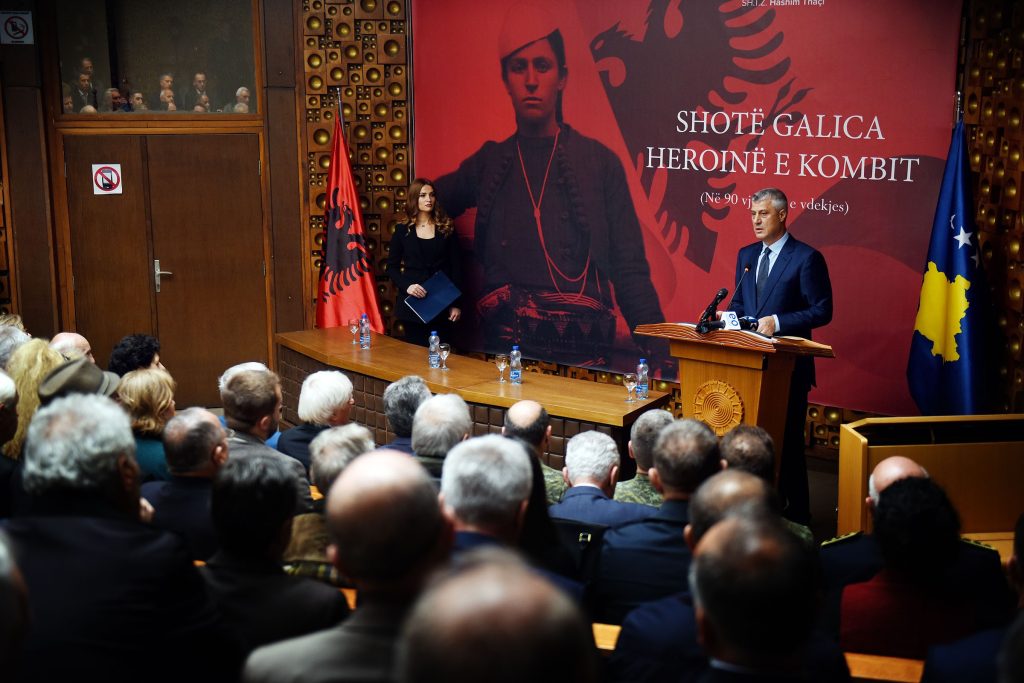
Prishtina, November 10, 2017 – Under the auspices of the President of the Republic of Kosovo, Hashim Thaçi, today, the Memorial Academy for the Heroine of the Nation, Shotë Galica, on the ninetieth anniversary of her death, has been held.
President Thaçi thanks General Giovanni Fungo for the service in Kosovo
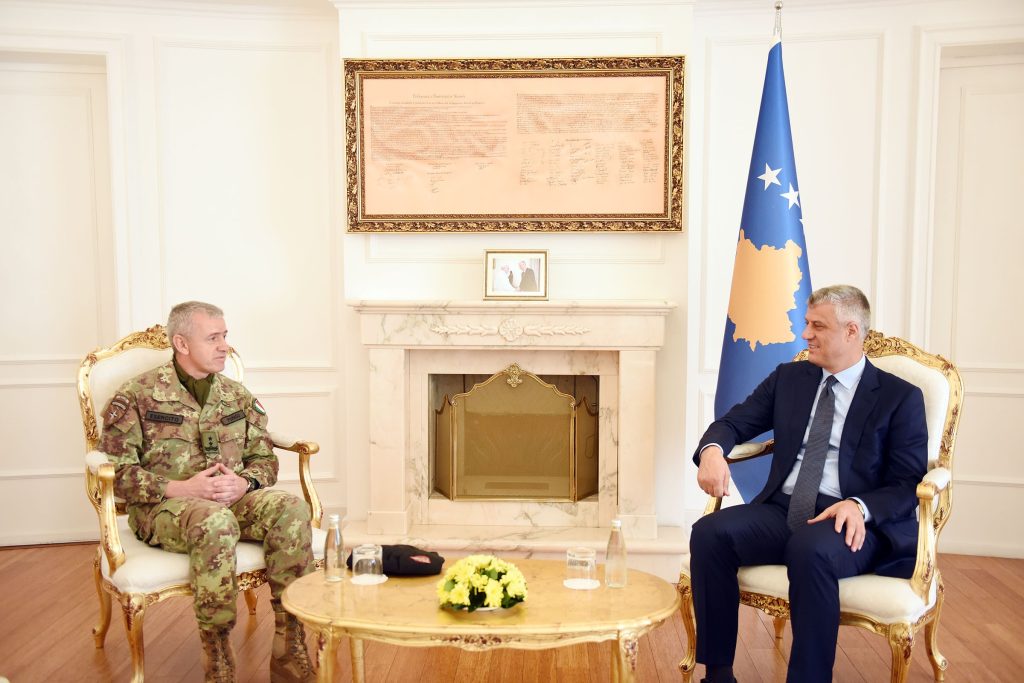
Prishtina, November 10 – The President of the Republic of Kosovo, Hashim Thaçi, received today in a farewell meeting General Giovanni Fungo, the XXI Commander of KFOR in Kosovo, who has completed his duty.
President Thaçi’s speech on the official visit to Kukës
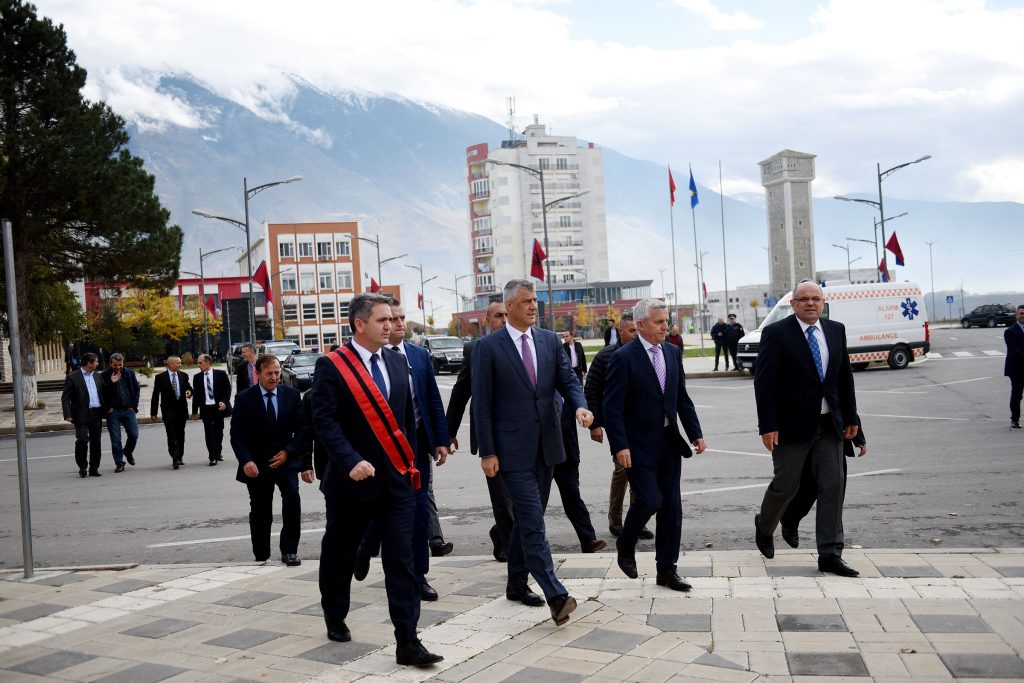
Honorable Mayor of Kukës, Mr. Bashkim Shehu, Honorable Ambassador Minxhozi, Ladies and Gentlemen, I am very honored to be in your midst today, on a one-day visit in the beginning of November, the month marking the 105th anniversary of Albania’s Independence. I am privileged to address the citizens of Kukës in a speech on behalf of the Presidency of the Republic of Kosovo, on my behalf and on behalf of the citizens of Kosovo. I am here to express the GREAT GRATITUDE to all the citizens of Kukës and of Albania, who with incomparable generosity and nobleness sheltered about 500 thousand brothers and sisters from Kosovo, displaced violently during the war years 1998, 1999. In the most critical period of the Kosovo Albanians, in the late twentieth century, the new Kukës, the small Kukës in appearance became the big Kukës, open, loving and deeply generous and noble. After a long history of struggle for freedom, Kosovo had finally established the most important political and military organization, the Kosovo Liberation Army, the most successful guerrilla of the century which went to fulfill the ideal and the dream of freedom. For the first time, Kosovo achieved to be an actor in the international arena at the Rambouillet Conference. For the first time Kosovo had on its side strong international friends, the world of democratic values. It was precisely this political advancement of Kosovo that managed to produce the international document by which the democratic world engaged the most powerful alliance of the globe, NATO, to intervene militarily over Serbian military and police targets. The fair war of the Kosovo Liberation Army and NATO’s successes made the anti-Albanian politics of Belgrade even wilder, which began ethnic cleansing through murders, prosecutions, deportations and genocide. The unarmed population, women, men, elderly and children were forced to leave their homes toward Macedonia and Albania. Thanks to the solidarity, love and pure patriotic feeling, the deported Kosovars, in Kukës, found the warmth of the Albanian hearth and patiently waited for the end of the war. The miracle happened. As the great writer Ismail Kadare stated: the hand of the farmer haven’t cooled yet from the plug, the moment of the return to Kosovo came. History has not witnessed a more fleeting return of people to their homes than that of the Kosovo Albanians, just after the end of the war on June 11, 1999 Ladies and Gentlemen, The inhabitants of Kukës and those of Lumë in general are a common part of Kosovo’s history. They experienced what their compatriots experienced during the turbulent years of the Balkan Wars and during World War I They experienced the terror of the Serbian armies. They made resistance against Serbian military troops aiming the occupation of Albania. Kukës and Prizren had the political, historical and geographical fate of unrighteous state border division for a century. This division was deep and big throughout the era of communism. But in this division and isolation there was found a form of communication between Kosovo and Albania. It was Radio Kukësi, a radio station that, despite ideological influence, performed a mission for which we, Kosovo, have a high appreciation. Thousands of programs with historical and patriotic content were broadcasted on the waves of Radio Kukësi. Through the waves of Radio Kukësi, the feeling of love for Albania and the historical figures of our national Renaissance grew and was cultivated. Kosovo’s forbidden history was broadcasted on Radio Kukësi. And especially the 1981 demonstration support, with the request for the Republic of Kosovo, had great echo everywhere in Kosovo. Allow me to express my special gratitude today for this contribution of Radio Kukësi, which was the voice of Albania. Ladies and Gentlemen, During 1998-1999, Kukës became the basis of the KLA. The city of Kukës experienced the shelling of the Serbian army. Many people of Kukës joined the Kosovo Liberation Army, just like the ones of Hasi and Tropoja. Glory to all those who contributed to the war of the Kosovo Liberation Army! Ladies and Gentlemen, Today, the history of relations between Kosovo and Albania has radically changed for the better. Never in history, our political, economic, cultural relations and those of all areas of life, have been better than today. Democratic Albania is a NATO member state. The free and independent Kosovo is on the secure road towards Euro-Atlantic integration. Despite being a nation in two states, we have no alternative but Euro-Atlantic integration. Ladies and Gentlemen, Once again I express my gladness that I am in your midst, in the uttermost city of northern Albania, in the first city when Kosovo enters into Albania In the Kukës of the legendary hospitality. In the city that unites the eternal flows of the two rivers that traverse a large part of the Albanian territories: the White Drin and the Black Drin. Thank you!
The President: In Kukës, the Kosovars found the warmth of the Albanian hearth
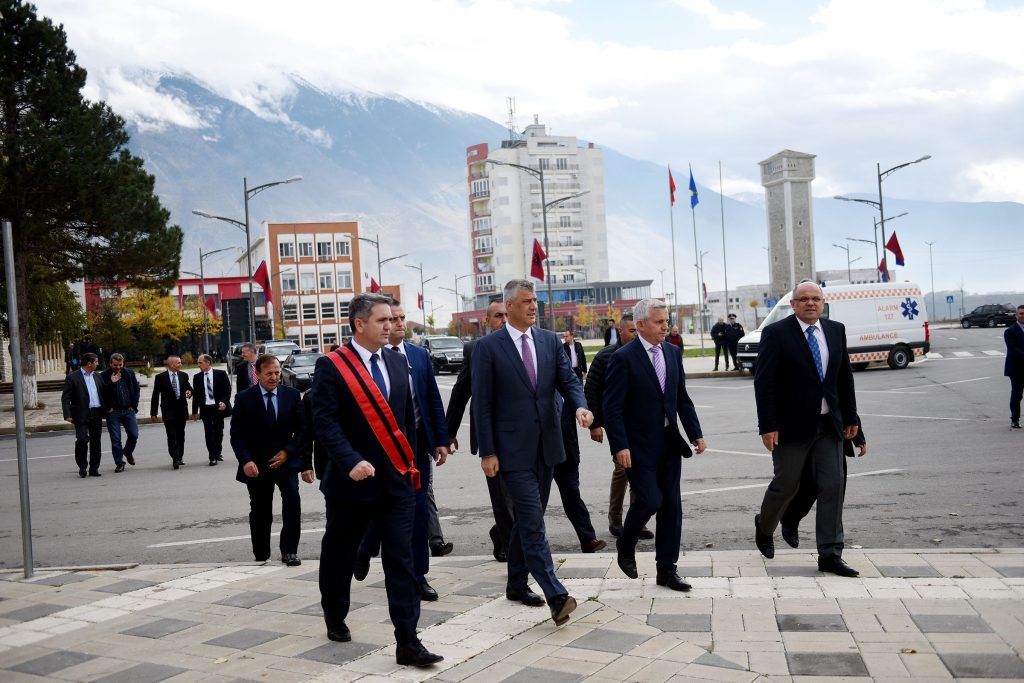
Kukës, November 09, 2017 – The President of the Republic of Kosovo, Hashim Thaçi, today, at the Kukës Palace of Culture has decorated the citizens of Kukës with the “Order of Freedom” medal.
KONKURS PUBLIK – PËR DIZAJNIMIN E LOGOS DHE PROPOZIMIN E SLOGANIT TË 10-VJETORIT TË PAVARËSISË SË KOSOVËS
