
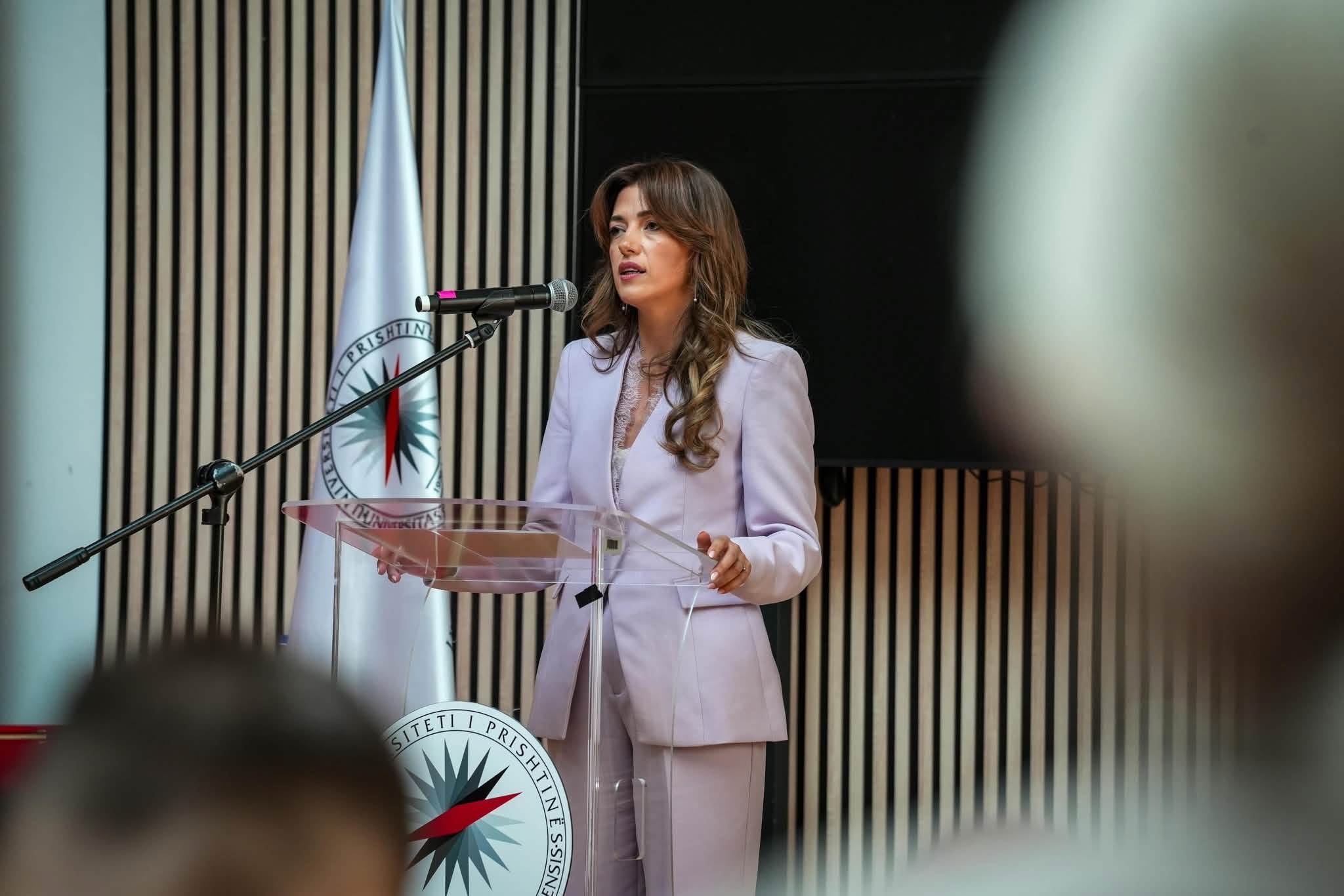
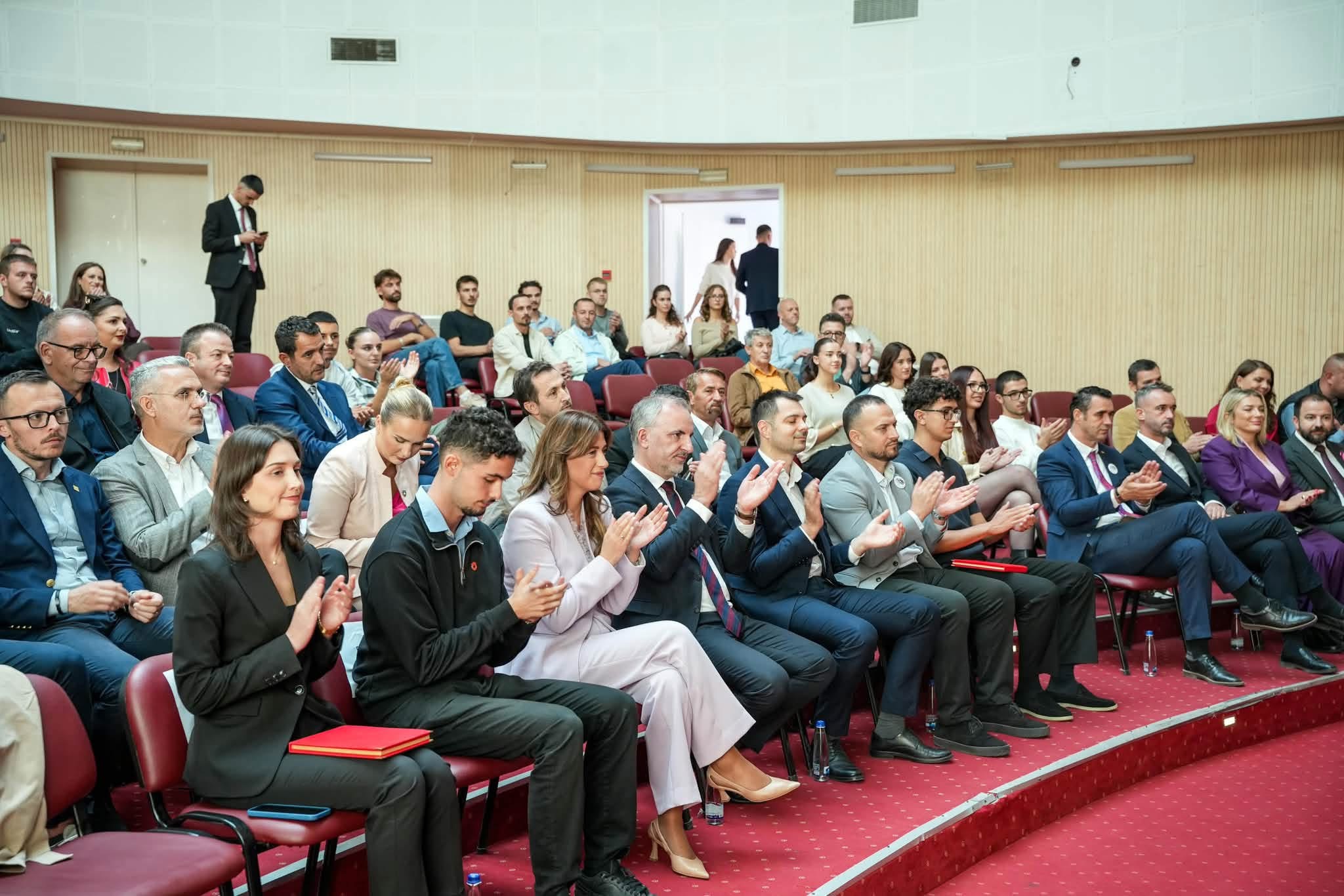
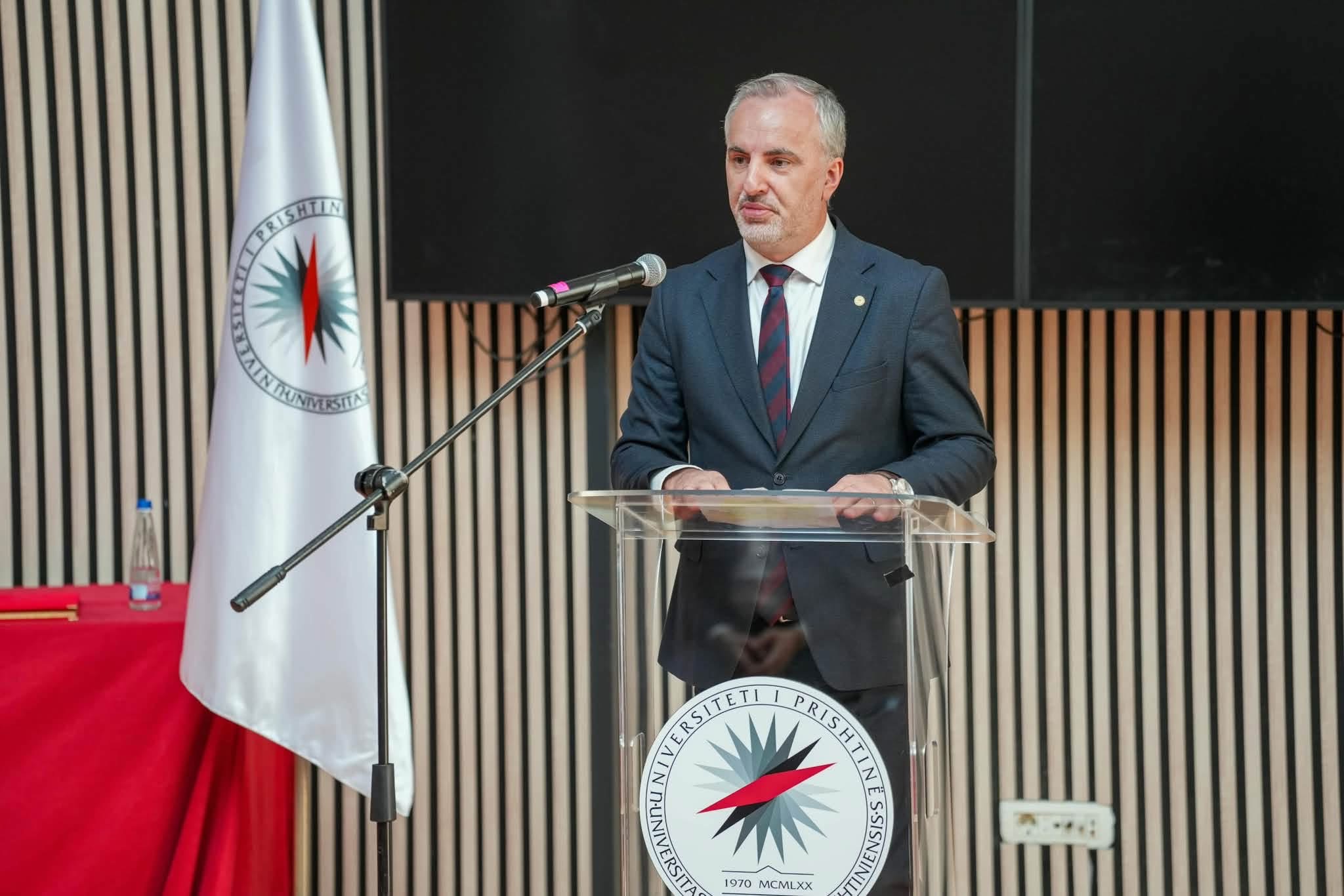
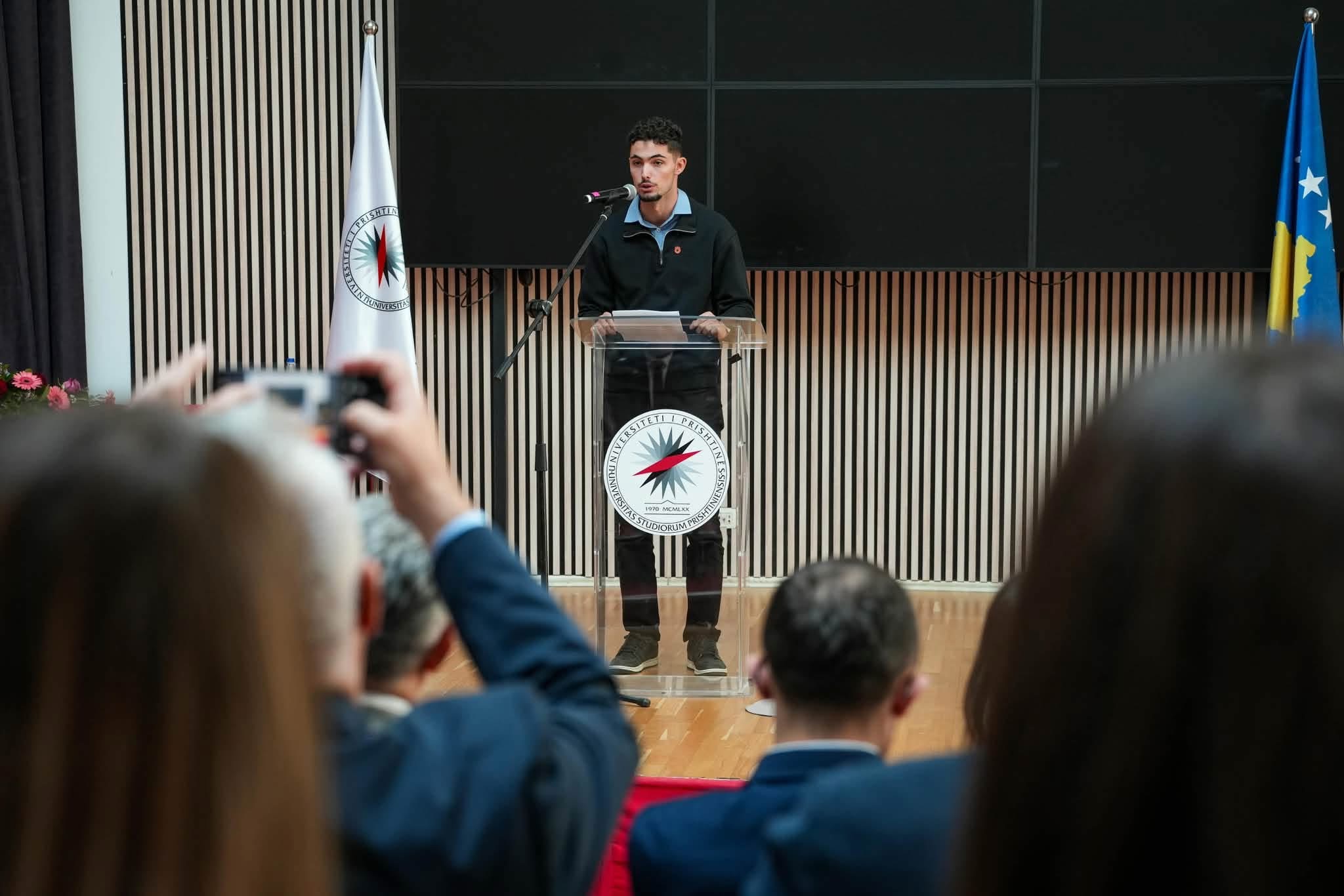
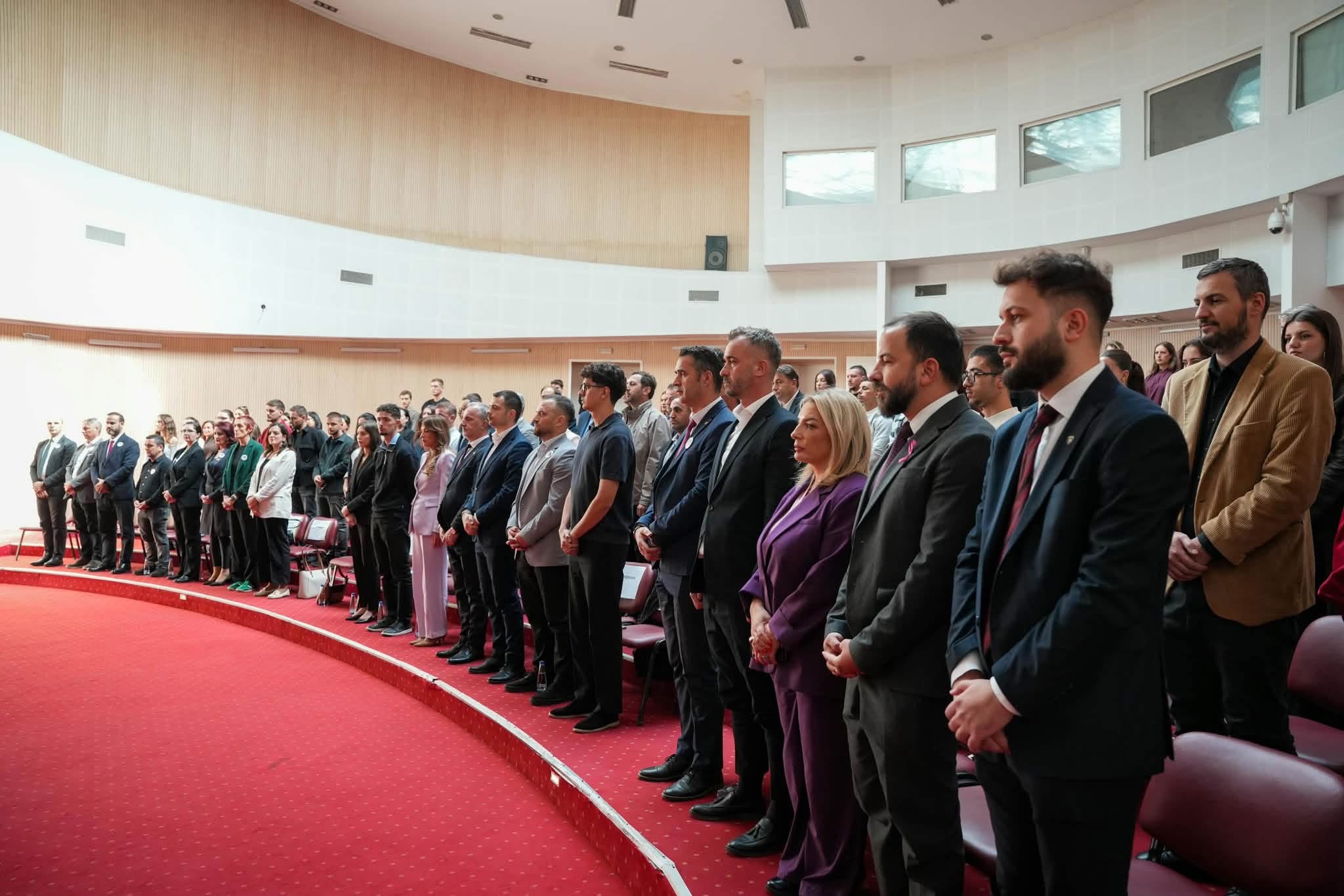
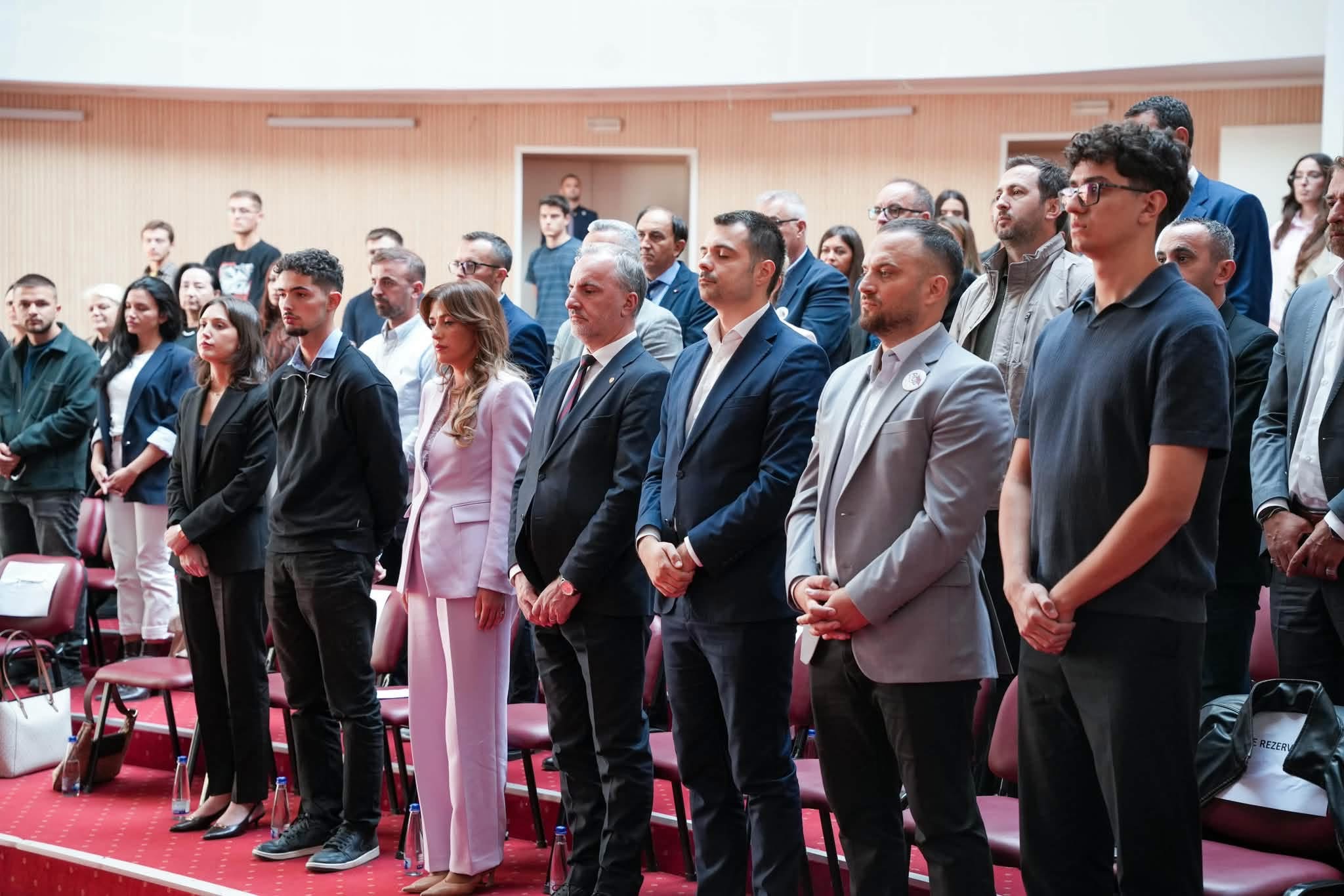
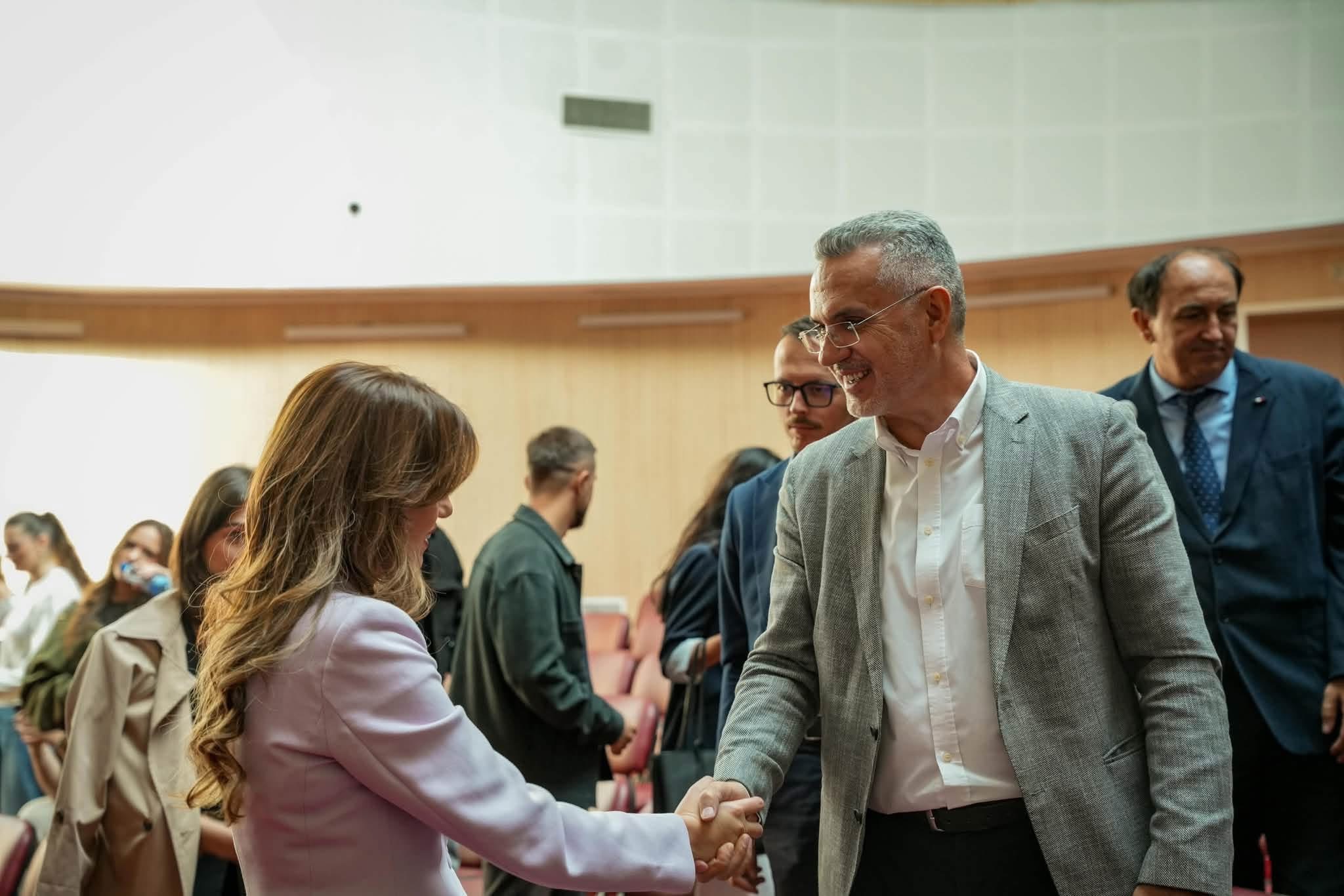
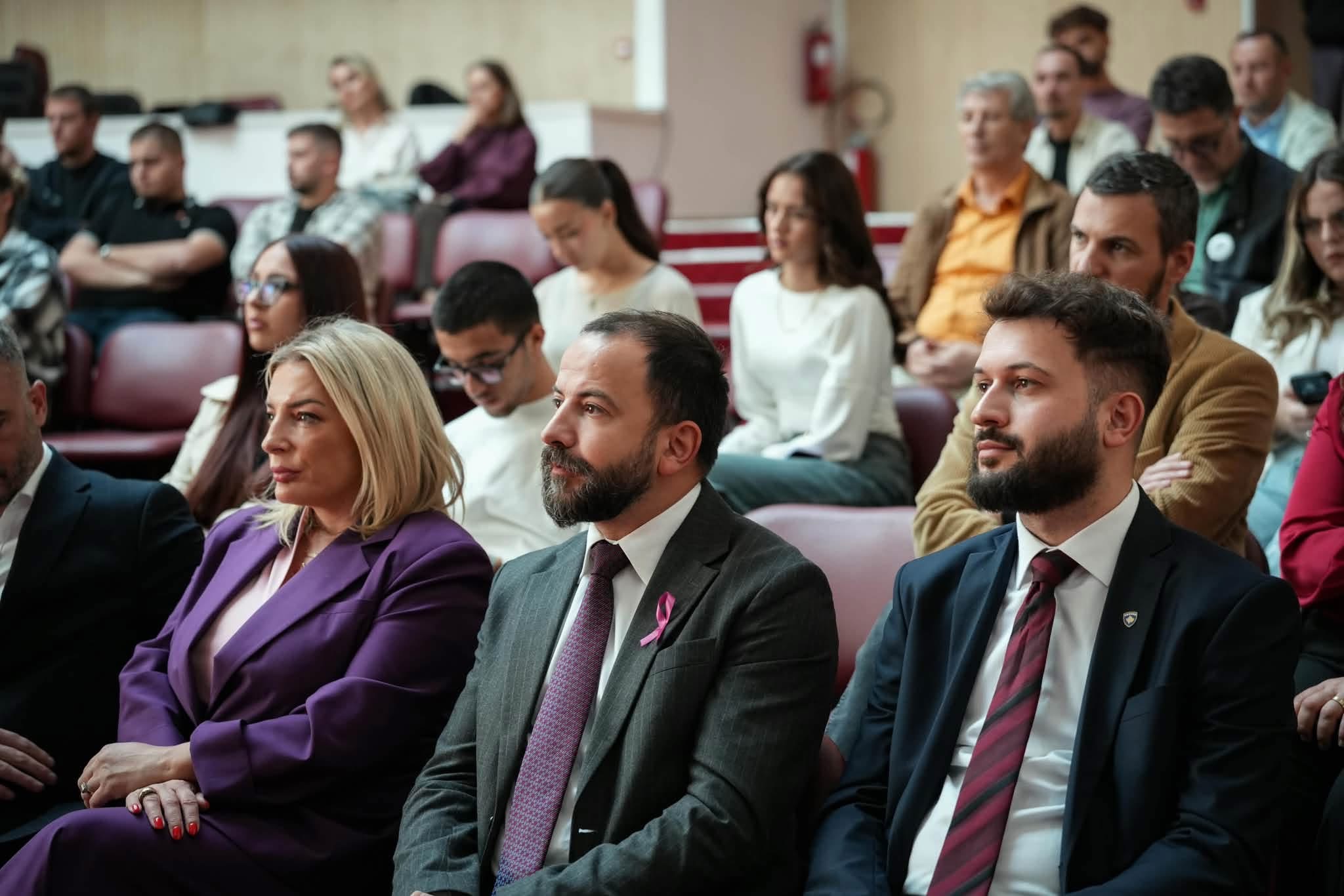
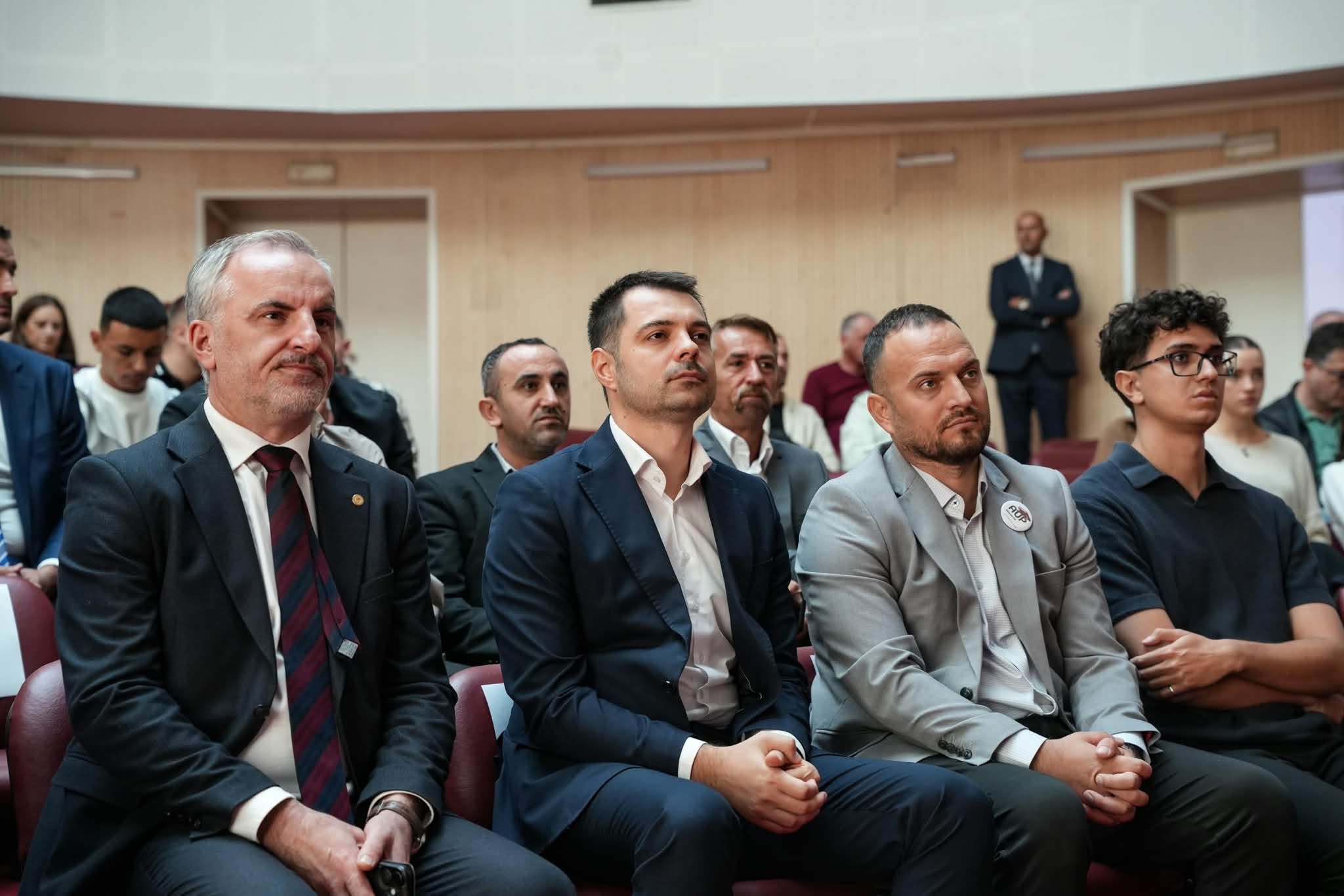
The Acting President of the Republic of Kosovo, Albulena Haxhiu, participated today at the ceremony marking the Student Day at the University of Prishtina.
In her address, Acting President Haxhiu stated that there are universities whose history is written primarily in lecture halls, libraries, and laboratories.
She stated that the history of the University of Prishtina was also written in the streets, in protests, in homes converted into classrooms, and—above all—by generations of students who refused to remain indifferent to the times in which they lived.
“In his lecture ‘The Mission of the University,’ the philosopher Ortega states that the student lies at the heart of the university. More than the disciplines taught there and more than the professors who teach, the university exists for the student. Ortega expected something more from the university than merely the preparation of skilled professionals. He believed that the university should help the student grasp the great idea of their time and be capable of responding to it,” said Acting President Haxhiu. According to her, if there is a university where this idea holds special significance, it is the University of Prishtina; for, as Acting President Haxhiu noted, its history is largely the history of generations that understood what the times demanded of them and took action.
“In the late 1960s, the great idea of the era for us was self-determination—the creation of our own institutions. In November 1968, young people and students took to the streets in protest, demanding, among other things, the establishment of the University. Just over a year later, we established our University. In 1981, students from the University of Prishtina launched a widespread movement with the call ‘Kosovo: A Republic.’ The regime responded with violence, imprisonment, and persecution. Yet, the demands of that generation did not fade away; they remained alive in the generations that followed,” emphasized Acting President Haxhiu.
She went on to say that a decade later, the challenge was different. “In 1991, when the Serbian regime expelled Albanian students and professors from university buildings, the imperative of the time was to ensure the institution did not cease to exist. Families opened their doors, rooms were transformed into classrooms, and private edifices became offices. An entire university continued to function outside its own buildings. For six consecutive years, the academic year began in those spaces every October 1st. Then came October 1st 1997. After years of keeping the University alive outside its own facilities, a new generation of students decided the time had come for the resistance to move into the open. The immediate demand was a return to university premises, but its significance was far broader: it was a call for freedom, dignity, and the right to live and act in one’s own land without subjugation or humiliation,” stated Acting President Haxhiu.
She further added that students answered the call of the Independent Student Union and, together with their professors, gathered in the Velania neighborhood. “From there, thousands of students, professors, and citizens set out toward the center of Prishtina and the university campus, demanding a return to their premises. Yet, that march was far more than a plea to open the university doors; it was an act of open defiance against a regime that had long sought to keep Albanians excluded from institutions, voiceless, and stripped of their rights. Confronted by dense cordons of Serbian police, the protest was violently suppressed. Protesters were beaten and arrested in full view of journalists, diplomats, and the international community. Yet, something else occurred that day—something the regime had not anticipated: the fear of the Serbian police, which had long seemed invincible, began to shatter on the streets of Prishtina,” emphasized Acting President Haxhiu.
Acting President Haxhiu noted that the world gained a clearer view of the events unfolding in Kosovo, while a society long forced to live under oppression demonstrated its readiness to openly resist it. “After October 1st, further protests followed. Kosovo was entering a new phase of its resistance—now an armed one—which would continue until liberation. The call for the October 1st protest came from the students, while professors stood alongside and in support of them. Rector Ejup Statovci led the way. He was aware of the risks he was taking and the potential consequences of confronting the regime, yet he did not waver. He demonstrated through his actions that the student lies at the heart of the university,” stated Acting President Haxhiu.
She further noted that today we are inside the University, within the very spaces for which the students of that time took to the streets.
“And when we look at the history of the University of Prishtina as a whole, we realize something very important: each generation was handedout this university from the hands of the preceding one, defended it, advanced it, and handed it over to those who followed. Many of the students from that era teach here today. Others work in the institutions of the Republic of Kosovo, as well as in science, the economy, culture, and public life. Yet, this history does not end with them,” she stated.
According to her, every generation faces its own great challenge; she added that the generations before them had the duty to strive for the university and the republic, to defend this university, and to fight for freedom.
Addressing the students, Acting President Haxhiu said that a different task lies before them: to build, upon this foundation of freedom, a state that serves its citizens well and a Kosovo that takes its place among other free nations in Europe and the world. “This is another challenge—perhaps less dramatic than that faced by the generations who took to the streets, yet no less important. For this, the country needs well-prepared doctors, engineers, teachers, lawyers, economists, artists, and researchers. But it also needs people who understand the times they live in—people who do not settle for what they are simply told, who ask questions, who question the status quo, and who take responsibility and participate in social and political life. The freedom you enjoy in the lecture hall is only as valuable as the use you make of it. Use it to ask questions, to refuse to accept an answer simply because it comes from an authority figure, and to demand more—from your professors, from one another, and from those of us holding public office. For the university is not merely a place to obtain a degree; it is a place where one learns how to think,” emphasized Acting President Haxhiu.
She further noted that the work of the professors is reflected in every student who graduates from this university possessing knowledge, integrity, and a free mind. “Rector Statovci left us an example that remains valid today: a professor’s place is alongside their students. This means listening to them, challenging them, demanding more from them, and helping them become better than the generation that taught them. The university grows stronger when the student demands more from the professor and the professor demands more from the student. Meanwhile, our institutions have a perpetual obligation: to support the public university, preserve its autonomy, and create the conditions where knowledge, hard work, and merit serve as its standard. We will undoubtedly do our part,” stated Acting President Haxhiu.
Addressing the students, Acting President Haxhiu noted that the university they have today was inherited from generations that made great sacrifices for its existence; those generations had their battles, and the current students have their own.
“Your task is not to repeat their path. Your task is to carry it forward: to make this university better than you found it, to make your country better than you found it, and—when one day you hand this university over to the generation following you—to be able to say that you understood your times and responded to them responsibly,” stated Acting President Haxhiu.
