
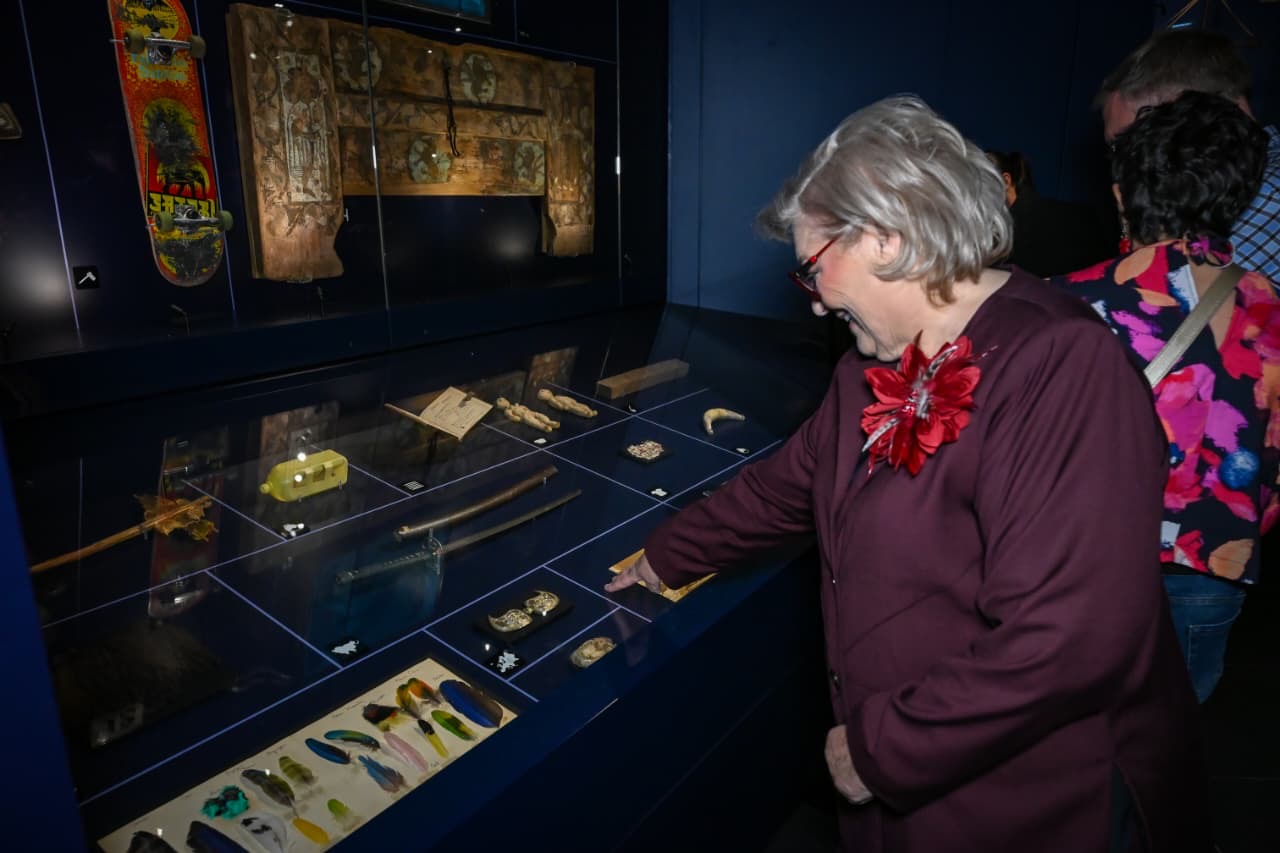
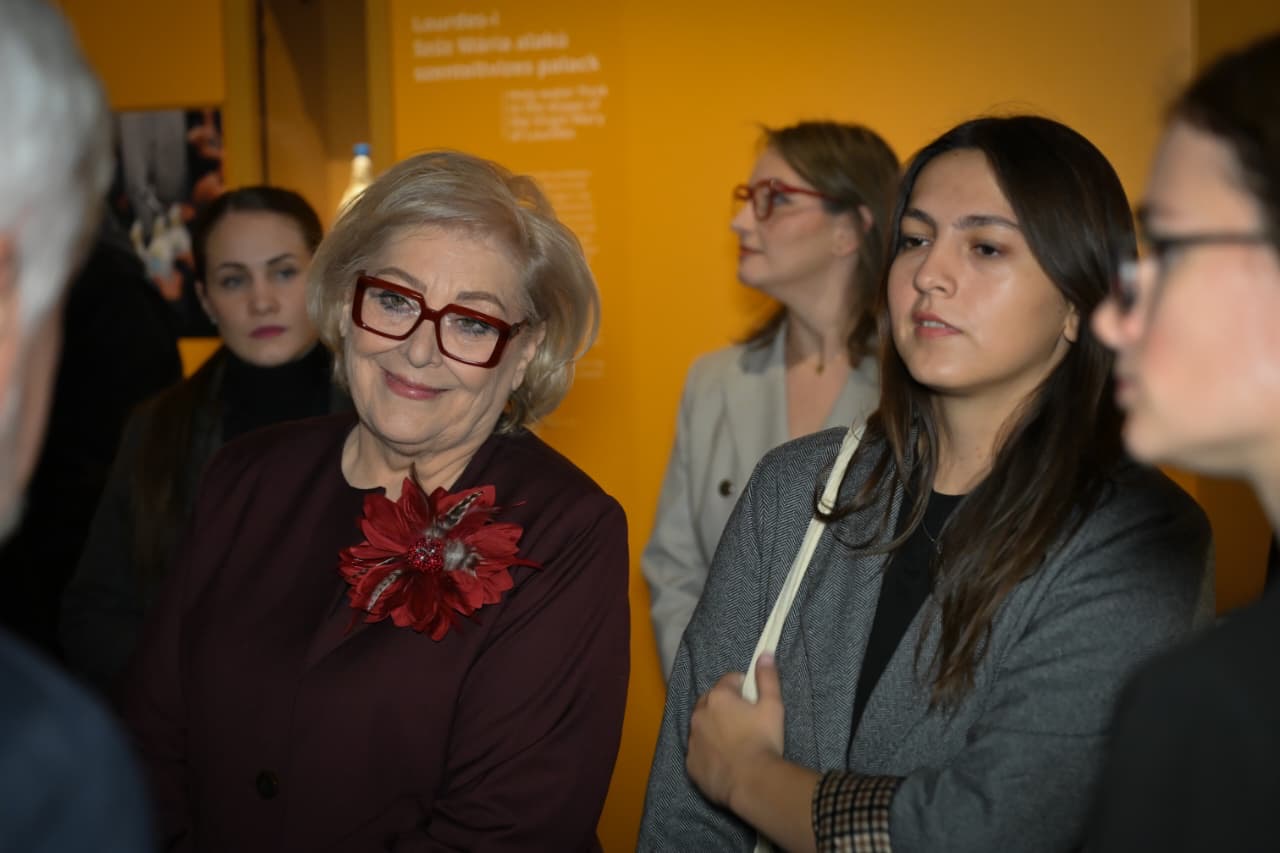
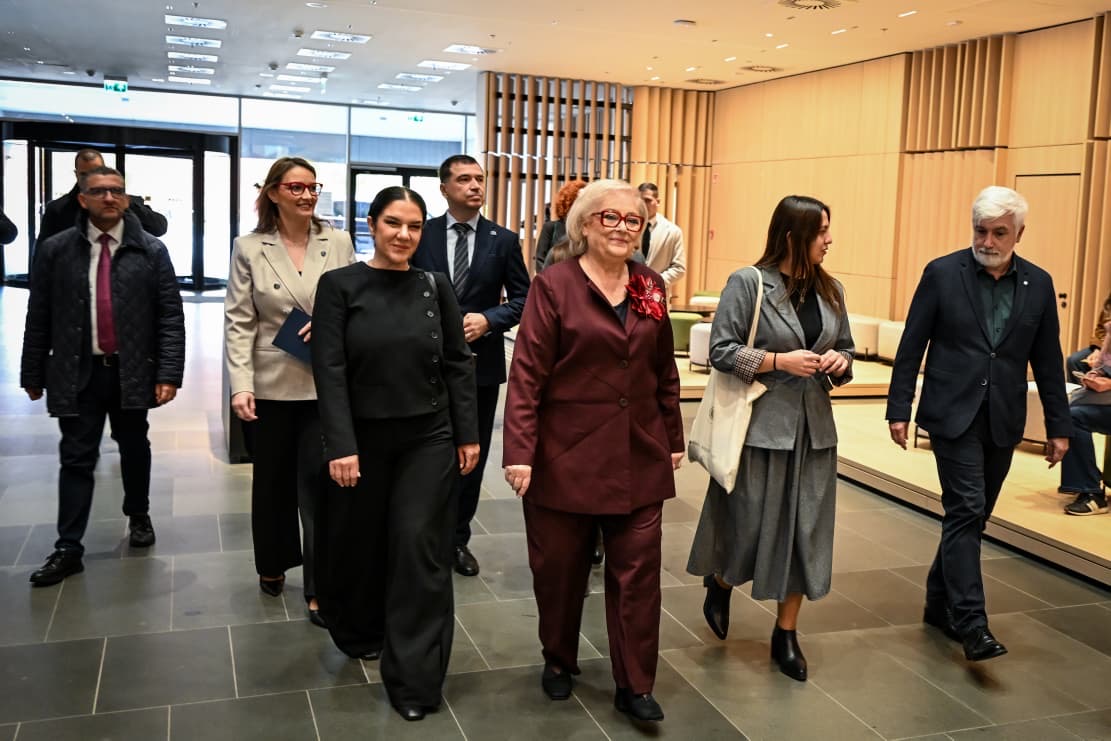
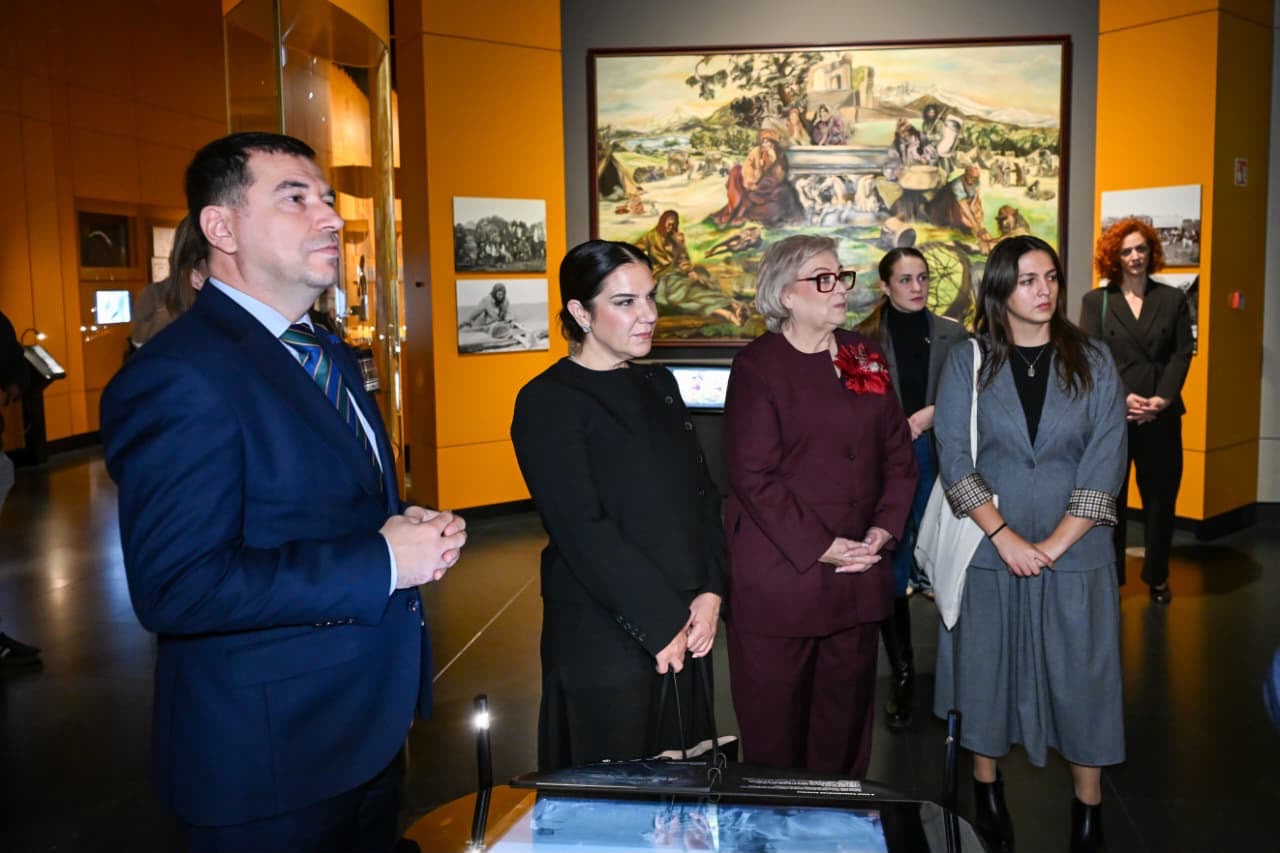
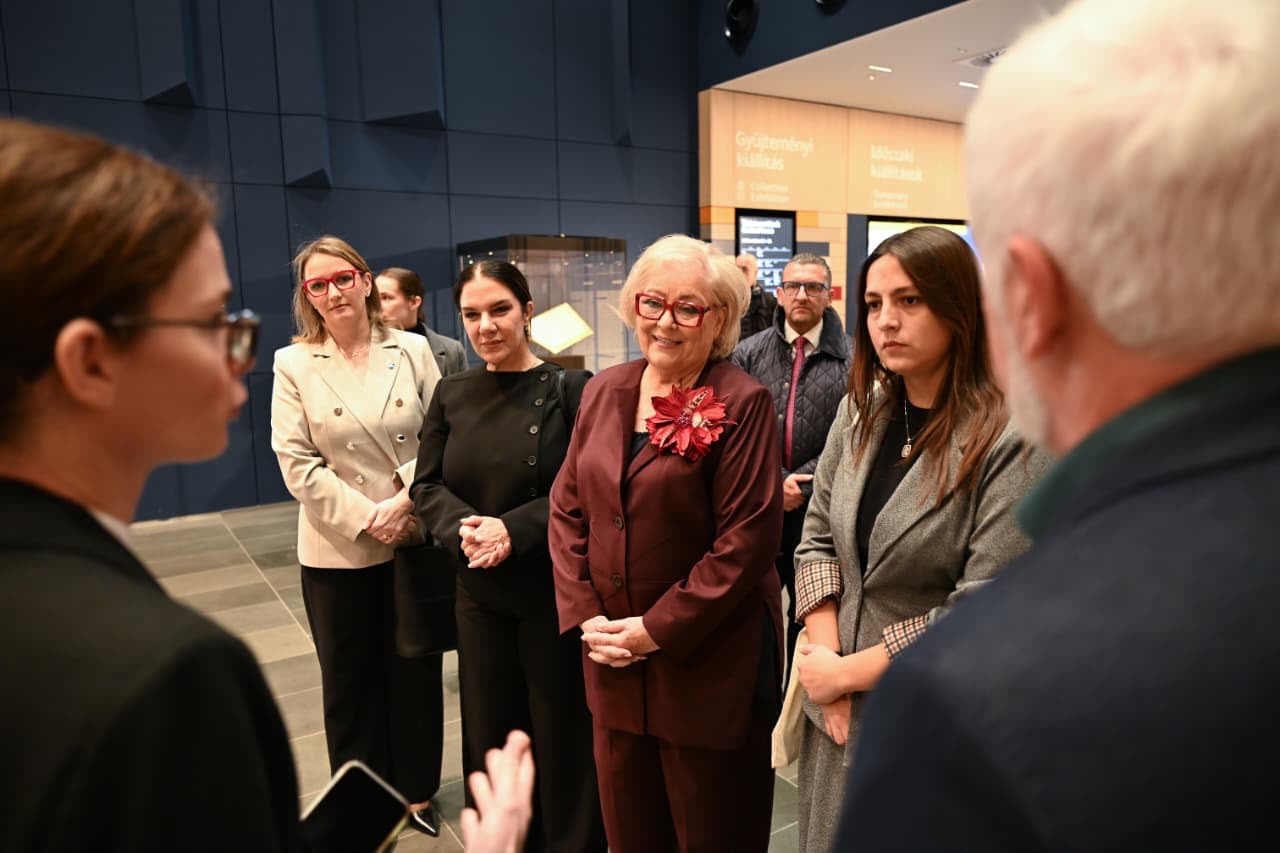
During her official visit to Hungary, the President of the Republic of Kosovo Justina Shiroka Pula, visited the Budapest Ethnographic Museum (Néprajzi Múzeum)—one of the most significant ethnographic institutions in Europe.
Founded in 1872, the Budapest Ethnographic Museum houses over 235,000 ethnographic objects representing traditional Hungarian culture as well as the cultures of peoples from across the globe.
The visit took place at the museum’s new building, which opened in 2022. While there, Madam President had the opportunity to explore the museum’s extensive collections and learn about the work being done to protect and preserve cultural heritage.
The museum also holds the Albanian collection of Paolo Lazza (Palokë Laca), which serves as an important testament to Albanian ethnographic heritage. Such collections are of particular value for understanding and studying our cultural history; they provide deeper insight into the identity, traditions, crafts, and skills that have defined the lives of Albanians through the generations.
Madam President emphasized the extraordinary importance of these artefacts and the necessity of preserving them for future generations. “The artefacts in this museum bear witness to the history, identity, and creativity of peoples throughout the centuries. Such collections help us better understand ourselves, our culture, and the traditional crafts that constitute an important part of our heritage. Preserving this heritage is a shared responsibility of humanity,” said President Shiroka Pula.
