
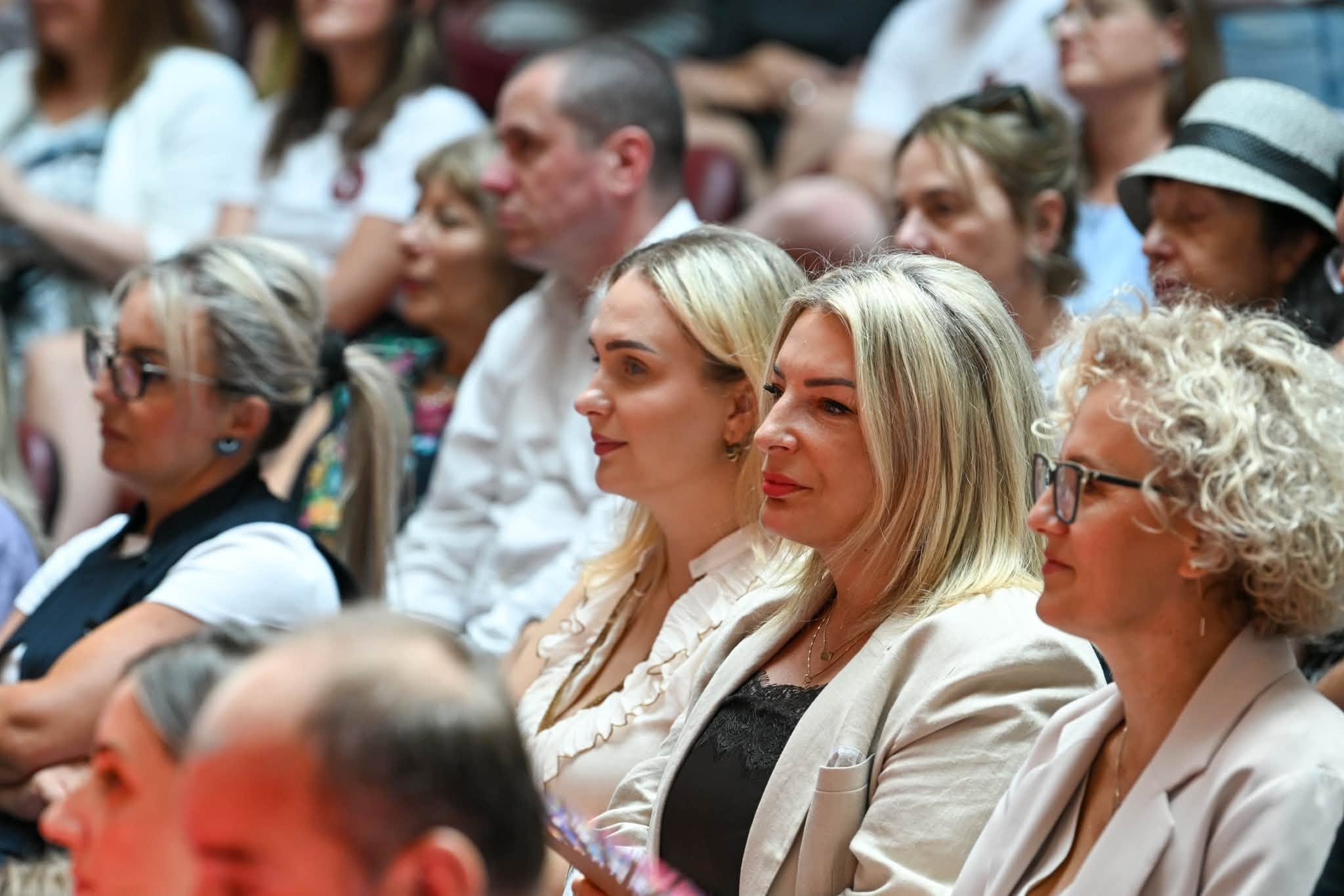
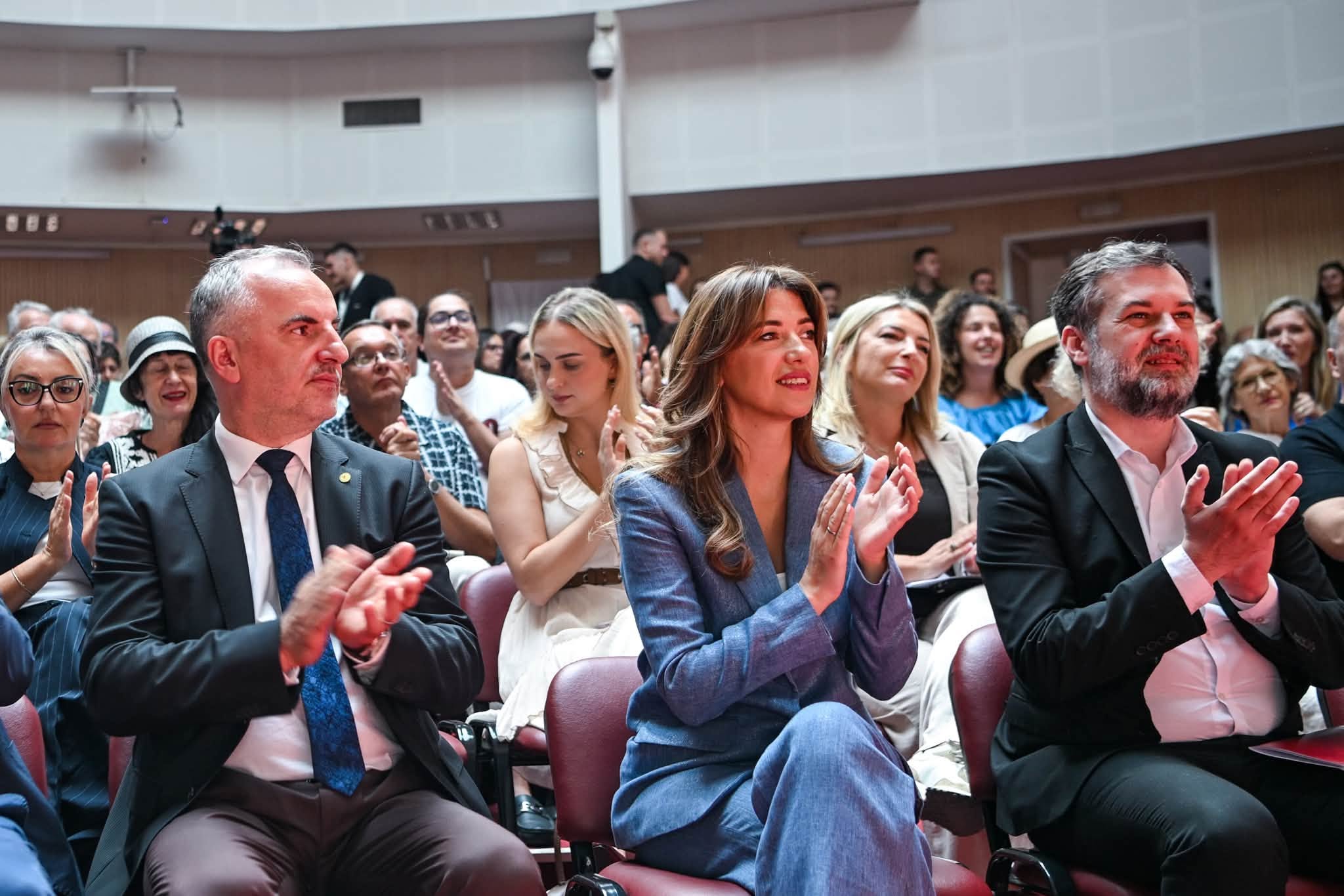
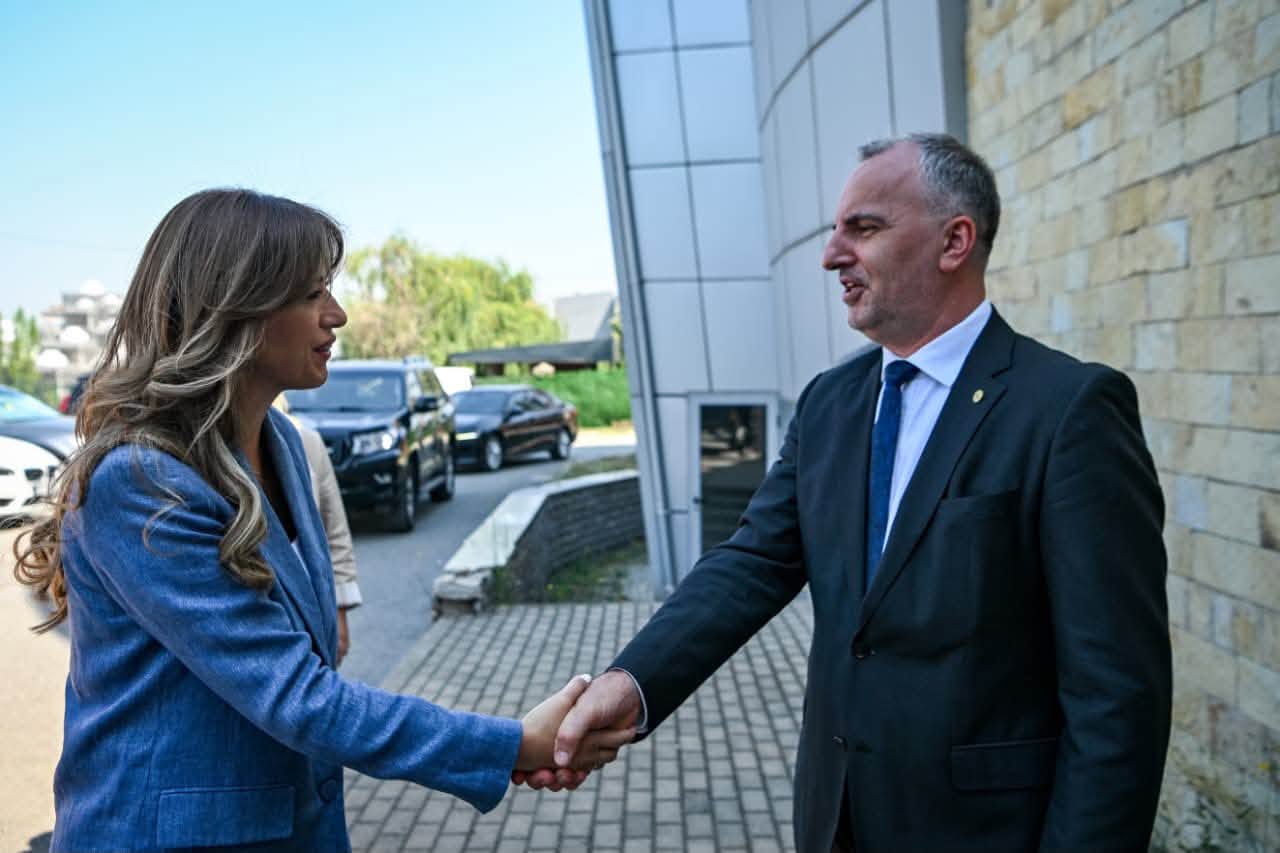
Honourable Seminar leaders,
Honourable professors, scholars and Albanologists,
Dear seminarians,
Ladies and Gentlemen,
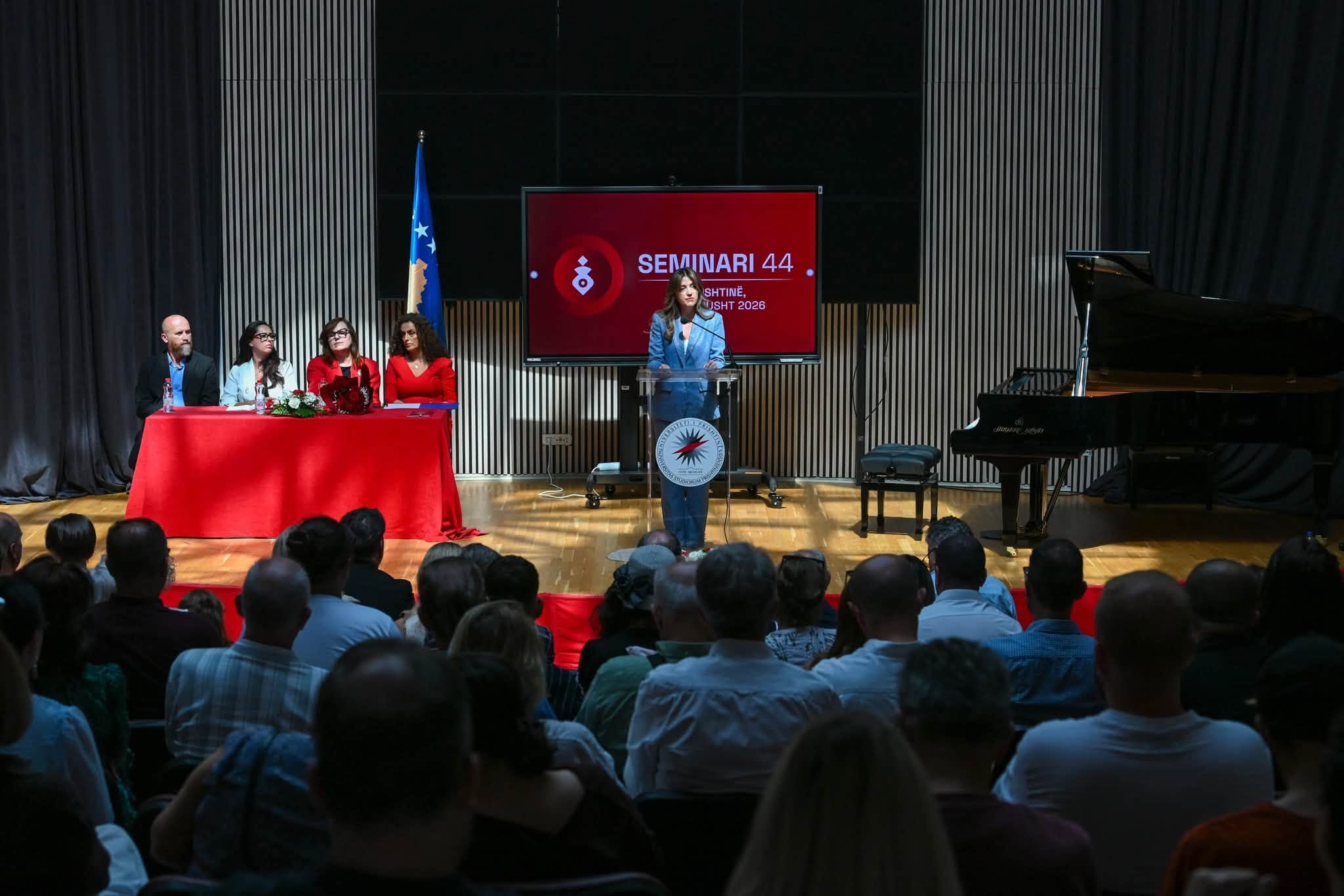
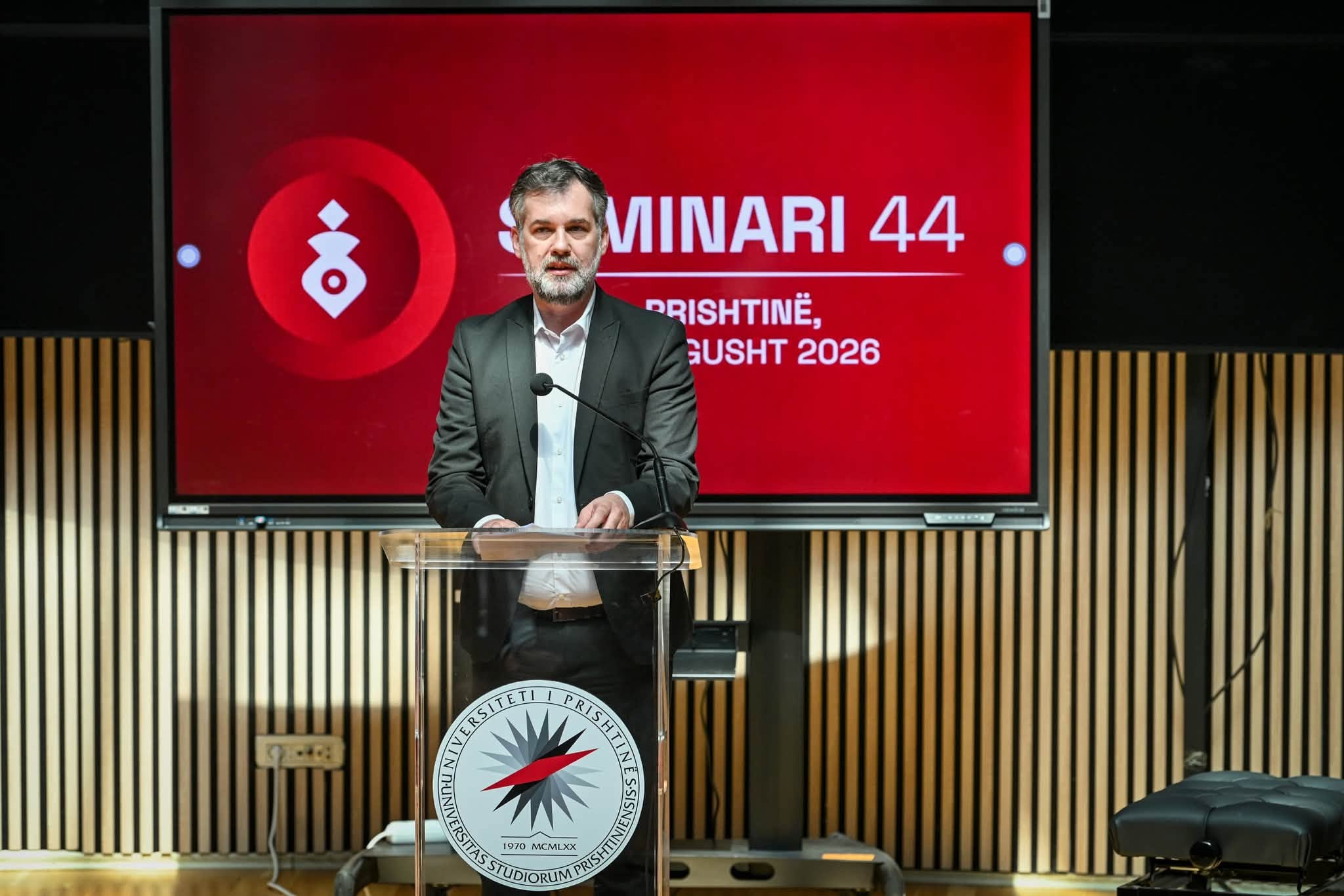
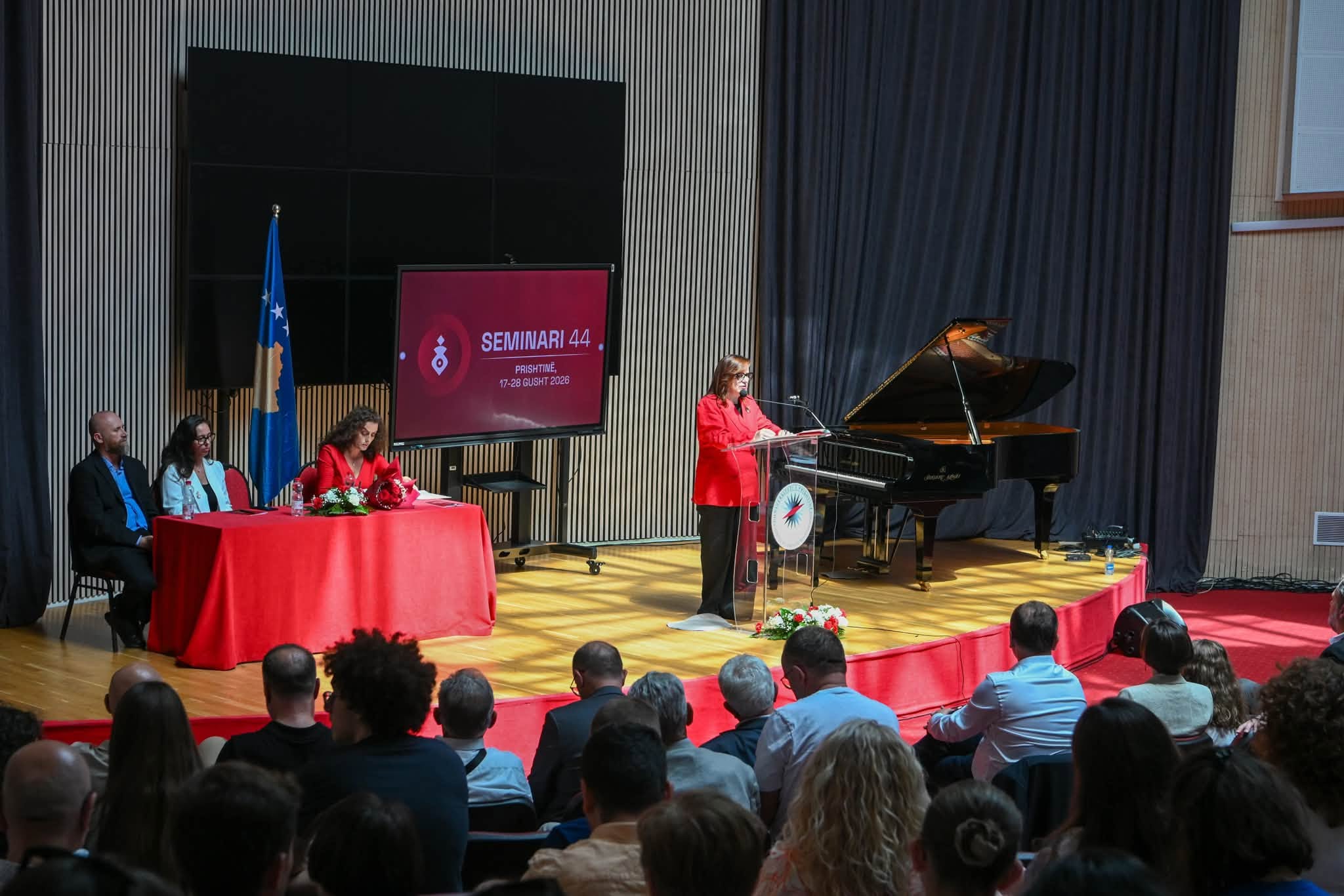
It is a special pleasure to be with you today at the opening of the 44th International Seminar on Albanian Language, Literature and Culture.
In periods when Albanians lacked their own institutions, Albanian language remained one of the main forms of our cultural and political continuity. The right to education, to knowledge, to expression and to participation in public life have also been linked to it. Therefore, the history of the Albanian language in Kosovo cannot be separated from the political history, which, in different periods, has also determined its place in public life.
Many of us have lived through a time when Albanian language was excluded from schools and universities, from television and the press, and when its use in public life was limited by the government itself. Today, inequalities between languages no longer necessarily appear in this form. Languages that have large corpora, that have a long tradition of digitization and strong technological support enjoy a superiority that is not only related to the number of speakers, but also to the amount of material that exists in digital form. Therefore, even when languages are equal before the law, they are not necessarily equal in the spaces where knowledge is produced and circulated.
Our experience makes us particularly sensitive to this. It would not be progress if the former linguistic hierarchies were to disappear from the law, only to return to technology. For more than fifty years, people who have worked for Albanian language in universities and Albanological centers at home and abroad have gathered around this Seminar. Here, students have been trained, stories and materials from the field have been collected, archives have been opened, studies have been written and works have been translated that have brought Albanian literature to other readers. Many of these works have required years and have continued far from the halls of the Seminar, in universities, institutes, libraries and archives.
From them, Albanian has gained researchers, readers and an academic presence even outside the countries where it is spoken. With the displacement of an increasingly large part of knowledge into the digital environment, this work is also related to the presence that Albanian will have there.
Our academic, Idriz Ajeti, also saw language as a connection that overcomes geographical divisions. “Regardless of our geographical spread, we will bring together across borders not only the idea, but above all the people who speak the same language”, he said.
Professor Ajeti had in mind the political borders that had separated the speakers of the same language. Meanwhile, digital communication has made the relationship between language and space itself more complicated. The linguistic repertoire of the individual no longer necessarily coincides with the geography of the place where he lives.
This relationship between language and space was well known to Robert Elsie, the Albanologist and translator, who linked his path to Albanology early on with this Seminar.
He translated Albanian poets and prose writers, from ancient literature to contemporary authors, collected and recorded speeches in more than 150 locations, searched archives for forgotten texts and documents, and tracked down early photographs of Albanian regions. He made a large part of the material he collected accessible on the Internet, taking it out of the archive and putting it in the hands of researchers and readers wherever they were.
Among the themes you have chosen this year, the one about the physical, metaphysical and surreal homeland seems particularly fitting to me, because it touches on the relationship between place and belonging. Homeland has a geography, but belonging does not end there. Territory remains one of the fundamental ways we understand homeland, but not the only way we experience it. Literature has proven this especially through the experience of exile, where the country left behind continues to live in memory and in language. Today, this separation can also occur without exile.
Closer contact with other languages expands the conceptual fund of the Albanian language and creates new registers and forms of expression. But, in fields where knowledge, technology or cultural production are developed mainly in another language, the use of Albanian may begin to narrow. Albanian cannot remain a language of the past in a world that is building the future with algorithms.
In these new spaces, Albanian literature also meets a different reader. The writer can no longer count on the reader sharing the same canon, the same cultural memory or the same horizon of references. Among you there are also seminarians who have learned Albanian as a second or third language and who approach Albanian literature from other literary traditions. You read the Albanian text with a different linguistic and cultural experience and, in many cases, you then take it to your universities, studies, translations and languages. This too changes the circle of readers of Albanian literature and the way it is read outside the language in which it was written.
Honourable participants,
We who make public decisions must also learn from your work. You, who study Albanian language, document it, enrich it through the creation of translations and follow its changes with the means of science, have the authority to show us where it is gaining ground, where it is losing functions and what must not be neglected. For our part, we will be available whenever this work requires institutional support, whether for research, digitization, publication, translation or for the development of new tools for the Albanian language.
I wish you successful proceeds at the 44th International Seminar on Albanian Language, Literature and Culture.
Welcome to Prishtina!
Thank you!
